
Barometer
Instrument that measures atmospheric pressure; types include mercury, aneroid and water barometers. Used in weather forecasting, altitude measurement and scientific research; recorded by barographs.
A barometer is an instrument designed to measure the pressure exerted by the atmosphere at a given location. Atmospheric pressure is commonly reported in hectopascals (hPa) or millibars (mbar), units that are numerically equivalent (1 hPa = 1 mbar). Measurements from barometers are fundamental to meteorology, aviation and many fields of geoscience because pressure patterns help indicate weather changes and can be converted to altitude estimates.
Image gallery
10 Images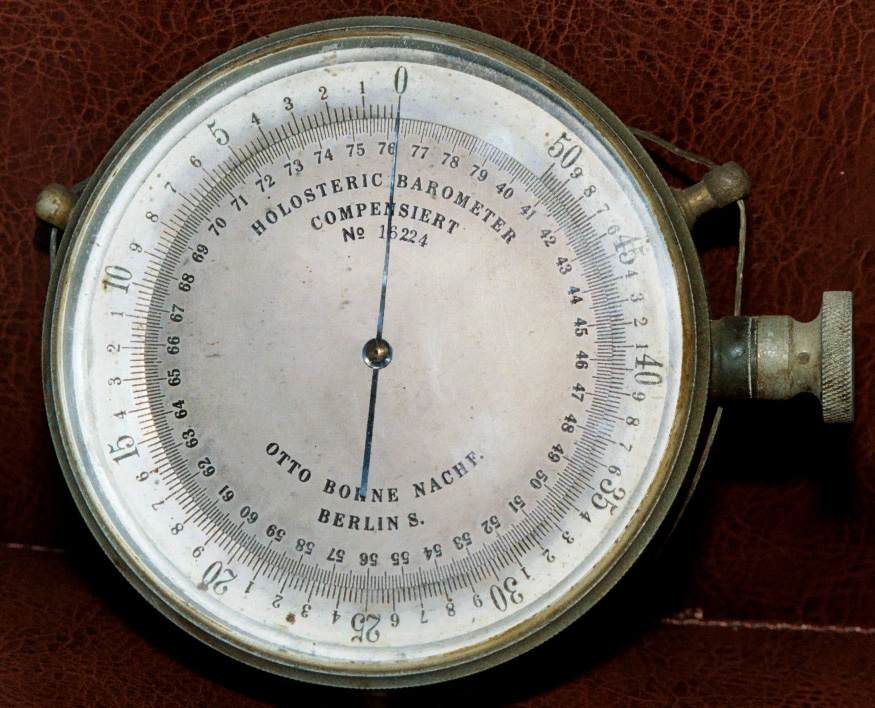


Types and how they work
Several designs of barometers are in widespread use. Their operating principles differ, but all respond to changes in the weight of the overlying air column.
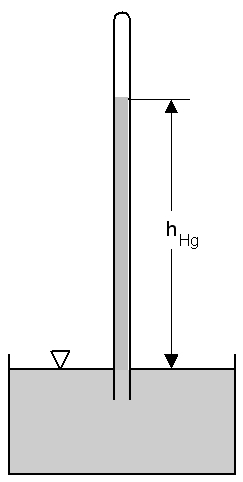
- Mercury barometer: A column of mercury in a sealed glass tube stands at a height that balances atmospheric pressure. The height of the mercury column (commonly measured in millimetres or inches) provides the pressure reading.
- Aneroid barometer: Uses a sealed, flexible metal capsule (aneroid cell) that expands or contracts with pressure changes. Mechanical linkages amplify that movement and drive a needle on a dial; many portable barometers and altimeters are aneroid devices.
- Water and other liquid barometers: Operate like the mercury type but use lower-density fluids, requiring taller columns. They are mainly of historical or demonstrative interest because of practical limits.
History and development
The first reliable barometer is attributed to the Italian scientist Evangelista Torricelli, who in the 17th century used a mercury column to demonstrate that air has weight and that pressure varies with elevation. Early instruments and subsequent refinements were key in shifting natural philosophy toward experimental methods. Over time, portable aneroid designs and later electronic sensors expanded the places where pressure could be measured reliably.
Uses and applications
Barometric measurements have a wide range of practical uses. Meteorologists map pressure fields to forecast weather and identify systems such as cyclones and anticyclones. Pilots use pressure-based altimeters—with settings adjusted to local pressure—to determine altitude above mean sea level; many altimeters are essentially aneroid barometers adapted for flight. Hikers, balloonists and mariners have also relied on barometers for navigation and safety. Miners and surveyors have used pressure readings to infer depth or elevation changes when other instruments were unavailable.
Recording and accuracy
Continuous recording barometers, or barographs, trace pressure on a paper chart so trends and sudden shifts can be studied later. Modern meteorology increasingly uses electronic pressure sensors and networks of observing stations, but analogue barographs remain useful for historical comparison and educational demonstration. Readings require corrections: temperature affects instrument materials and fluid density, and measurements are often reduced to sea-level pressure to allow comparison between sites at different elevations.
Distinctions and notable facts
- Station pressure is the actual pressure at the measurement location; sea-level pressure is an adjusted value used for mapping and forecasting.
- Barometric tendency—how rapidly pressure rises or falls—can be as important as the absolute reading for short-term weather prediction (forecasters and sailors pay particular attention to it).
- Many educational and museum displays present Torricelli's experiment to illustrate basic principles (experiments, historical demonstrations).
Instrument makers, researchers and users reference standards and calibration procedures when precise pressure values are required. For practical information on pressure units and conversion, see technical guides and instrument manuals (technical overview). Aviation regulations and navigation practices discuss correct altimeter settings and the role of atmospheric pressure in determining altitude (altimetry, aviation use).
Related articles
Author
AlegsaOnline.com Barometer Leandro Alegsa
URL: https://en.alegsaonline.com/art/9063