
Technical drawing (drafting): principles, tools, and applications
Technical drawing, or drafting, is the standardized practice of producing diagrams that specify form, dimensions, materials and assembly for engineering, architecture, manufacturing and patents.
Technical drawing, often called drafting or draughting, is the practice of producing precise drawings that convey the geometry, dimensions, materials and assembly instructions for physical objects. Practitioners use agreed conventions so a drawing can be interpreted by engineers, fabricators, architects and regulatory reviewers. The discipline exists to replace ambiguous sketches with unambiguous, repeatable instructions.
Image gallery
10 Images





Core characteristics
Key features of technical drawings include orthographic projection (views from multiple directions), standardized line types and weights, dimensioning and tolerancing, scale indication, and material or finish notes. Drawings may show exploded views, section cuts and detail enlargements to clarify complex features. Acceptable symbols and notation are defined by national and international standards.
Tools and media
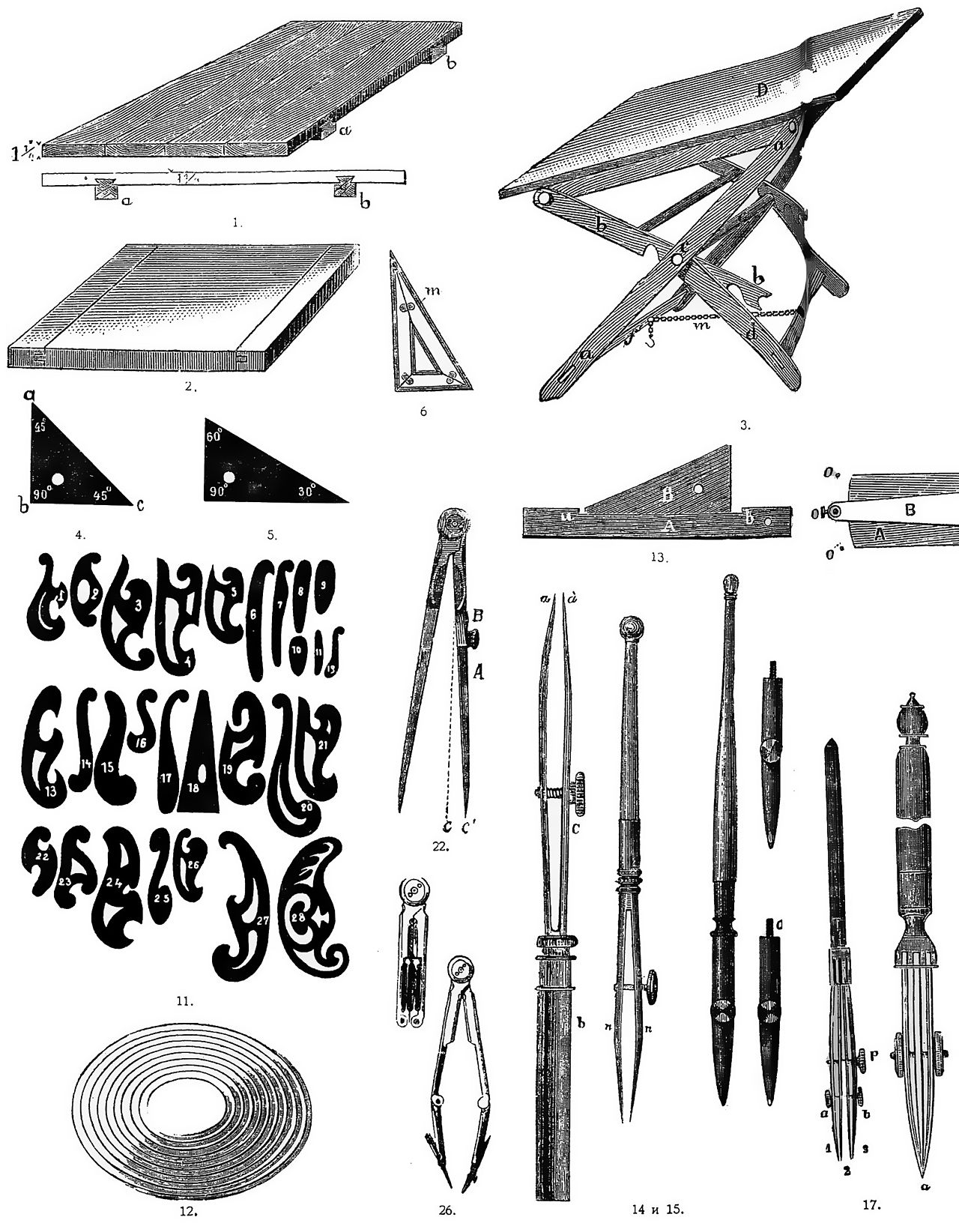
Historically drawings were made by hand with drawing boards, T-squares, compasses and drafting pens. Since the late 20th century, computer-aided design (CAD) systems have become dominant, allowing precise geometry, revision control and digital output for machining and fabrication. Technical drawing remains important even when generated by software because the underlying conventions govern how information is presented.
Types and typical uses
- Engineering drawings: parts, assemblies and tolerances for manufacturing.
- Architectural drawings: plans, elevations and sections for buildings.
- Electrical and piping schematics: functional layouts and routing.
- Patent drawings: clear depiction of an invention's structure and operation.
Whether produced by hand or CAD, technical drawings are intended to visually communicate how something works and how it is to be made. They also serve legal, safety and quality-control roles by providing traceable documentation.
Standards and interpretation
Interpretation depends on standards such as ISO and regional codes that define projection methods, tolerancing systems, and annotation practices. Good drawings minimize ambiguity: they balance completeness with clarity so that different readers can derive the same manufacturing or construction outcome. Examples of common drawing types and conventions can be explored further in technical manuals and educational courses (detailed drawings).
Related articles
Author
AlegsaOnline.com Technical drawing (drafting): principles, tools, and applications Leandro Alegsa
URL: https://en.alegsaonline.com/art/96675
Sources
- commons.wikimedia.org : Technical drawing
- me.umn.edu : "Engineering Drawing and Sketching"
- worldcat.org : 39756434