
Super Nintendo Entertainment System (SNES)
The Super Nintendo Entertainment System (SNES) is Nintendo’s 16-bit home console from the early 1990s, known for advanced 2D graphics, cartridge expansion chips, a rich game library and lasting influence on game design.
Overview
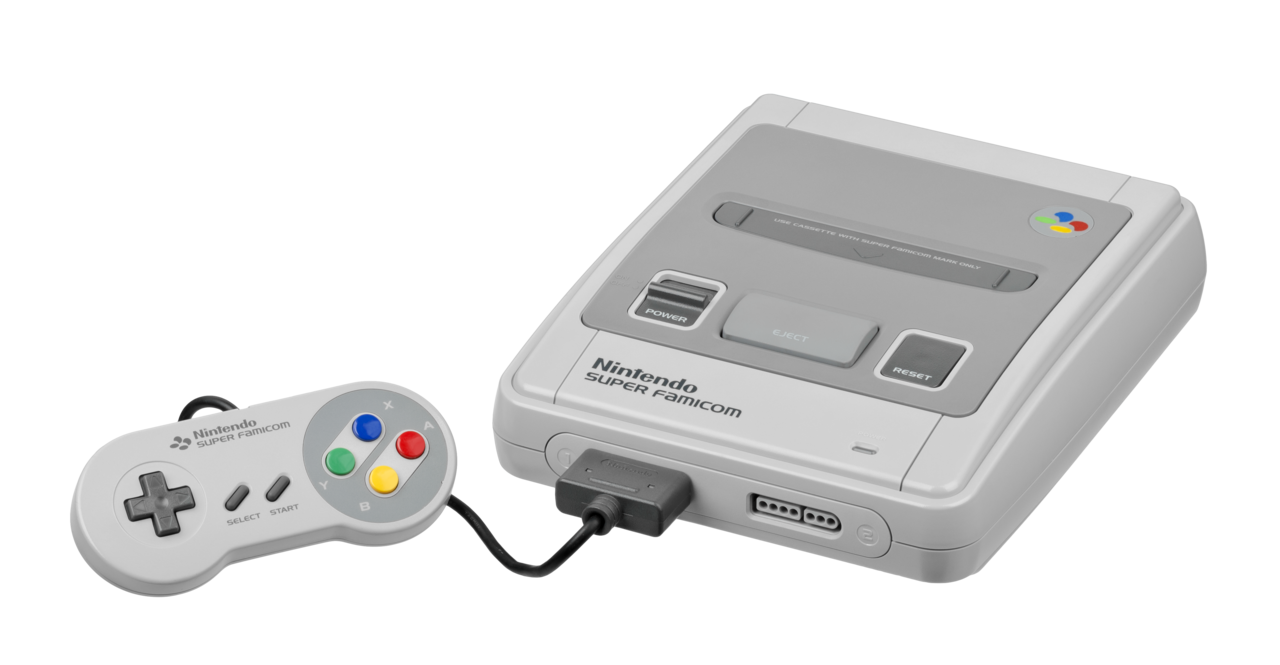
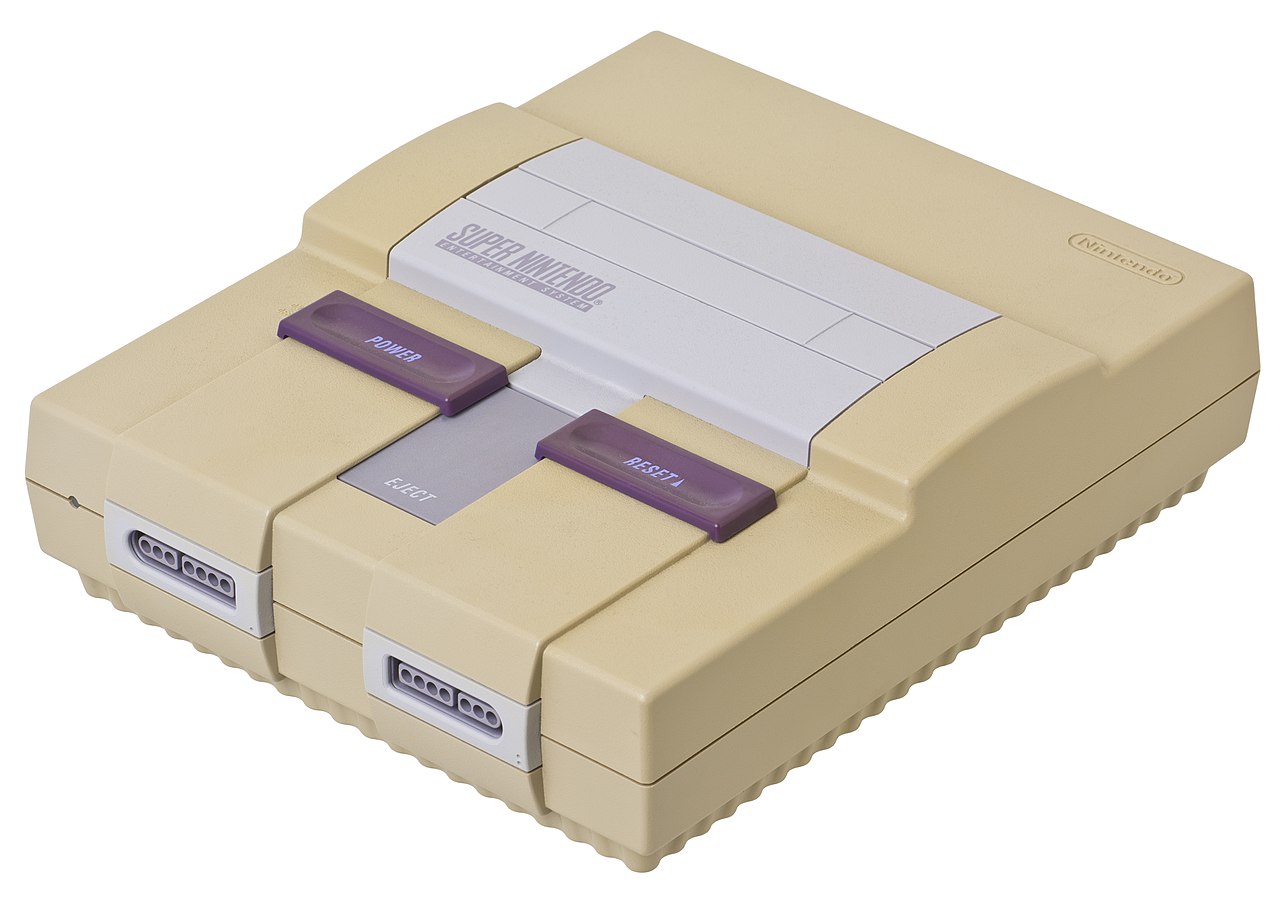
The Super Nintendo Entertainment System, commonly abbreviated SNES or Super NES, is a 16-bit home video game console developed by Nintendo. It was first released in 1990 and subsequently launched in other regions in the early 1990s. The SNES succeeded the Nintendo Entertainment System (NES) and was marketed under different names, including the Super Famicom in Japan and the Super Comboy in South Korea. The system is widely remembered for its strong 2D capabilities, broad genre coverage and influential first- and third-party titles.
Image gallery
10 Images




Design and controllers
The console introduced a redesigned controller that added shoulder buttons to the four face buttons and directional pad layout, enabling more complex control schemes for action, fighting and platform games. The SNES hardware prioritized sprite handling, fine palette control and multiple video modes to support effects such as parallax scrolling, scaling and rotation that enhanced 2D presentation.
Technical features and expansion
Although fundamentally optimized for 2D graphics, the SNES could be extended by placing additional processors and custom chips inside game cartridges. These co-processors — including well-known examples used for 3D or special effects — allowed some games to render limited polygonal graphics and other advanced routines beyond the console’s base specification. The platform’s strengths lay in color depth, sprite management and audiovisual presentation, with some titles using cartridge-based enhancement to produce pseudo-3D effects or faster arithmetic handling. See a general note on graphics approaches (2D techniques) and supplemental 3D support (hardware-assisted).
Cartridges, peripherals and media
Games were distributed on ROM cartridges that plugged into the top of the unit. Cartridges could include additional memory or custom chips to expand performance and features. The cartridge format enabled near-instant load times and the possibility of hardware augmentation on a per-game basis; for more on cartridges and media formats see related material.
Library and legacy
The SNES hosted a diverse library spanning platformers, role-playing games, shooters, fighting titles and arcade ports. Landmark games helped define genres and remain culturally significant. The console competed closely with contemporary systems such as the Sega Genesis / Mega Drive and other platforms of the era (competitors). Decades after its debut the SNES continues to be studied by historians, collected by enthusiasts and celebrated through re-releases and emulation.
For further reading and authoritative reference material, consult platform summaries SNES overview, corporate histories Nintendo, and cartridge or preservation discussions media resources.
Related articles
Author
AlegsaOnline.com Super Nintendo Entertainment System (SNES) Leandro Alegsa
URL: https://en.alegsaonline.com/art/95009