
Nintendo Entertainment System (NES): overview, hardware, games, and legacy
The Nintendo Entertainment System (NES) is Nintendo's influential 8-bit home console from the 1980s that helped revive the video game industry and introduced enduring franchises and design conventions.
Overview
The Nintendo Entertainment System (NES) is the home video game console released by Nintendo that became one of the most influential platforms of the 1980s. It was first produced as the Family Computer (Famicom) in Japan and later sold internationally under the NES name, reaching North America in 1985 and rolling out to other regions thereafter. The system is widely credited with helping to revive the home videogame market after the early-1980s downturn and establishing many industry practices that followed.
Image gallery
10 Images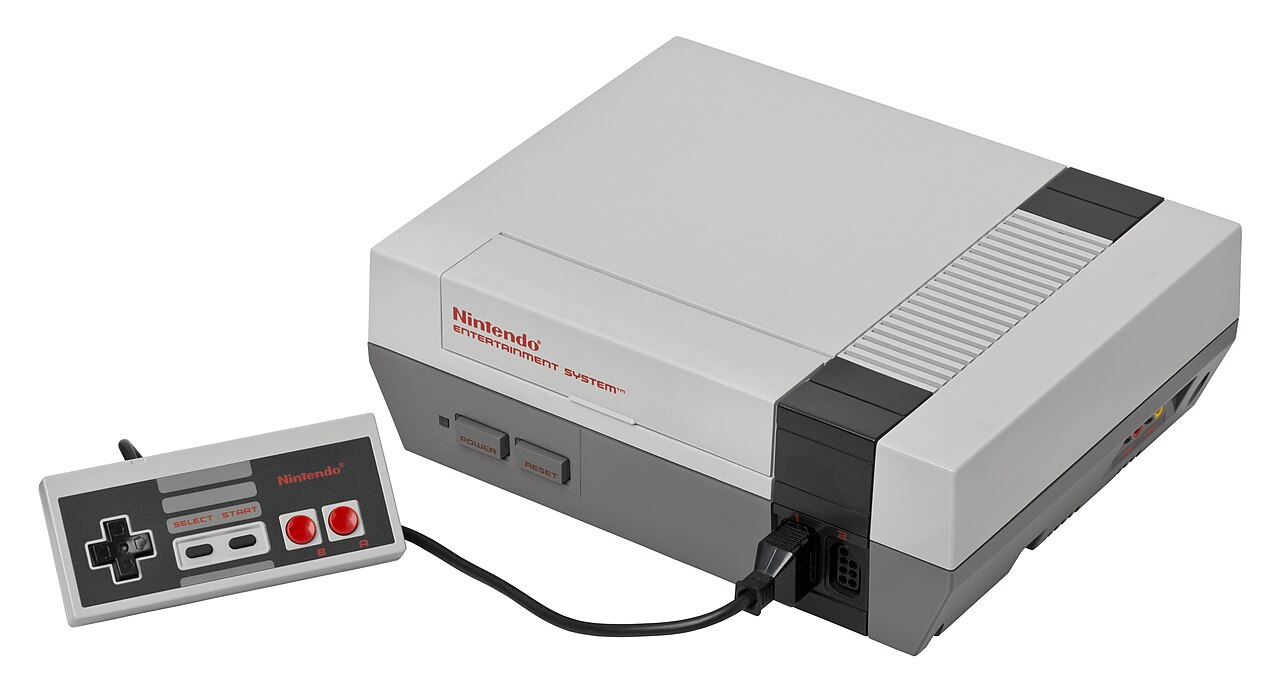


Hardware and design
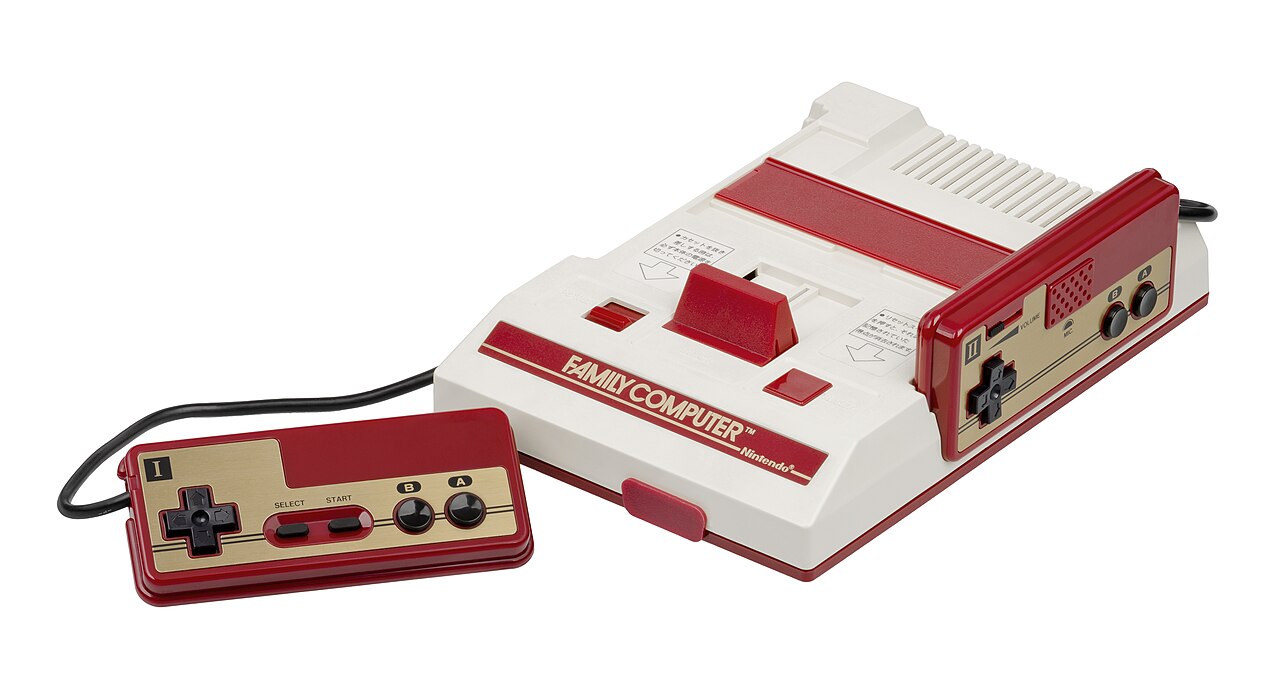
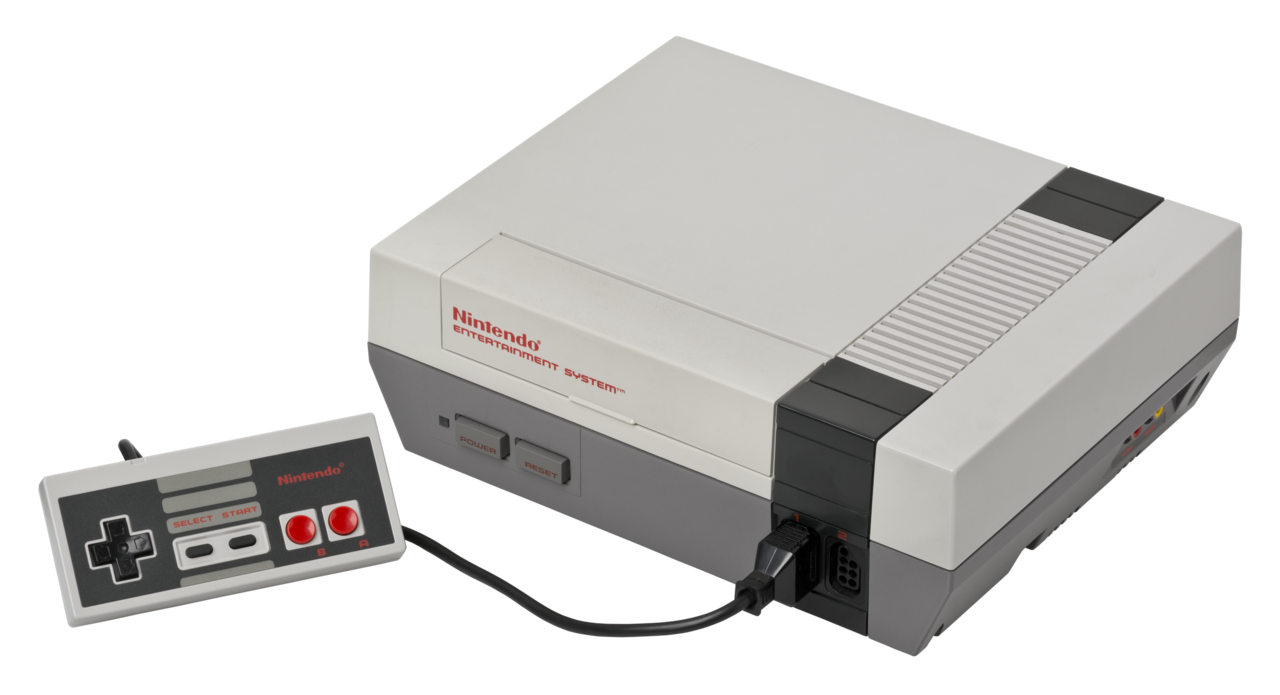
Technically an 8-bit console, the NES used a cartridge-based format for games and offered modest graphics and sound capabilities by later standards. Cartridges sometimes contained additional chips to extend graphics or memory functions. The Japanese Famicom and the international NES differed in appearance and cartridge shape; the North American model employed a distinctive front-loading tray and a motherboard-level lockout system to enforce licensed software. The console's compact design, low cost and robust library of titles were important factors in its commercial success.
Controllers and accessories
The standard input device for the system was a compact rectangular gamepad with a directional pad (D-pad), two action buttons (A and B) and Start and Select buttons. This layout became a template for many later controllers and appears in modern gamepads in evolved form. In addition to the basic controller there were a number of official and third-party peripherals, ranging from light guns and floor pads to robotic accessories and alternative controllers for specific games. For more on input devices, see NES controllers and peripherals.
Notable games and franchises
The NES is the platform on which many long-running franchises established their early identities. Landmark titles include Super Mario Bros., The Legend of Zelda, Metroid, Mega Man, Castlevania, Donkey Kong and Final Fantasy. These games introduced design ideas such as non-linear exploration, persistent save systems, sophisticated platforming physics and storytelling approaches that influenced later generations. Many spawned sequels and spin-offs, forming long-lived series and multimedia presences (sequels and continuations).
History and impact
When Nintendo introduced the Famicom in Japan and later the NES abroad, it brought a combination of hardware innovation, quality control and third-party licensing that reshaped the business of console publishing. Nintendo's approach to licensing, cartridge authentication and packaging helped reassure retailers and consumers in an industry still recovering from market saturation and low-quality release practices. The NES era also saw the rise of prominent third-party developers and the early formation of many companies that remain active in the games industry.
Legacy and continued relevance
Although Nintendo ended production of the original unit in the 1990s, the NES's influence remains visible. Its game library has been reissued, emulated and celebrated through collections, digital storefronts and plug-and-play microconsoles. Design elements such as the D-pad and two-button action layout persisted for decades; its franchises remain cornerstone properties for Nintendo and the broader entertainment landscape. For further background on the company behind the system, see Nintendo, and for general platform information see NES console.
- Key accessories: light gun, external controllers, and novelty peripherals.
- Regional names: Famicom (Japan) and NES (international).
- Cultural effect: revitalized home console market and created enduring game franchises.
Questions and answers
Q: What is the Nintendo Entertainment System?
A: The Nintendo Entertainment System (NES) is the first video game console made by Nintendo in Japan, Europe, and the United States.
Q: When was the NES released in the United States?
A: The NES was released in 1985 in the United States.
Q: What kind of controller did the NES have?
A: The NES had a controller with a D-pad button that could go up, down, left, or right, along with A, B, Select, and Start buttons.
Q: How many controllers could be used with the NES?
A: The NES could use up to two controllers for multiplayer games.
Q: What are some famous games for the NES?
A: Some famous games for the NES are Super Mario Bros., The Legend of Zelda, Metroid, Mega Man, Castlevania, Donkey Kong, and Final Fantasy.
Q: Are there sequels to these famous NES games?
A: Yes, there have been many sequels made to these games and they are still enjoyed today.
Q: When did Nintendo discontinue the NES?
A: Nintendo discontinued (stopped making and selling) the NES in 1995.
Related articles
Author
AlegsaOnline.com Nintendo Entertainment System (NES): overview, hardware, games, and legacy Leandro Alegsa
URL: https://en.alegsaonline.com/art/70299
Sources
- classicgaming.gamespy.com : "Nintendo Entertainment System (NES) – 1985–1995"
- nintendo.co.jp : nintendo.co.jp
- guinnessworldrecords.com : "Best-Selling Video Games" · web.archive.org
- telegraph.co.uk : "Super Mario Bros voted greatest computer game ever"
- tech.uk.msn.com : "The games that sold consoles"