
Suppressor (firearm device)
A suppressor (often called a silencer) is an attachment or integral component that reduces a firearm's sound and visible muzzle signature; this article covers design, effects, uses, and legal issues.
A suppressor, commonly but imprecisely called a "silencer," is a device fitted to the muzzle of a firearm to reduce the sound, flash, and sometimes the recoil produced when a cartridge is discharged. Suppressors can be attached externally by threading or quick-detach mounts, or built into the barrel as an integral design. They work by slowing, cooling, and redirecting high-pressure propellant gases before they exit to the atmosphere, which lowers the peak pressure and changes the sound signature of the shot.
Image gallery
10 Images
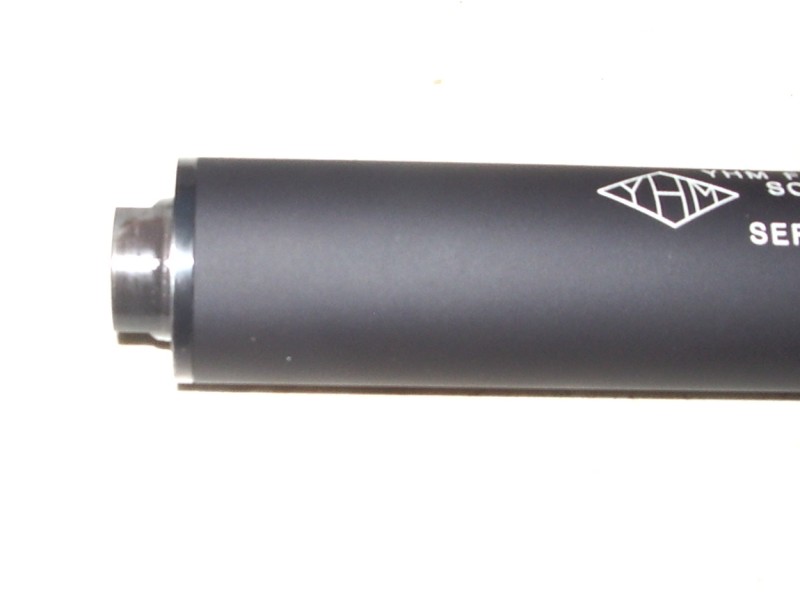


How suppressors work and main components
Inside a typical suppressor are a series of chambers and baffles that trap, expand, and redirect gases. Common elements include the outer tube, internal baffles or cones, spacers, and an end cap. Some designs use polymer or metal wipes to achieve additional gas sealing, while others rely solely on rigid baffles. Suppressors do not remove the sonic crack created by a bullet traveling faster than the speed of sound; to reduce that noise, shooters use subsonic cartridges. The combined effectiveness depends on the cartridge, barrel length, and suppressor design.
Acoustic effect and safety
Despite the popular term "silencer," a suppressor rarely makes a firearm silent. Typical peak sound levels for a suppressed firearm vary widely; many fall in a range often quoted around 120–135 decibels, depending on ammunition and the device, while unsuppressed firearms commonly produce 140–165 decibels. Because those levels can still cause hearing damage, ear protection is recommended even with a suppressor. Suppressors also reduce visible muzzle flash and can slightly reduce felt recoil, which can improve shooter comfort and follow-up shot speed.
Types and practical uses
Suppressors are used in several contexts: recreational shooting to reduce noise at ranges and protect hearing, hunting to reduce disturbance of wildlife, military and law enforcement operations to manage signature and communication, and in some industrial or pest-control situations. Types include welded or integral suppressors (part of the barrel), screw-on or quick-detach models, and specialized forms for rimfire pistols and rifles. The choice of suppressor is guided by caliber, barrel threading, intended use, and whether the user values compactness or maximum sound reduction.
History and development
Early commercial designs appeared in the late 19th and early 20th centuries and were marketed to reduce perceived noise and recoil. Over time, materials and machining improved, leading to lighter, more durable units that can withstand repeated high-pressure firings. Modern designs balance gas management, durability, and weight; manufacturers experiment with baffle geometry, materials such as stainless steel and titanium, and modular systems that allow owners to alter length and volume.
Legal status and public issues
Laws governing suppressors vary widely. In many countries they are restricted or reserved for government use, while in others they are permitted under regulation because of their hearing-protection benefits. In the United States, civilians may own many types of suppressors where state law allows, but federal regulation under the National Firearms Act requires registration, a background check, and payment of a tax (commonly a $200 transfer tax) to possess an untaxed unit legally. Because quieter firearms raise concerns about illicit use, critics argue for stricter limits, while advocates emphasize public health and sporting benefits. Laws and requirements differ by jurisdiction and may involve law enforcement and military exemptions; for example, agencies such as military and police often have separate procurement and legal frameworks. Discussions about suppressors also touch on crime prevention concerns (criminal use), responsible ownership by civilians, and differences between national systems such as in the United States where federal and state rules interact. For more information on firearms and related regulation, see resources about modern firearms.
- Key distinctions: suppressors reduce muzzle noise but do not eliminate the supersonic crack of bullets above sound speed.
- Safety: always treat a firearm as loaded and use hearing protection when appropriate.
- Practical tip: subsonic ammunition and longer barrels can increase the relative benefit of a suppressor.
Related articles
Author
AlegsaOnline.com Suppressor (firearm device) Leandro Alegsa
URL: https://en.alegsaonline.com/art/95112