
Supercapacitor (Ultracapacitor): high‑power electrochemical capacitor
A supercapacitor is an electrochemical capacitor that stores more charge than conventional capacitors, offering very high power delivery, long cycle life, and rapid charge/discharge for applications from backup power to transport.
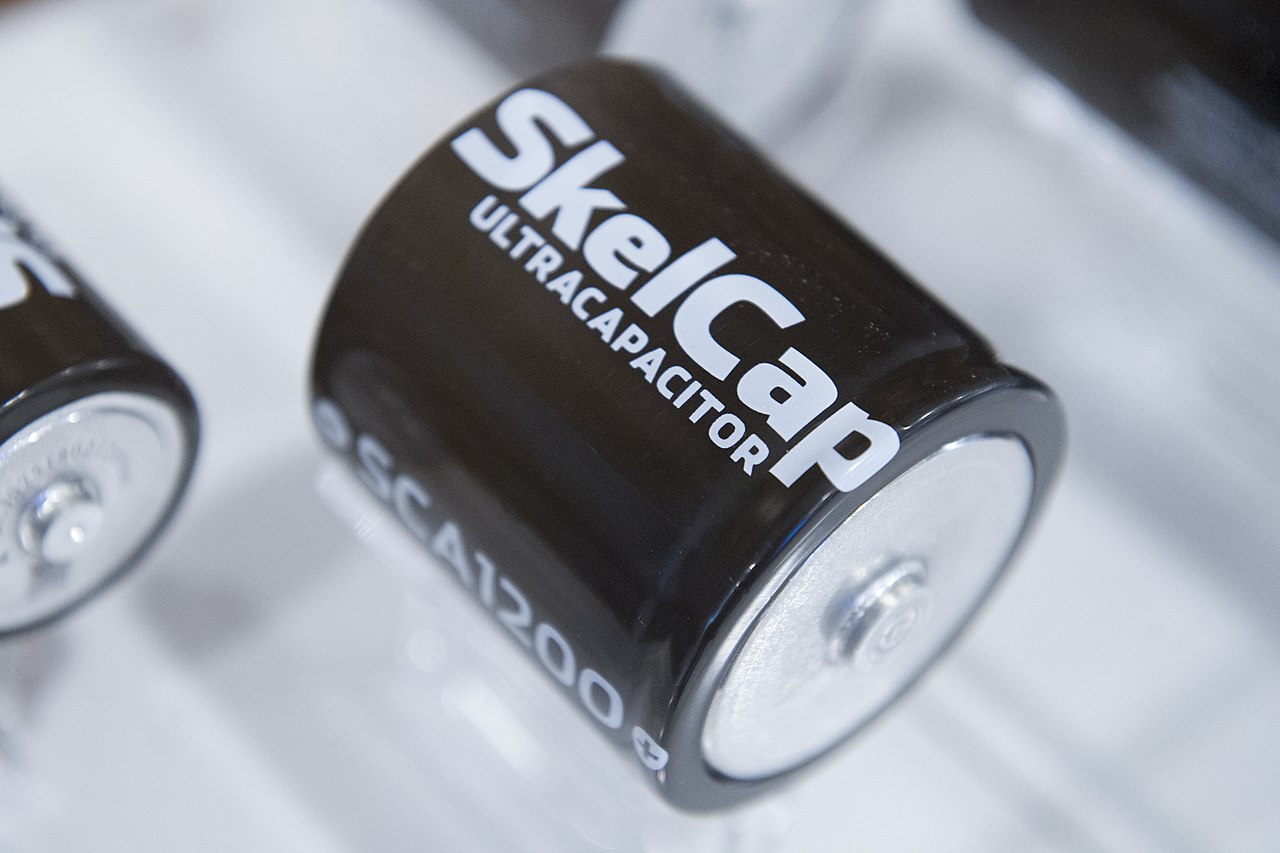
Supercapacitors, often called ultracapacitors or electrochemical capacitors, are a class of energy storage devices designed to provide high power over short timescales. Unlike conventional capacitors, they can store substantially more charge and release it quickly, bridging the gap between ordinary capacitors and chemical batteries. For a basic comparison with conventional capacitors see capacitor overview.
Image gallery
10 Images




Characteristics
- Energy vs power: supercapacitors prioritize power density and rapid charge/discharge; their volumetric energy density remains lower than most batteries, though they can hold many times the energy of older capacitor types (energy comparison).
- Construction: typical elements include porous electrodes (often activated carbon), an electrolyte, and a separator; variants include electrochemical double‑layer capacitors (EDLCs), pseudocapacitors, and hybrid designs.
- Performance: they tolerate very high cycle counts, charge in seconds to minutes, and operate over wide temperature ranges, but usually at lower voltages per cell, requiring series configurations for higher voltages.
Development and history: modern supercapacitors emerged in the late 20th century as materials and electrolytes improved. Early research identified the electrochemical double layer as a means to increase capacitance dramatically; later advances focused on electrode surface area, novel carbon materials, metal oxides and conductive polymers to boost performance.
Applications
- Transportation: energy recuperation in regenerative braking, power assists for electric and hybrid vehicles, and load leveling in buses and trains.
- Consumer and industrial uses: short‑term backup power, peak shaving, pulse power for cameras or radio transmitters, and fast buffering in renewable energy systems.
- Emerging roles: researchers and companies explore replacing or supplementing batteries in some devices such as future phones or cars where rapid charging and long life are advantageous (future applications).
Advantages and limitations: supercapacitors excel at delivering high currents, enduring millions of cycles, and requiring little maintenance. Their main drawbacks are lower energy storage per mass or volume compared with batteries, higher self‑discharge rates, and cost per stored energy. Practical systems often pair supercapacitors with batteries to combine high power and greater energy capacity.
Notable facts: because of their fast response and durability, supercapacitors are used where frequent, rapid charge/discharge cycles occur. Ongoing research targets improved electrode materials, hybrid architectures, and safer, more compact cells to widen their adoption in transportation, grid services, and portable electronics.
Related articles
Author
AlegsaOnline.com Supercapacitor (Ultracapacitor): high‑power electrochemical capacitor Leandro Alegsa
URL: https://en.alegsaonline.com/art/95033