
Three-dimensional (3D): concept, measurement, perception, and applications
Overview of three-dimensional space and objects: definitions, measurement, geometric terms, human perception, and practical applications in computing, industry, medicine, art and visualization.
Overview
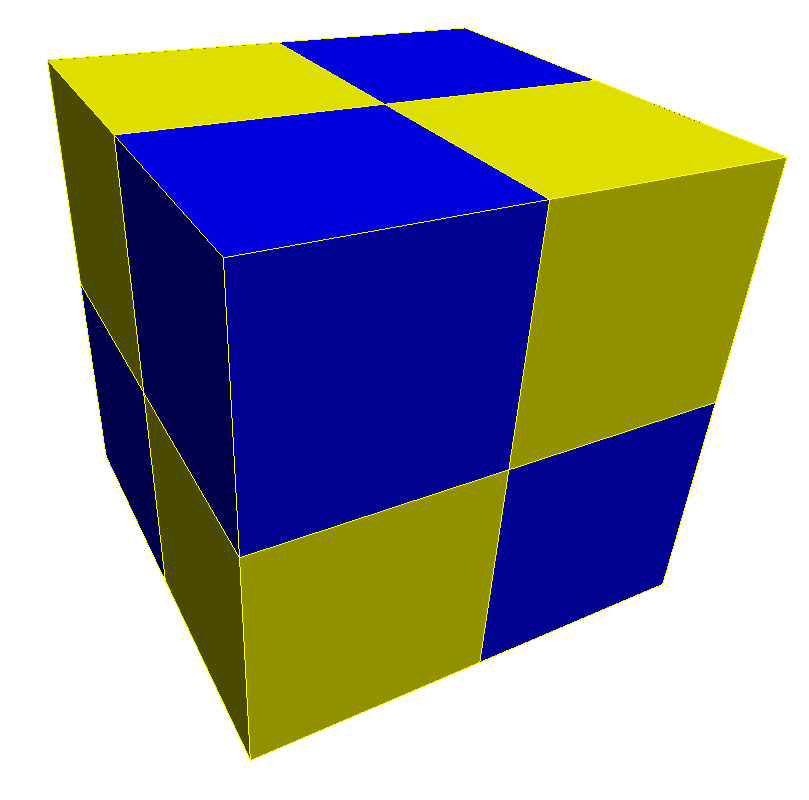
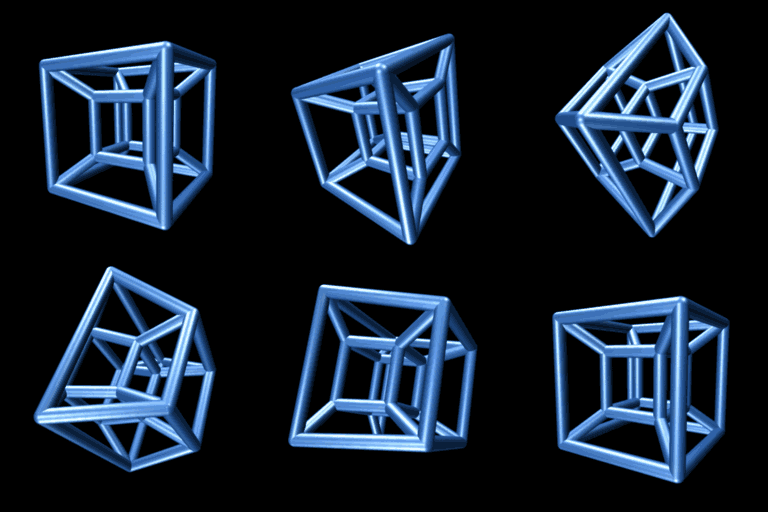
The phrase three-dimensional (often written 3D or 3‑D) describes objects or spaces that extend in three independent directions. A 3D object occupies volume and presents multiple sides or faces that can be inspected from different viewpoints. Everyday solids such as a box are solid rather than thin like a sheet of paper, and they have distinct sides including a top, bottom, left, right, front and back.
Image gallery
9 Images


Dimensions and measurement
In ordinary use the three linear measures are called length, width (or breadth) and height. In mathematics and physics these correspond to independent axes in Euclidean space. Each dimension is measured using a chosen unit of length: for small objects measurements may be expressed in inches or millimetres, while long distances are commonly given in miles or kilometres. The three linear extents together determine an object's size and, when combined, yield geometric properties such as volume and surface area.
Geometry and terminology
Geometric solids are described by their bounding elements. A planar region that bounds a solid is called a face or surface. The line where two surfaces meet is an edge, and a vertex is a corner point where several edges converge. Surfaces may be flat, as on a polyhedron, or smoothly curved, as on a sphere or cylinder. Solids are further classified by properties such as convexity, symmetry and whether they are rigid or deformable.
Perception and stereoscopy
Humans infer three-dimensional structure from a combination of visual cues. Binocular vision uses the slightly different images seen by each eye to perceive depth. Monocular cues such as perspective, occlusion, relative size, shading, texture gradients and motion parallax also convey information about shape and distance. Stereoscopic techniques reproduce depth impressions by presenting different images to each eye; such techniques underpin 3D cinema, some virtual reality systems and stereo photography.
3D in computing and visualization
Digital 3D graphics represent geometric shapes with mathematical models and project them to a two-dimensional display using transformations, perspective projection and lighting models. Rendering realistic images requires algorithms for shading, hidden-surface determination and texture mapping. Modern computers typically use dedicated processors (GPUs) to accelerate these calculations, enabling interactive 3D scenes in video games, simulation and virtual environments. 3D modelling and rendering are also central to animation and animated movies.
Applications
- Engineering and manufacturing: computer-aided design (CAD), finite-element analysis and 3D models guide fabrication, tolerancing and quality control.
- Medicine: three-dimensional imaging from modalities such as CT or MRI supports diagnosis, planning and image-guided procedures.
- Art and entertainment: sculpture, installation art, gaming and visual effects rely on three-dimensional composition and perception.
- Mapping and geospatial work: terrain, buildings and infrastructural models are handled in three dimensions for planning and analysis.
- Education and research: interactive 3D visualizations aid understanding of complex structures in science and engineering.
History and distinctions
The study of three-dimensional solids has roots in ancient geometry and was formalized by mathematicians who classified polyhedra and explored spatial relations. Optical devices that create depth impressions, such as stereoscopes and anaglyphs, were developed in the 19th century and later influenced cinema and immersive technologies. It is useful to distinguish three related meanings: the abstract mathematical concept of 3D space, the visual and perceptual experience of depth, and physical three-dimensional objects manufactured or printed in the real world.
Further reading and resources
Introductory material can clarify the differences between flat and solid forms and explain measurement methods: see guides on flat vs. solid, practical notes on measuring volume, and tutorials on identifying faces and sides. Technical references cover terminology for faces and surfaces, units such as inches and broader measurement units, and scale considerations including miles and kilometres. For perception and psychology of depth see material on binocular vision, and for applied media work consult resources on animated movies and modern visualization tools.
Readers seeking practical exercises can explore modelling, simple stereoscopic photography and basic CAD projects to gain hands-on experience with three-dimensional representation and measurement.
Questions and answers
Q: What does 3D mean?
A: 3D means three-dimensional or having three dimensions.
Q: How can you describe a box?
A: A box is three-dimensional, it is solid and has volume. It also has a top and bottom, left and right (sides), and a front and back.
Q: What are the three dimensions called?
A: The three dimensions are often called length (or depth), width (or breadth), and height.
Q: What are 3D graphics used for?
A: 3D graphics are used to make video games or animated movies.
Q: What do modern computers have to handle 3D graphics?
A: Modern computers usually have a GPU (Graphics Processing Unit) to handle these calculations.
Q: What helps people see the third dimension easily?
A: Binocular vision helps people see the third dimension easily.
Q: How are pictures made to seem three-dimensional on a screen?
A: Many calculations are needed to make pictures seem three-dimensional on a screen.
Tags
Related articles
Author
AlegsaOnline.com Three-dimensional (3D): concept, measurement, perception, and applications Leandro Alegsa
URL: https://en.alegsaonline.com/art/112860