
Strontium: properties, occurrence, uses and safety
Overview of strontium (Sr, atomic number 38): physical and chemical properties, occurrence and production, common uses (pyrotechnics, glass, electronics), isotopes, biological role and safety.
Overview
Strontium is a metallic chemical element with symbol Sr and atomic number 38. It belongs to the group of alkaline earth metals and commonly forms divalent cations (Sr2+). The metal itself is silvery to yellowish, relatively soft, and reacts readily with oxygen and water. In nature strontium is most often encountered as stable isotopes clustered around an average atomic mass close to 88; detailed isotope information and reference material can be consulted via an element profile.
Image gallery
10 Images




Physical and chemical properties
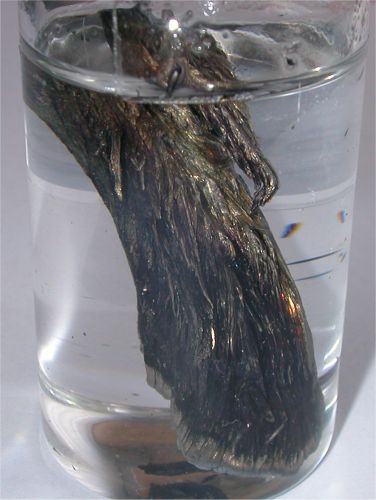
As an alkaline earth element, strontium shares chemical behaviour with its group neighbors such as calcium and barium. It typically adopts the +2 oxidation state and forms ionic compounds including carbonates, chlorides and nitrates. The pure metal oxidises in air, developing a yellowish tarnish, and reacts with water to give strontium hydroxide and hydrogen. Many strontium salts impart a characteristic red colour to flames, a property widely used in pyrotechnics.
Occurrence and production
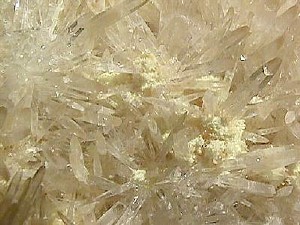
Strontium is found in minerals such as celestine (celestite) and strontianite. Commercial production usually begins with mining of celestine followed by chemical conversion to chemicals such as strontium carbonate; further refining can yield the metal by processes including electrolysis. Mining and processing practices and geological summaries are discussed in resources on mineral extraction and celestine deposits.
Uses and applications
- Pyrotechnics and signalling: Strontium salts, especially strontium carbonate and nitrate, are used to produce red colours in fireworks, flares and marine distress signals.
- Glass and electronics: Certain strontium compounds modify optical and physical properties of specialty glasses and were historically used in some cathode-ray tube components and in optical ceramics.
- Ceramics and metallurgy: Strontium additives appear in ceramic glazes, enamels and some metal alloys to improve properties.
- Scientific and industrial: Isotopically enriched strontium has applications in research, calibration standards and specific manufacturing processes.
Isotopes and radiological concerns
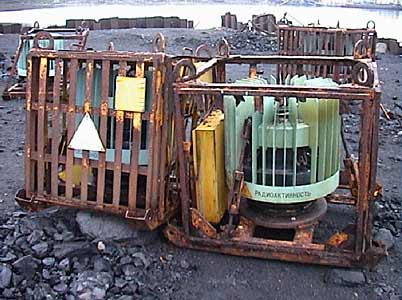
Natural strontium comprises several stable isotopes such as Sr-84, Sr-86, Sr-87 and Sr-88. A significant radioactive isotope produced by nuclear fission is strontium-90, which has a half-life of about 28.9 years; this value and related safety guidance are discussed in technical references and monitoring reports accessible at sources like specialist databases. Because strontium behaves chemically similar to calcium, some radioactive strontium can be incorporated into bone tissue after environmental release, making monitoring and remediation important in affected areas.
Biological and environmental aspects
Stable strontium occurs naturally in soils, rocks and seawater and is taken up by plants and animals to varying degrees. At typical environmental concentrations it is of low toxicity to humans. Biologically, strontium can substitute for calcium in small amounts within bone mineral, which explains both its low-dose environmental behaviour and the concern over radioactive isotopes that mimic calcium. For routine environmental assessments and public health advice, consult authoritative regulatory guidance and analytical reports available through scientific agencies and databases (materials and metals references).
History and name
The element was first associated with minerals found near the village of Strontian in Scotland; the name "strontium" is derived from that locality. Early chemists isolated the element from its mineral forms during the late 18th and early 19th centuries, and later advances in electrochemistry enabled production of the pure metal for research and industrial use.
Safety, handling and regulation
Handling of metallic strontium requires basic precautions because the metal reacts with moisture and oxidants; common laboratory safety practices apply. Non-radioactive strontium compounds are generally handled with routine chemical safety measures. In contrast, radioactive strontium isotopes require strict radiological controls, long-term monitoring and specialized remediation after significant releases. For occupational exposure limits, transport rules and cleanup procedures, refer to up-to-date regulatory documents and safety data from competent authorities and technical sources (safety guidance).
Further reading on analytical methods, mineral processing, environmental monitoring and health effects can be found through specialized texts and databases; typical entry points for these materials include technical profiles, geological summaries and radiological monitoring reports (element group summaries, comparative chemistry, neighbor element data).
Related articles
Author
AlegsaOnline.com Strontium: properties, occurrence, uses and safety Leandro Alegsa
URL: https://en.alegsaonline.com/art/94331