
Substance: material, composition, properties and classification
An overview of substance as material: scientific definitions, pure substances versus mixtures, properties, historical development and common examples like iron, water and air.
In science, the term substance denotes a form of matter that has a characteristic composition and set of properties. More generally, a substance is the material out of which something is made; it can be observed, weighed and analyzed. The everyday notion of matter is closely related to this idea — see matter for a broader treatment.
Image gallery
2 Images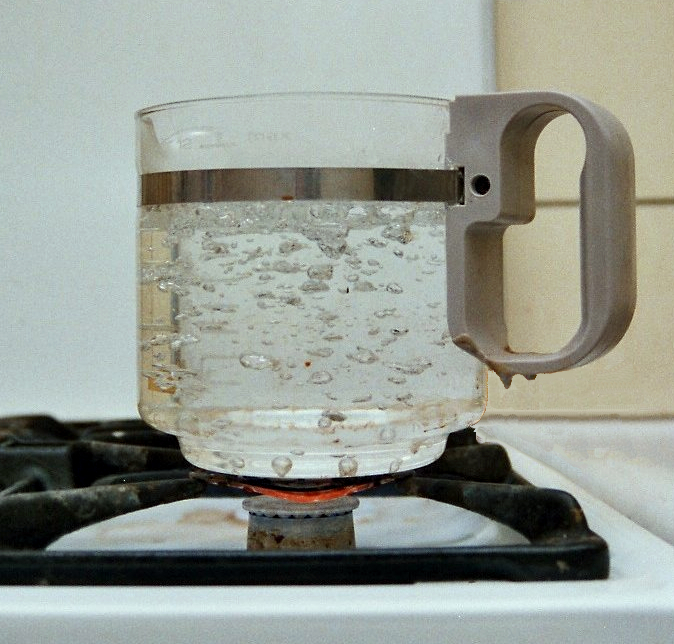
Types and composition
Substances are often classified as pure substances or mixtures. A pure substance has a uniform and definite composition throughout. Pure substances include chemical elements and compounds; the concept of an element plays a central role in distinguishing one type of pure substance from another. Mixtures combine two or more substances without fixed stoichiometry and can be homogeneous or heterogeneous.
Common examples of substances illustrate these categories. Metals such as iron and aluminium are elemental or alloyed materials; water is a chemical compound essential to life; and air is a mixture of gases. These examples show how composition determines behavior and use.
Properties and states
Substances are characterized by physical properties (density, melting and boiling points, conductivity) and chemical properties (reactivity, acidity, oxidation states). They exist in different states—solid, liquid, gas, and plasma—depending on temperature and pressure, and they can undergo phase changes and chemical reactions that transform one substance into another.
History and scientific development
The idea of substance has evolved from early philosophical models—such as the classical elements of antiquity—to the modern chemical view. Developments in the sciences of the 18th and 19th centuries, including the formulation of conservation laws and atomic theory, established that substances are composed of atoms and molecules with predictable behavior under chemical laws.
Uses and significance
Understanding substances underpins chemistry, materials science, biology and engineering. Identifying and manipulating substances enables production of alloys, pharmaceuticals, fuels and polymers, and supports analytical techniques like spectroscopy, chromatography and microscopy that reveal composition and structure.
Distinctions and notable facts
- Pure substance vs mixture: purity implies consistent properties; mixtures vary with composition.
- Chemical vs philosophical senses: scientists focus on measurable composition, while philosophers may discuss substance as that which exists independently.
- Practical importance: regulatory and safety frameworks often refer to substances when controlling chemicals and materials.
For further reading see entries on matter, elements, and resources about specific examples like iron, aluminium, water and air.
Questions and answers
Q: What is substance?
A: Substance is the matter or material that makes up something, and it can be seen, touched, or measured.
Q: What are substances made up of?
A: Substances are made up of one or more elemental parts.
Q: Can you mention some examples of substances?
A: Iron, aluminium, water, and air are some examples of substances.
Q: How can substances be perceived?
A: Substances can be seen, touched, or measured.
Q: Is substance a physical thing?
A: Yes, substance is a physical thing.
Q: Can we create new substances?
A: Yes, new substances can be created by combining two or more elemental parts.
Q: Are all substances visible to the naked eye?
A: No, not all substances are visible to the naked eye, some can only be measured using scientific instruments.
Related articles
Author
AlegsaOnline.com Substance: material, composition, properties and classification Leandro Alegsa
URL: https://en.alegsaonline.com/art/94519