
Barium
Barium is a soft, silvery alkaline earth metal (atomic number 56). It occurs in minerals like barite, forms a range of compounds, is useful industrially, and has important safety considerations.
Overview
Barium is a chemical element with the symbol Ba and atomic number 56. It is a member of the alkaline earth metals on the periodic table. A neutral barium atom contains 56 protons and 56 electrons, and its standard atomic mass is about 137.3 unified atomic mass units. In its metallic form barium is a soft, lustrous, silvery material that tarnishes readily in air.
Image gallery
10 Images
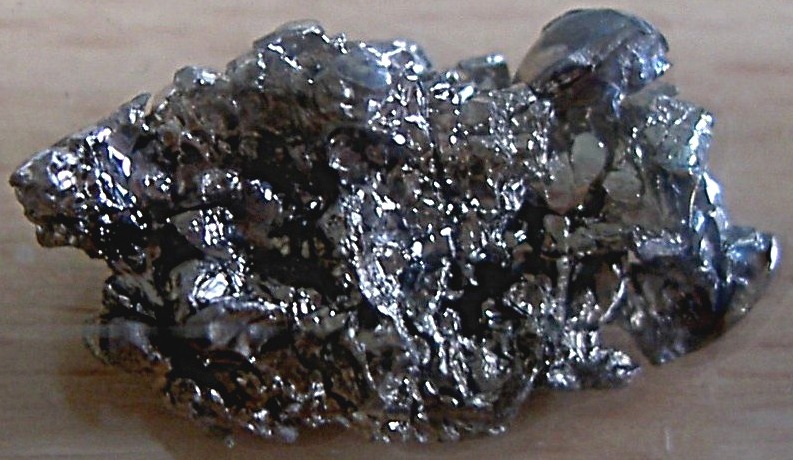


Physical and chemical characteristics
Barium behaves chemically like other alkaline earth elements: it commonly forms divalent (+2) cations and combines with nonmetals to produce salts. It reacts with oxygen to form oxides and with water to yield alkaline hydroxides and hydrogen gas under suitable conditions. Barium metal is highly reactive and must be handled under inert atmosphere or oil. The element is classified as a metal, specifically an alkaline earth metal.
Occurrence and production
Barium is not found free in nature because of its reactivity; it occurs in minerals such as barite (barium sulfate) and witherite (barium carbonate). These minerals are the principal ores from which commercial barium compounds are extracted. Barium metal is produced industrially by reducing barium compounds to the element or by electrolytic methods applied to molten salts.
Common compounds and uses
Several barium compounds have broad industrial and medical uses. Notable examples include:
- Barite (BaSO4) — used as a weighting agent in drilling fluids and as a radiopaque medium for medical x-ray imaging because it is insoluble and opaque to X-rays.
- Barium carbonate (BaCO3) — used in ceramics, glass, and as a precursor for other barium chemicals.
- Barium nitrate and barium chlorides — employed in pyrotechnics to produce green colors and in various chemical processes.
Health, safety, and environmental notes
Soluble barium salts are toxic if ingested or inhaled because free barium ions interfere with biological processes, potentially causing muscle weakness, changes in heart rhythm, and other systemic effects. Insoluble barium sulfate is considered safe for use as a medical contrast agent because it does not dissolve and is not absorbed by the body. Handling of barium compounds and metal requires appropriate controls to limit exposure and environmental release.
History and notable facts
The name "barium" derives from the Greek word for "heavy". The element was isolated in the early 19th century by electrochemical methods; its predictable chemistry has made it useful across mining, manufacturing, and medicine. For further basic reference and periodic data, consult standard chemistry resources and materials safety guidelines (atomic data, periodic table entries, and material safety documentation at proton-based references and electron configuration guides).
Related articles
Author
AlegsaOnline.com Barium Leandro Alegsa
URL: https://en.alegsaonline.com/art/9004
Sources
- degruyter.com : "Atomic weights of the elements 2013 (IUPAC Technical Report)"
- doi.org : 10.1515/pac-2015-0305 · web.archive.org