
Styrene: structure, production, uses, and safety
Styrene (C8H8) is an aromatic vinyl compound used to produce polystyrene and many copolymers; this article summarizes its chemistry, manufacture, applications, and health and environmental considerations.
Overview
Styrene is an organic aromatic compound built from a benzene ring bonded to a vinyl group; its empirical formula is C8H8. It appears at room temperature as a clear, slightly oily liquid with a sweet, floral odor. Common synonyms include styrol, vinylbenzene, phenylethene and phenylethylene. The vinyl substituent makes styrene chemically reactive toward addition and polymerization, while the aromatic ring influences its physical and spectroscopic properties. For general context see chemical compound and related summaries at reference overview.
Image gallery
5 Images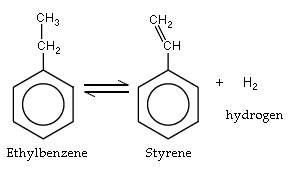


Properties and chemical behaviour
Styrene combines features of alkenes and aromatic hydrocarbons. The vinyl group readily undergoes radical, cationic or anionic polymerization, which is the basis for producing plastics. The aromatic ring lends thermal stability and influences solubility: styrene is relatively nonpolar and dissolves many organic substances. It is flammable, can form vapors at ambient temperatures, and tends to polymerize spontaneously unless stabilizers are added during storage and transport. For quick chemical data see formula details and structural notes at structural description.
History and production
The name "styrene" derives from storax (styrax), a natural resin from which an oily distillate was obtained and later characterized in the 19th century. Industrial-scale production expanded in the 20th century alongside the growth of the plastics industry. Today, most styrene is produced from ethylbenzene, commonly made by alkylating benzene with ethylene; ethylbenzene is then dehydrogenated to yield styrene. Large-scale petrochemical processes and catalyst systems support continuous manufacture and purification for polymer-grade output. More historical and process notes can be found at industrial history and technical summaries at manufacturing routes.
Uses and examples
Styrene's principal application is as a monomer for polystyrene and for a range of copolymers. Common commercial products include:
- Polystyrene (solid or foamed) used in packaging, insulation, disposable containers and consumer goods.
- Styrene-acrylonitrile (SAN) and acrylonitrile butadiene styrene (ABS) copolymers used for durable consumer products, electronics housings and automotive parts.
- Styrene-butadiene rubber (SBR) used in tires and industrial goods.
- Unsaturated polyester resins and fiberglass-reinforced plastics, widely used in construction, marine and automotive applications.
These polymers illustrate how a simple monomer can yield materials with diverse mechanical and thermal properties through copolymerization and formulation.
Health, safety and environmental aspects
Styrene is regulated for workplace exposure because inhalation and skin contact can cause irritation, and long-term exposure has been linked to effects on the nervous system. Major health agencies have evaluated styrene and classified it as probably carcinogenic to humans (Group 2A) on the basis of laboratory and occupational studies. Because styrene can polymerize exothermically, industrial handling includes inhibitors and temperature controls to prevent runaway reactions. Environmental concerns center on emissions to air from production facilities and on proper disposal or recycling of styrenic plastics. For safety data consult regulatory guidance and material safety resources such as health guidance and regulatory summaries.
Notable distinctions
Styrene should not be confused with structurally related compounds such as ethylbenzene (its industrial precursor) or substituted styrenes used in specialized polymers. Its combination of an aromatic ring and a polymerizable vinyl group makes it a versatile building block in synthetic materials. Innovations in recycling and in alternatives to traditional styrenic products are active areas of research as industry seeks to reduce emissions and improve material circularity.
Questions and answers
Q: What is styrene?
A: Styrene is an organic chemical compound with the chemical formula C8H8, made up of a vinyl group bonded onto a benzene ring.
Q: What is the chemical structure of styrene?
A: The chemical structure of styrene is made up of a vinyl group bonded onto a benzene ring, making it an aromatic compound.
Q: What physical state is styrene in at room temperature and pressure?
A: Styrene is a clear, colorless liquid at room temperature and pressure.
Q: What are some other names for styrene?
A: Other names for styrene include styrol, vinylbenzene, phenylethene, or phenylethylene.
Q: What is the chemical formula of styrene?
A: The chemical formula of styrene is C8H8.
Q: What type of compound is styrene?
A: Styrene is an aromatic compound.
Q: What is the molecular weight of styrene?
A: The molecular weight of styrene is 104.15 g/mol.
Related articles
Author
AlegsaOnline.com Styrene: structure, production, uses, and safety Leandro Alegsa
URL: https://en.alegsaonline.com/art/94439