
Solomon, King of Israel: life, writings, and legacy
Solomon, son of David, is a central figure in Abrahamic traditions: a king famed for wealth, wisdom, the First Temple, and the biblical books attributed to him, whose reign influenced religion, literature and later folklore.
Overview
Solomon is a prominent figure in the Abrahamic faiths, traditionally described as a monarch of ancient Israel and the son of King David. His name is commonly understood to mean "peace." Accounts of his life and reign appear in the Bible and in the Qur'an, and he is represented in later Jewish, Christian and Islamic literature. He is celebrated for his reputed wisdom, wealth, building projects and for the texts traditionally attributed to him.
Image gallery
10 Images


Sources and historicity
The primary narrative about Solomon is found in the Hebrew scriptures and related historical books collected in the Old Testament. These accounts present a complex mixture of literary shaping, theological purpose and possible historical memory. Solomon is traditionally dated by many scholars to the 10th century BCE, though the precise historic details and the scale of his kingdom remain debated among historians and archaeologists.
Reign, administration and economy
Scriptural descriptions credit Solomon with consolidating the monarchy, developing trade networks and undertaking major construction projects. The biblical narrative describes alliances and economic arrangements — including contacts with coastal city-states and foreign rulers — that brought resources, horses and goods to his court. Large public works, often identified with the building of the First Temple and other official structures, are said to have required substantial labor and materials provided by levies, corvée labor and international trade.
Temple and building projects
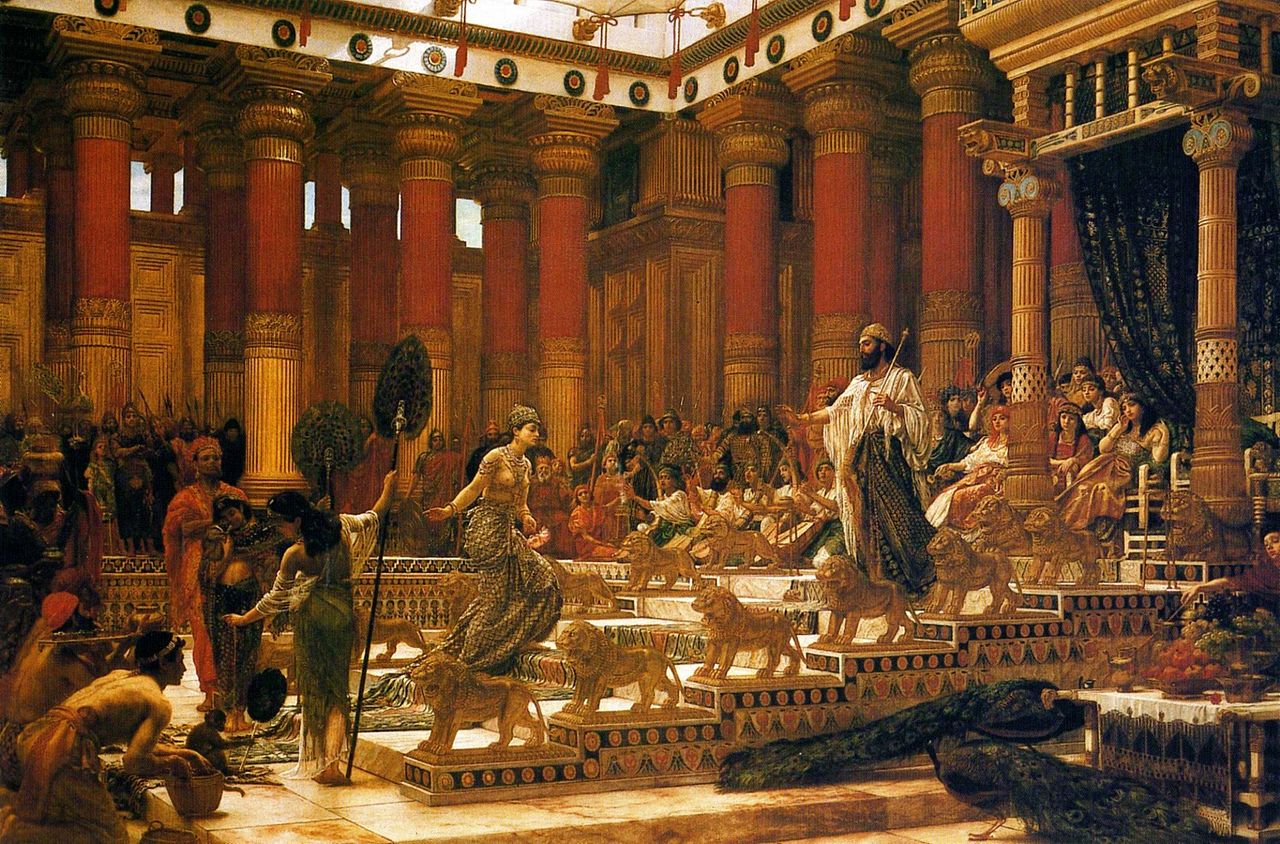
The construction of the Temple in Jerusalem is the most enduring element of Solomon's religious and cultural legacy. The Temple became the central sanctuary for Israelite worship in later tradition. Descriptions of the Temple’s furnishings, priests and ritual functions in the biblical account form the basis for much subsequent theology and liturgy.
Writings and reputation for wisdom
Several books are traditionally ascribed to Solomon, though modern scholarship often treats these attributions as part of a later tradition. The Song of Songs (Song of Songs), Ecclesiastes (Ecclesiastes) and large portions of Proverbs (Proverbs) are associated with him. Stories such as the famous judgment in which he decides the true mother of an infant illustrate his image as an ideal judge and sage. His reputation for wisdom influenced Jewish, Christian and Islamic thought for centuries.
Family, religion and succession
Scriptural accounts emphasize Solomon’s numerous marriages and diplomatic unions with foreign wives. These marriages are presented as contributing to the introduction of non-Yahwistic practices and the worship of foreign idols, a theme used in the narrative to explain religious decline. According to the biblical story, religious and political tensions increased toward the end of his life, and after his death the united monarchy split into separate northern and southern polities, a turning point in the history of ancient Israel and in later Jewish memory.
Portrayal in the Qur'an and other traditions
In Islamic tradition Solomon (often called Sulaiman) appears as a prophet-king endowed with unique powers, including control over certain spirits and animals and command of the wind; these elements reflect distinct theological emphases and popular folklore. Christian and Jewish commentaries preserved and adapted many of the stories about his wisdom, his temple and his writings, resulting in a vast afterlife in literature, art and devotional practice.
Archaeology and scholarly debate
Archaeologists and historians debate the archaeological footprint of a united monarchy and the scale of Solomon's building activities. Some scholars argue for evidence of centralized administration and monumental building in the 10th century BCE, while others propose more modest interpretations. The historicity of particular biblical details is evaluated using textual criticism, comparative Near Eastern material and excavation results.
Legacy
Solomon's figure has had a long cultural afterlife. He is a model monarch in religious teaching, a source of wisdom literature in the Old Testament, and a symbol in folklore, esoteric traditions and popular culture. Tales of his judgments, his temple and his proverbs have been transmitted and adapted across many languages and faith communities, continuing to inform ideas about power, piety and wisdom.
Notable points
- The title "king" ties Solomon to the institution of monarchy in ancient Israel.
- Traditional attributions include Ecclesiastes, Proverbs and the Song of Songs.
- His construction of the First Temple remains central in religious memory and scholarly discussion.
- Mentions in the Bible and the Qur'an underline his cross-religious significance.
Related articles
Author
AlegsaOnline.com Solomon, King of Israel: life, writings, and legacy Leandro Alegsa
URL: https://en.alegsaonline.com/art/91706