
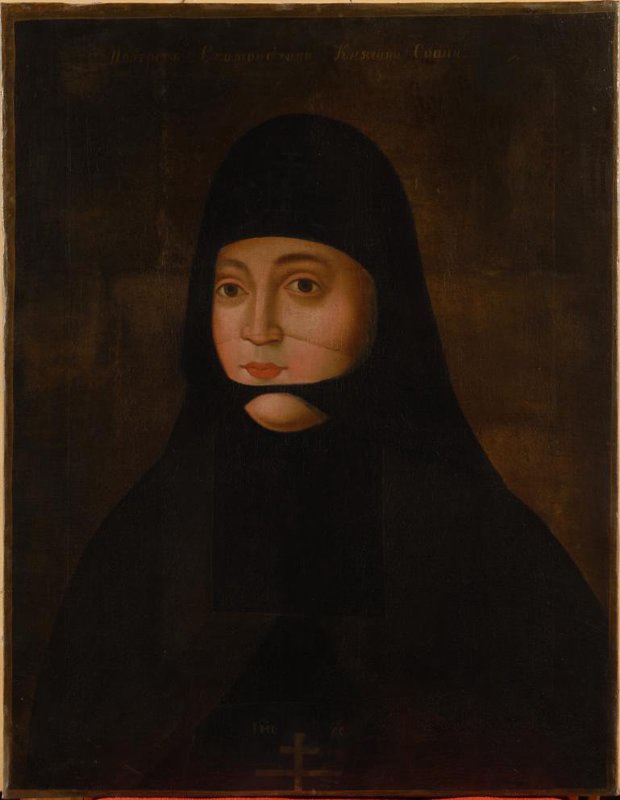
Solomonia Saburova (Saint Sofia of Suzdal)
First wife of Grand Prince Vasili III of Muscovy, later forced into monastic life and canonized by the Russian Orthodox Church as Saint Sofia of Suzdal.
Solomonia Yuryevna Saburova (c. 1490 – 18 December 1542) was a noblewoman of Muscovy best known as the first wife of Grand Prince Vasili III. Her life is remembered both for its political implications in the dynastic struggles of early 16th‑century Russia and for her later veneration by the Russian Orthodox Church as Saint Sofia of Suzdal.
Image gallery
2 Images
Life and marriage
Born into the boyar Saburov family, Solomonia entered the Muscovite court as the consort of Vasili III. Marriages among the high nobility at that time were closely bound to alliances and succession concerns. When the grand prince came under mounting pressure to produce an heir, the couple’s lack of surviving children became a decisive public matter that culminated in Solomonia’s removal from court life.
Following formal proceedings that contemporary sources describe as motivated by the need for a dynastic successor, Solomonia was compelled to take the veil and enter a convent. Vasili III remarried; his second wife later became the mother of Ivan IV (commonly known as Ivan the Terrible), a development that confirmed the political rationale offered at the time for Solomonia’s fate.
Monastic life, death and veneration
After retiring to religious life, Solomonia lived in seclusion in the Suzdal convent where she was known in monastic records as Sofia of Suzdal. She died on 18 December 1542. In later centuries the Russian Orthodox Church recognized her sanctity and she was canonized, venerated as an example of patient suffering and devotion.
- Approximate birth: c. 1490
- Spouse: Vasili III, Grand Prince of Moscow
- Died: 18 December 1542
- Canonized as: Saint Sofia of Suzdal by the Russian Orthodox Church
Historians debate the balance between genuine religious vocation and political coercion in Solomonia’s story. Her life remains an emblematic case of how personal lives intersected with succession politics in Muscovy. She also appears in later cultural and religious histories as a symbol of pious endurance and as a figure invoked in discussions of monasticism and women's roles in the Russian Orthodox tradition.
Related articles
Author
AlegsaOnline.com Solomonia Saburova (Saint Sofia of Suzdal) Leandro Alegsa
URL: https://en.alegsaonline.com/art/91707