
Solomon's Temple
An encyclopedic overview of Solomon's Temple (the First Temple): its purpose, layout, historical tradition, religious role, destruction, and the archaeological and scholarly issues surrounding it.
The structure known as Solomon's Temple, often called the First Temple, is described in the Hebrew Bible as a monumental sanctuary built in Jerusalem for the worship of God. According to biblical tradition it was erected by King Solomon as the national cult center for the Israelites, occupying a site adjacent to the royal palace and the threshing floor purchased by King David. The biblical account frames the building as both a sacred dwelling place for the divine name and as a symbol of monarchy and national identity.
Image gallery
10 Images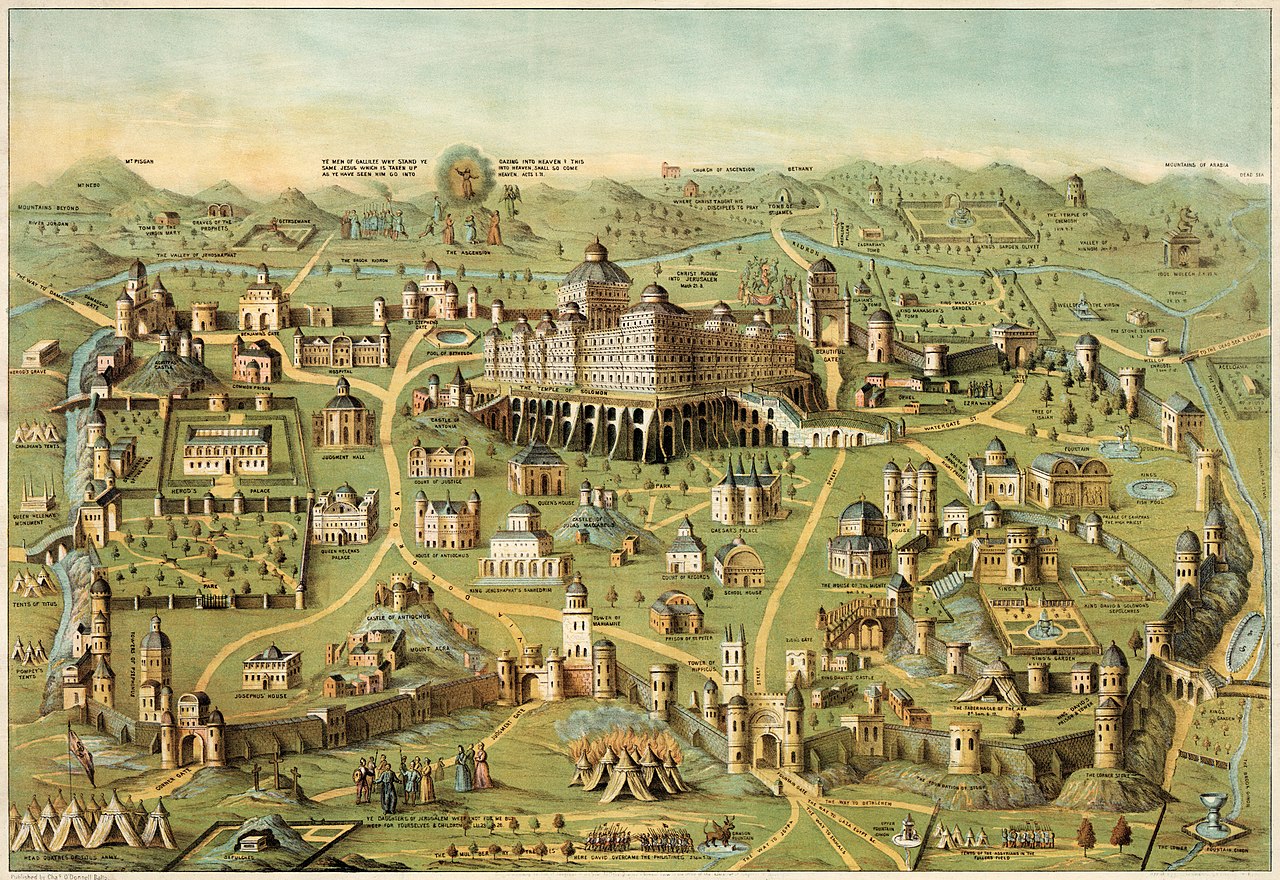



Architecture and principal spaces
Descriptions in the biblical narrative attach considerable attention to materials, measurements and ritual furnishings. The temple is conventionally divided into three zones: the outer courtyard frequented by worshipers; the inner chamber or Holy Place, where lamps and altars stood; and the innermost sanctuary, the Most Holy Place (Holy of Holies), which housed the ark in earlier traditions. Other notable features included an inner and outer porch, side rooms for storage and priests' activities, and extensive use of cedar, gold overlay and stonework.
Construction, dating and literary sources
Traditional chronology places the construction in the tenth century BCE under Solomon's rule. The primary textual record is the biblical description, which gives specific proportions and ornate details. Archaeological confirmation of the temple itself is limited: the structure stood on the site later occupied by the Second Temple complex and the present Temple Mount, which complicates excavation and preservation of direct remains.
Religious role and practices
As the focal point of sacrificial worship and priestly rites, the temple regulated cult practice and festival life. The priesthood performed offerings, incense rituals and maintenance of sacred objects. The building functioned as a visible sign of covenantal relationship in Israelite religion: the deity's presence was said to dwell in the Most Holy Place, and the temple was central to theological narratives about kingship, law and communal identity.
Destruction and legacy
According to biblical accounts, the First Temple was destroyed during the Babylonian campaign in the late seventh or early sixth century BCE, an event linked to the exile of many of Jerusalem's inhabitants. Its destruction and subsequent exile shaped later religious memory and institutions, leading to the construction of a Second Temple and a long legacy in Jewish, Christian and Islamic traditions. The site itself remained politically and religiously significant through successive eras.
Archaeology, interpretation and notable facts
Modern scholarship treats the biblical descriptions as a mixture of historical recollection, theological shaping and later editorial work. Excavations in the broader region have uncovered material culture of the Iron Age compatible with a centralized polity, but direct archaeological traces clearly attributable to Solomon's Temple are lacking or contested. The temple's image continues to be a subject of study in biblical studies, Near Eastern archaeology and comparative religion. For further reading and source texts, see the biblical books and commentaries referenced in the Hebrew Bible accounts and specialized studies available through academic and cultural resources (tabernacle and earlier cult structures provide useful parallels). Additional context about the historical figures and events connected to the temple appears in works on the monarchy and kingship period (David) and on the community described as Israelites. For theological perspectives on the temple's role as the dwelling of God, consult liturgical and historical studies that compare the First Temple tradition with later temple developments (biblical sources and archaeological syntheses).
Questions and answers
Q: What was the first temple built by the Israelites?
A: According to the Hebrew Bible, Solomon’s Temple was the first temple that the Israelites built for God. It was also called the First Temple and was first built by Solomon.
Q: Where did it stand?
A: The temple stood next to King Solomon's palace and served as both God's royal palace and Israel's center of worship.
Q: What did God say about it?
A: The Lord said to Solomon, “I have consecrated (made special or clean) this temple…by putting my name there forever. My eyes and my heart will always be there” (1 Kings 9:3).
Q: What does it symbolize?
A: The temple is a symbol of holiness and royalty, reminding the Israelites that God is the special head of Israel.
Q: How was it patterned after other temples at that time?
A: The First Temple was patterned after other temples at that time, including the tabernacle, which were divided into three important areas -the Most Holy Place, Holy Place and outer courtyard.
Q: Where in Jerusalem did they build it?
A: They built it on Araunah's threshing floor in Jerusalem where King David had bought land to build an altar to God.
Tags
Related articles
Author
AlegsaOnline.com Solomon's Temple Leandro Alegsa
URL: https://en.alegsaonline.com/art/91710
Sources
- books.google.com : Temples, tithes, and taxes: the temple and the economic life of ancient Israel
- books.google.com : Miraculous journey: a complete history of the Jewish people from creation to the present
- books.google.com : Encyclopedia of architectural and engineering feats
- jewishencyclopedia.com : "JewishEncyclopedia.com - TEMPLE OF SOLOMON"