
Siquijor: small Philippine island province of beaches, waterfalls and folk traditions
Siquijor is a small island province in the central Philippines, known for clear beaches, waterfalls, historic churches and a strong tradition of folk healing. Overview, geography, history, attractions and administration.
Overview
Siquijor is an island island and province of the Philippines located in the central Visayas. It is one of the smaller provinces in the country, with a modest population (around 90,000) and a reputation that blends natural scenery with living local traditions. The island’s landscape and cultural life attract both domestic and international visitors seeking beaches, forested hills and village festivals.
Image gallery
10 Images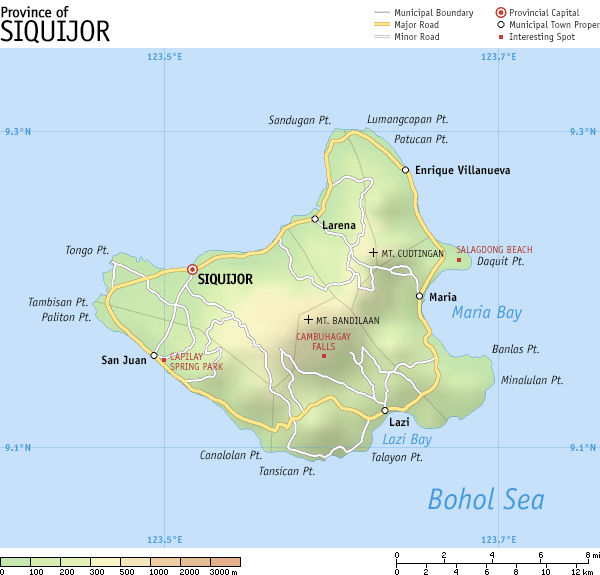


Geography and access
Siquijor lies in the Visayas region. Nearby islands and provinces include Negros Oriental to the west (Negros Oriental), Cebu to the north (Cebu) and the larger island of Mindanao further to the south (Mindanao). Ferries and small vessels connect Siquijor with neighboring ports, making the island accessible while retaining a quieter, less urban character than larger tourism centers.
History and culture
The island has a layered history of indigenous settlement, Spanish colonial influence and continued local traditions. Colonial-era churches and convents stand alongside barangay chapels and ancestral homes. Siquijor is widely known in the Philippines for its folk healing practices and local healers—traditions that are part medical, part ritual and which have persisted into the present as an element of cultural identity rather than formal medicine.
Attractions and economy
Tourism is an important part of the local economy, supported by a mix of natural and historical attractions. Visitors often explore waterfalls (see waterfalls), coastal coves and coral-fringed beaches (see beaches). Small conservation projects and private gardens showcase butterflies (see butterfly gardens) and native plants. The island also maintains several notable religious structures, including one of the oldest convents in the region (one of the oldest existing convents in Asia), which draws interest from those studying colonial architecture and local history.
Administration and localities
Siquijor is divided into six municipalities (six municipalities): Larena, Enrique Villanueva, Maria, Lazi, San Juan and the provincial capital, also called Siquijor (capital). Though small in area and population compared with many other provinces—it is commonly listed among the smallest island provinces of the Philippines—the island’s communities maintain distinct local festivals, markets and coastal livelihoods such as fishing and small-scale agriculture.
Notable facts and visitor tips
- Natural highlights include forested interior hills and several accessible cascades that are popular for short hikes and swimming.
- Cultural visits often combine historic churches, traditional healing demonstrations and local craft markets; respectful behavior and asking permission before photography is recommended.
- Transport around the island is by tricycle, motorcycle and jeepney; plan additional time for inter-municipal travel and ferry connections.
Summary: Siquijor is a compact island province that offers a mix of natural scenery, historical architecture and living folk traditions. It remains a destination for travelers who prefer quieter, culturally rich places and for those interested in the interplay of nature and community life on a small Philippine island.
Related articles
Author
AlegsaOnline.com Siquijor: small Philippine island province of beaches, waterfalls and folk traditions Leandro Alegsa
URL: https://en.alegsaonline.com/art/90734
Sources
- choosephilippines.com : "Lazi Convent: The Largest & Oldest in Siquijor"