
Shiprock: Volcanic Neck and Navajo Landmark in Northwestern New Mexico
Shiprock is an eroded volcanic neck in northwestern New Mexico, an Oligocene igneous remnant sacred to the Navajo Nation and a striking subject of geological study and cultural significance.
Overview
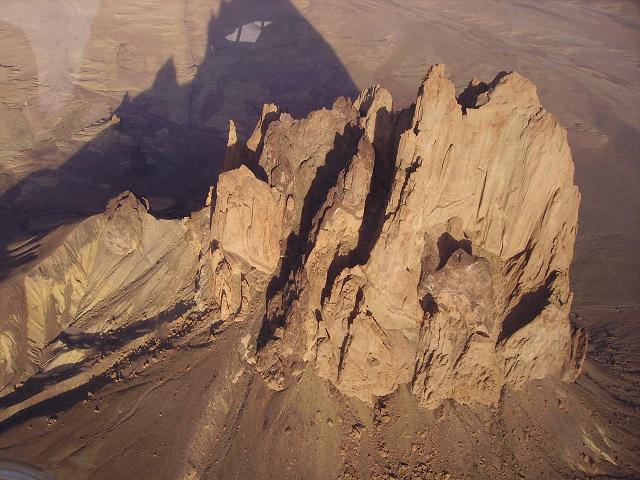
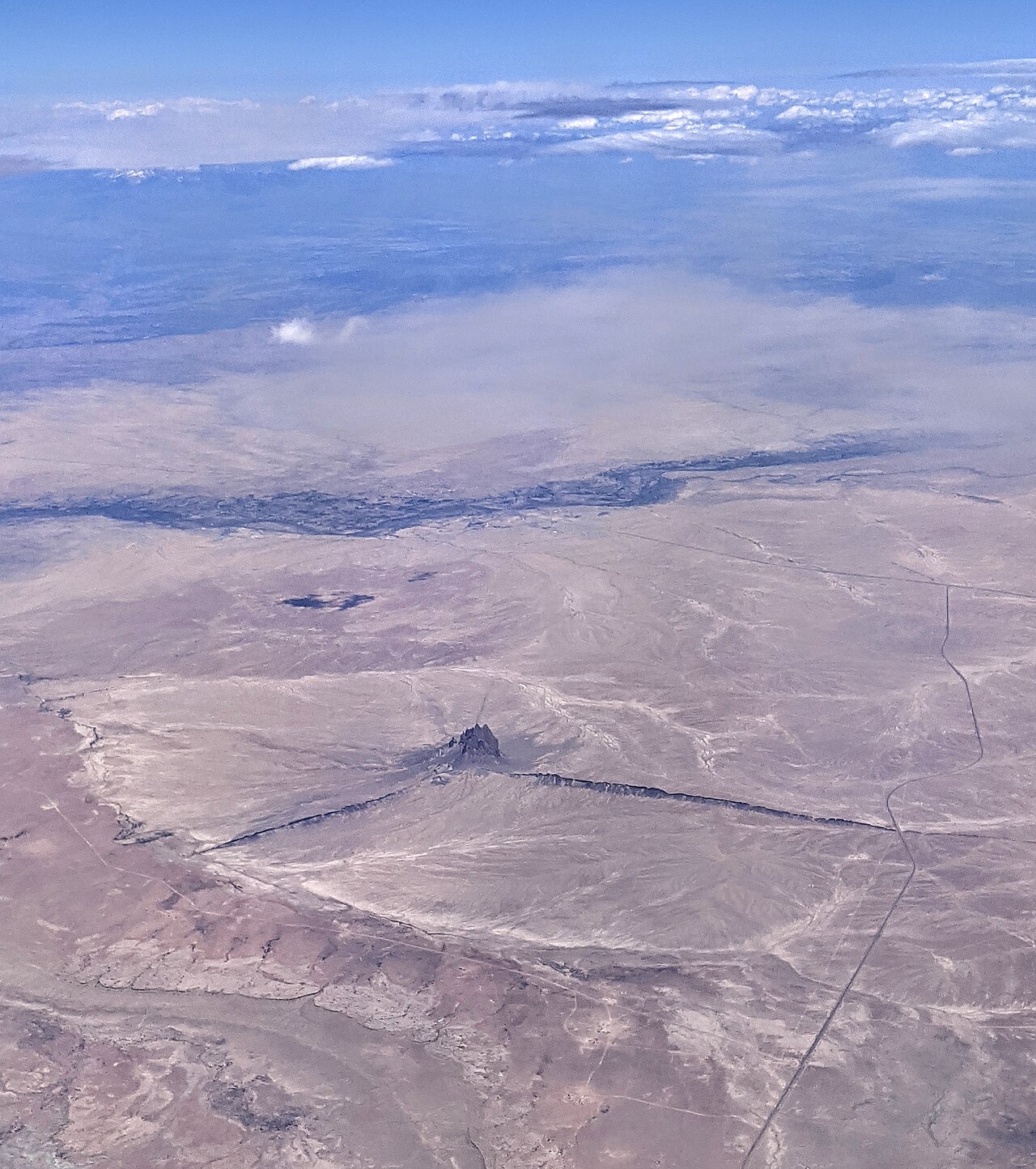
Shiprock is a dramatic, isolated rock formation rising from the high desert of northwestern New Mexico. It is the exposed core of an extinct volcano — commonly described as a volcanic neck or plug — and dominates the landscape near the town that shares its name. The monolithic silhouette of jagged spires and radiating dikes makes Shiprock a conspicuous landmark visible for many miles and a frequent subject of photographs, maps and geological descriptions.
Image gallery
8 Images




Geology and formation
The formation is composed largely of fractured volcanic breccia together with dark, fine-grained igneous intrusions that cut outward from the central throat as dikes. These dikes are often described as black or dark brown in the field and contrast sharply with the surrounding sediments. Shiprock represents the erosional remnant of a volcanic conduit: molten rock solidified within the volcano's plumbing system, and over millions of years the softer surrounding strata were worn away, leaving the harder intrusive rocks exposed.
Studies based on radiometric dating indicate that the igneous rocks that form Shiprock cooled and crystallized during the Oligocene, roughly on the order of tens of millions of years ago. The core rock likely originally formed deep beneath the surface — geologists estimate the material was emplaced many hundreds of meters below ground and later revealed by prolonged erosion.
Characteristics
- Prominent central tower and several subsidiary pinnacles connected by fractured breccia and intrusive dikes.
- Dark igneous composition with radial dikes that extend into the surrounding plain.
- Part of the wider Navajo Volcanic Field, which includes other volcanic necks and plugs such as El Capitan.
Cultural significance and name
Shiprock lies within the boundaries of the Navajo Nation and holds deep spiritual and cultural importance for Navajo people. It is known in the Navajo language by traditional names that refer to its distinctive profile and place in stories and ceremonies. Because of this sacred status, Shiprock is more than a physical landmark: it is entwined with local identity, custom and religious practice, and is treated with respect by residents and visitors alike (Navajo Nation).
Access, study and protection
Shiprock attracts interest from geologists, photographers and travelers, yet access is regulated to protect both the natural feature and cultural values. Scientific study of the formation has contributed to broader understanding of intrusive volcanic structures and regional volcanism; the outcrop's dikes and breccia are often cited in discussions of volcanic plumbing and erosional processes. Visitors are advised to follow local regulations and guidance from Navajo authorities when planning any travel or research in the area (land management).
Notable facts
- Shiprock is a classic example of a volcanic neck exposed by differential erosion and is frequently used to illustrate the concept in geology texts.
- It forms part of the Navajo Volcanic Field, a region of scattered intrusive and extrusive igneous features across the Four Corners area.
- Because of its prominence and cultural importance, Shiprock remains a protected and closely observed landmark in the American Southwest (New Mexico, erosional context, and age studies).
Related articles
Author
AlegsaOnline.com Shiprock: Volcanic Neck and Navajo Landmark in Northwestern New Mexico Leandro Alegsa
URL: https://en.alegsaonline.com/art/89858
Sources
- worldcat.org : 1524-4156