
Siderian (Palaeoproterozoic): Early oxygenation and banded iron formations
The Siderian (2.50–2.30 billion years ago) is the earliest Palaeoproterozoic period, notable for widespread banded iron formation deposition and the rise of atmospheric oxygen during the Great Oxidation Event.
Overview
The Siderian is the first formally recognized period of the Palaeoproterozoic Era, lasting from about 2.50 to 2.30 billion years ago. Its name derives from the Greek root "sider-" (iron), reflecting one of the period's most conspicuous features: abundant deposition of banded iron formations (BIFs). The Siderian records a major transition in Earth's surface chemistry and atmosphere, when photosynthetic microorganisms began to deliver oxygen to the oceans and, increasingly, to the atmosphere.
Image gallery
5 Images


Key characteristics
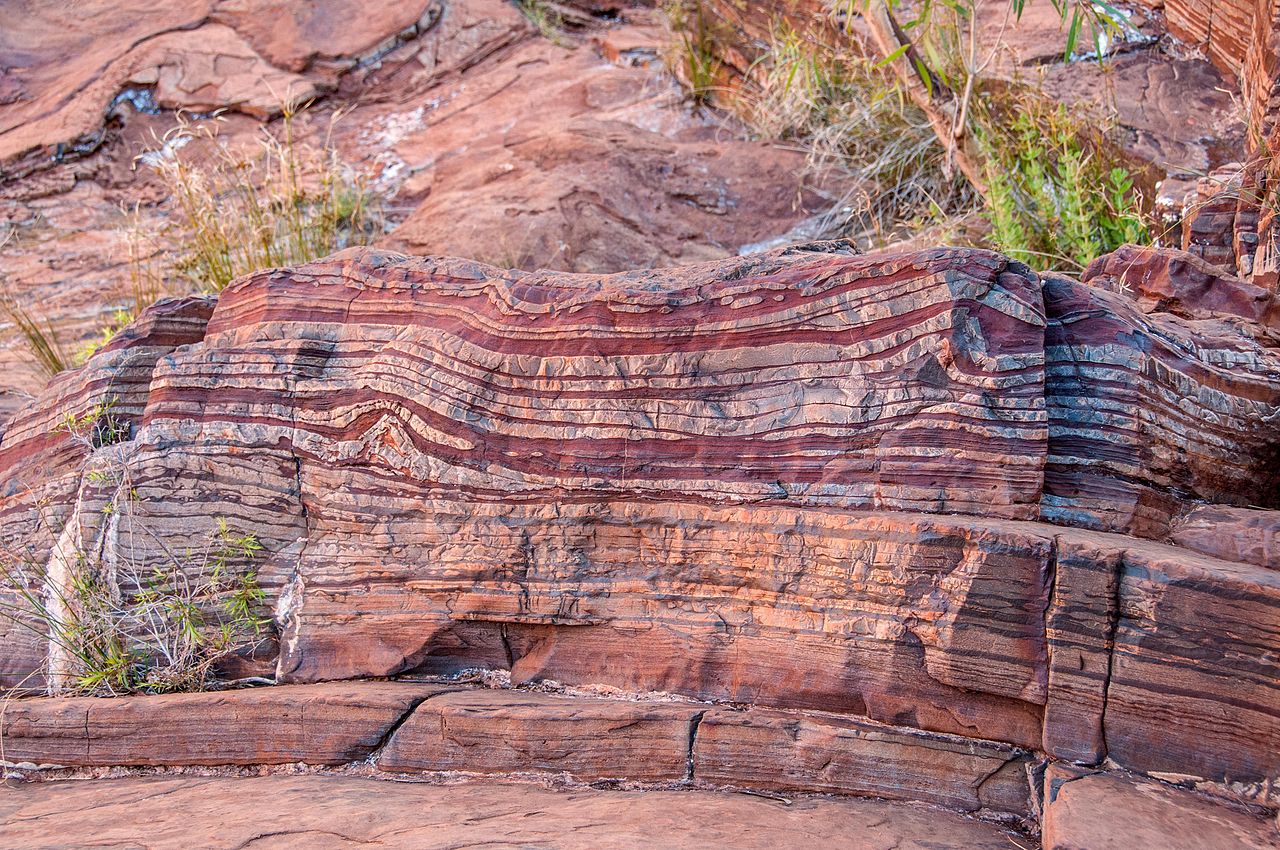
- Banded iron formations (BIFs): Extensive alternating layers of iron-rich minerals (including magnetite and hematite) and silica-rich chert accumulated on continental shelves and in deeper basins. These rocks are economically important as iron ore and as indicators of ancient ocean chemistry.
- Oxygenation: The appearance and proliferation of oxygen-producing photosynthetic microbes (commonly attributed to cyanobacteria) began to oxidize dissolved iron in the oceans. Iron oxides precipitated and formed BIFs, while free oxygen gradually accumulated in the atmosphere in what is often called the Great Oxidation Event.
- Redox change of surface environments: Prior to the Siderian, Earth's surface and oceans were largely anoxic. The oxidative processes of this period permanently changed weathering, sedimentation, and the availability of biologically important elements.
Chronology and stratigraphic context
The Siderian follows the Neoarchaean and precedes the Rhyacian within the Palaeoproterozoic. Its timing is constrained by multiple radiometric dating methods applied to volcanic ash layers and igneous intrusions found in sedimentary sequences. Correlative successions on several continents preserve Siderian-age BIFs, glacial deposits, and chemical sediments that record the changing atmosphere–ocean system.
Significance and consequences
The most consequential change associated with the Siderian is the stepwise rise of atmospheric oxygen. As oxygen combined with dissolved ferrous iron, massive amounts of iron were removed from seawater and locked into sediments. The decline of dissolved iron removed a major oxygen sink, allowing atmospheric oxygen levels to rise further. This shift had profound implications: many strictly anaerobic microbes likely declined, while new metabolic pathways that used oxygen became advantageous. The changing atmosphere also affected global climate and may have been linked to extensive glaciations that followed.
Related events and notable facts
- Huronian glaciation: A prolonged and possibly global glaciation occurred near the end of the Siderian (commonly placed around 2.4–2.3 billion years ago). The timing and drivers remain active topics of research; rising oxygen and altered greenhouse gas balances are among the suggested causes.
- Economic importance: Siderian-age BIFs form many of the planet's major iron deposits and have been mined for centuries.
- Transition marker: The Siderian marks the beginning of a more oxygenated Earth that set the stage for later ecological and geological developments during the Proterozoic.
Further reading and resources
- Geological period overview
- Formal stratigraphic definition
- Palaeoproterozoic context
- Radiometric dating methods
- Neoarchaean background
- Rhyacian period summary
- Banded iron formation studies
- Early photosynthetic microbes
- Oxygenation processes
- Iron chemistry in ancient oceans
- Iron oxide minerals
- Huronian glaciation research
The Siderian remains a focus of geological and geobiological research because it records a fundamental reshaping of Earth's surface environment. New field studies, geochemical analyses, and improved geochronology continue to refine our understanding of how and when the planet's atmosphere became hospitable to oxygen-dependent life.
Related articles
Author
AlegsaOnline.com Siderian (Palaeoproterozoic): Early oxygenation and banded iron formations Leandro Alegsa
URL: https://en.alegsaonline.com/art/90223
Sources
- jstor.org : jstor.org/stable/20209693
- pnas.org : pnas.org/content/102/32/11131.full.pdf html