
Second Severn Crossing (Prince of Wales Bridge)
Major motorway bridge spanning the River Severn between South Gloucestershire (England) and Monmouthshire (Wales); opened in 1996 to improve capacity and reliability on the M4.
Overview
The Second Severn Crossing, also known by its Welsh name Ail Groesfan Hafren, is a major road span that crosses the River Severn between South Gloucestershire in England and Monmouthshire in Wales. Commonly associated with the M4 motorway, it provides a high-capacity link into South Wales and complements the older Severn Bridge.
Image gallery
10 Images


Design and characteristics
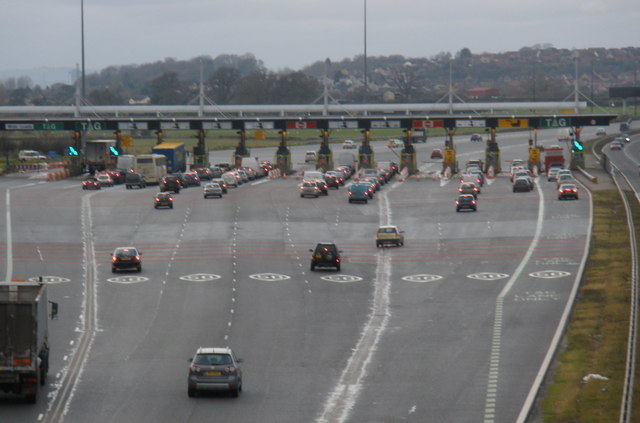
The crossing is a modern motorway bridge designed to carry six lanes of traffic. It makes use of long spans and a continuous deck to reduce the number of piers in the tidal estuary, and incorporates elements typical of late 20th-century bridge engineering such as cable-stayed supports and a box-girder deck. The route and geometry were chosen to provide a more direct alignment for the M4 and to offer improved resilience in severe weather.
- Function: motorway crossing for long-distance and freight traffic
- Lanes: six lanes dedicated to M4 traffic
- Location: spans the estuary between England and Wales
- Relation to older crossing: built to supplement the original Severn Bridge
History and development
Opened in 1996, the Second Severn Crossing was constructed to relieve congestion and to provide a route less prone to closure in high winds than the earlier 1966 bridge. After it opened, the original structure remained in use but was reclassified to serve local traffic and became known by a different motorway number. The newer crossing has been an important post-1990s addition to the regional road network and has at times been given a ceremonial name reflecting its national significance.
Uses and importance
As a trunk route, the crossing carries a mixture of passenger, commuter and heavy goods vehicles that connect England and Wales. It shortened travel times for many journeys to and from Cardiff and other parts of Wales, supported economic links between regions, and formed a strategic part of the M4 corridor. Its six-lane capacity reduced pressure on the older bridge and improved overall reliability for cross-estuary travel.
Notable facts and distinctions
Although both Severn crossings remain visible landmarks and continue to serve traffic, the Second Severn Crossing was intended as the primary motorway route. It has been recognized for its engineering approach to spanning a large tidal estuary and for helping to modernize access to the Welsh south coast. For further technical or historical details consult regional transport sources and engineering references linked below.
Related topics and references: bridge engineering, regional transport planning (M4 motorway), and cross-border infrastructure supporting South Wales.
Related articles
Author
AlegsaOnline.com Second Severn Crossing (Prince of Wales Bridge) Leandro Alegsa
URL: https://en.alegsaonline.com/art/88441