
Semmering Railway
Historic Austrian mountain railway (Gloggnitz–Mürzzuschlag), built 1848–1854 as the first standard‑gauge mountain line; noted for pioneering engineering and a UNESCO World Heritage listing.
The Semmering Railway is a historically important mountain railway in Austria that connects Gloggnitz and Mürzzuschlag by crossing the Semmering Pass. Constructed between 1848 and 1854 under the direction of the engineer Carl von Ghega, it is widely regarded as the first true standard‑gauge mountain railway in Europe. The line remains active today as part of the country's Southern Railway network and is valued both for its continued transport role and for its architectural and engineering heritage.
Image gallery
10 Images


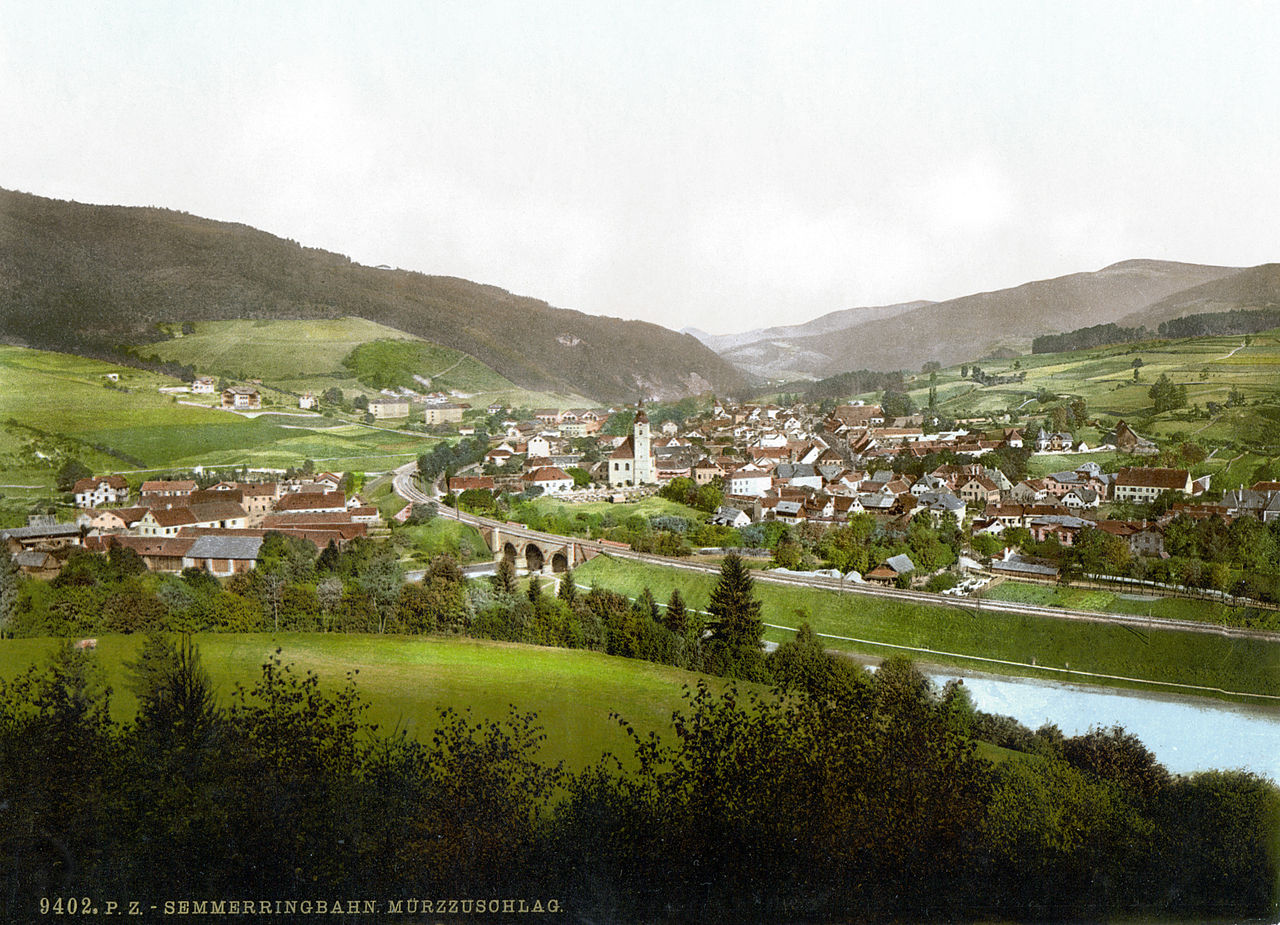


Route and distinguishing features
The Semmering route negotiates steep terrain and significant altitude change using a compact arrangement of tunnels, viaducts and stone bridges. Its alignment includes numerous sharp curves and complex gradients, which were especially challenging for mid‑19th century construction techniques. Notable structural counts along the route include 14 tunnels, 16 major viaducts and over 100 curved stone bridges, together with several small iron spans.
- Standard gauge construction and operation: standard gauge
- Major tunnels and galleries: see the list of tunnels
- Prominent masonry and ironwork such as listed viaducts
History and engineering
The project was led by Carl von Ghega, who combined careful surveying with innovative construction methods to solve problems of access, drainage and rock removal. During the six years of construction roughly 20,000 workers were employed on earthworks, masonry, timberwork and early iron bridge fabrication. The combination of tight curves, high masonry viaducts and long tunnels represented an early example of large‑scale civil engineering in mountainous terrain and influenced later mountain railway projects across Europe.
Because the line proved that standard gauge railways could operate reliably in difficult upland landscapes, it became an important reference for railway planners. The Semmering route continues to carry regional and intercity trains as well as tourist services attracted by the scenery and historic structures.
Significance and preservation
In recognition of its outstanding technical and cultural value, the Semmering Railway was inscribed on the UNESCO World Heritage List in 1998. The designation highlights the railway's pioneering role in railway technology, its high concentration of high‑quality 19th‑century masonry and ironwork, and its contribution to the development of long‑distance rail travel in Europe. The line's approximate location is given by its coordinates: 47°38′35″N 15°49′52″E.
Today, the route is maintained for operational safety while conserving original structures where possible. It remains a living example of early railway engineering, balancing transport utility with cultural heritage and attracting researchers, rail enthusiasts and visitors interested in industrial history and mountain landscapes.
For route maps, technical summaries and visitor information, consult regional railway resources and conservation bodies that document the Semmering Railway's structures and ongoing preservation work (regional rail authorities, technical summaries, tunnel inventories, viaduct details, location data).
Related articles
Author
AlegsaOnline.com Semmering Railway Leandro Alegsa
URL: https://en.alegsaonline.com/art/88770