
Schnitzel: history, preparation, regional varieties and servings
Schnitzel is a thin, breaded and fried meat cutlet from Central Europe, best known as Wiener Schnitzel. This article covers its preparation, traditional meats, regional variations, accompaniments and legal protections.
Overview
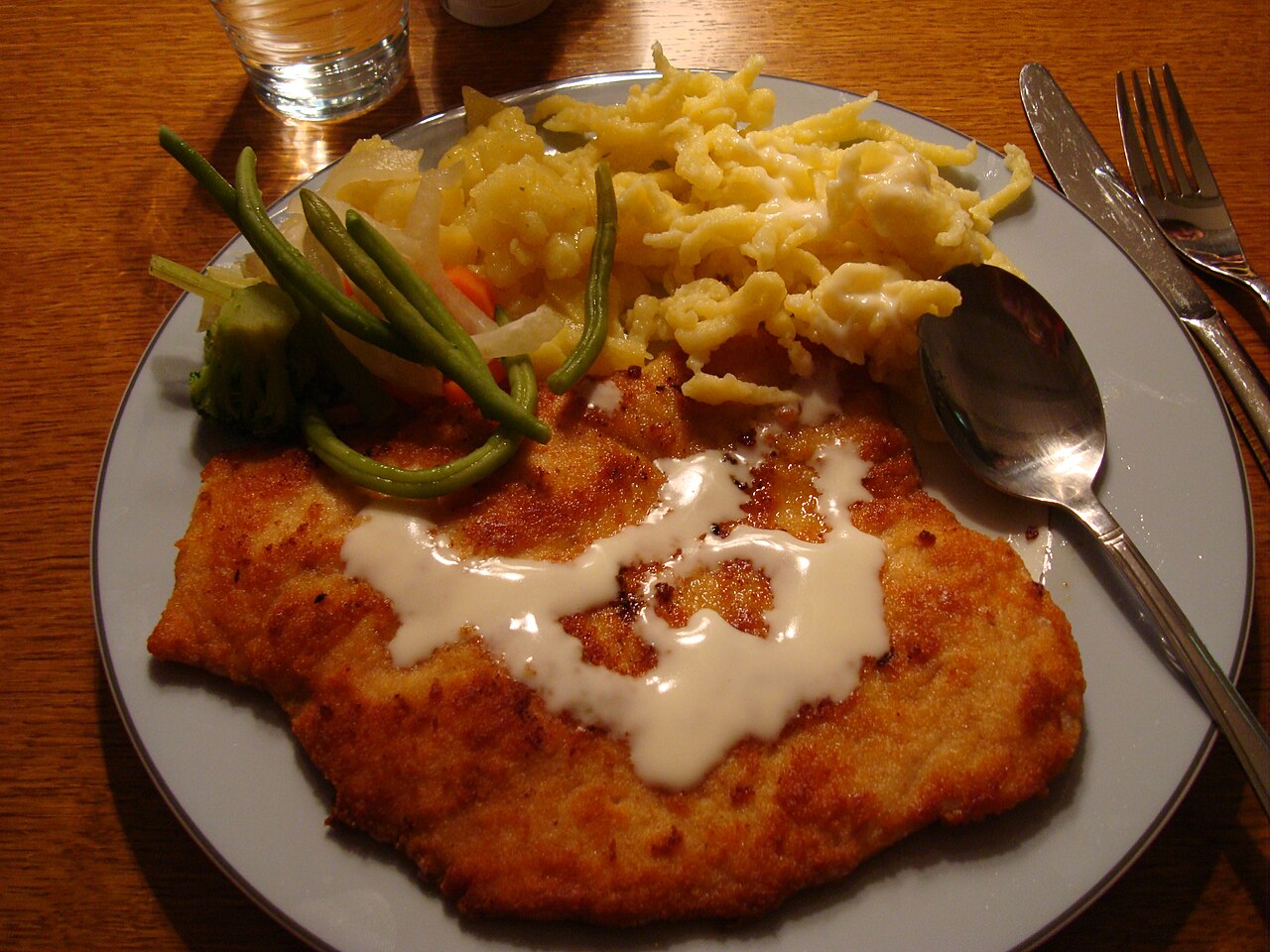
Schnitzel refers to a thin slice of boneless meat that has been pounded flat, coated in breadcrumbs and fried until golden. It is a hallmark of Austrian and German cookery and has spread across Europe and the world in many forms. The most internationally recognised version is the Wiener Schnitzel, which traditionally uses veal and is associated with Vienna. Schnitzel may also be made from pork, chicken, turkey or beef depending on taste and local custom; these alternatives often carry different names.
Image gallery
10 Images



Preparation and key characteristics
The basic technique involves tenderising the meat with a mallet or rolling pin to an even thinness, then seasoning, dredging in flour, dipping in beaten egg, and coating with dry breadcrumbs. It is shallow-fried in clarified butter, lard, or oil until a crisp, pale-golden crust forms. The crust should be light and not overly thick; proper frying temperature prevents excess oil absorption. A simple garnish of lemon is customary for the classic Wiener presentation.
History and origins
The exact origin of schnitzel as a concept—thin, breaded, fried cutlets—is a matter of culinary history with multiple influences. Central European kitchens adopted and adapted various breaded cutlet techniques over centuries. Schnitzel is often discussed alongside similar Italian and other European dishes such as cotoletta alla Milanese, but national culinary traditions produced distinct styles. For further reading on regional culinary history see related sources.
Variations and regional names
- Wiener Schnitzel: Traditionally veal; served with lemon and potatoes or a potato salad.
- Wiener Schnitzel vom Schwein / Schnitzel Wiener Art: Pork alternatives are common; in German-speaking countries the label varies to indicate pork rather than veal.
- Holsteiner Schnitzel: Topped with a fried egg and often capers or anchovies.
- Jägerschnitzel: Served with a mushroom-based sauce ("hunter's style").
- Other meats: Chicken and turkey schnitzels are popular in many households and restaurants.
Some traditional names and sauces have become controversial and have been retitled or described differently in modern menus; regional practice varies. For legal and naming details in German-speaking countries consult relevant food labeling rules.
Serving, accompaniments and cultural notes
Schnitzel is commonly served with simple sides that complement the crisp crust: potato salad, boiled potatoes with parsley and butter, mashed potatoes, or fries. In Austria, the classic pairing is a slice of lemon and either a warm potato side or a cold potato salad. Regional habits can be surprising: in Finland, pork schnitzel is often eaten with watermelon; in New Zealand, beef schnitzel is frequently paired with a large serving of mashed potatoes and boiled vegetables. These customs reflect local tastes and the versatility of the dish. For examples of regional serving traditions see Austrian accompaniments and pork-based variants.
Notable facts and distinctions
In Austria and Germany the name "Wiener Schnitzel" carries a specific meaning: it denotes a veal cutlet. Where pork is used, menus or labels indicate the difference, for instance with the phrase Wiener Schnitzel vom Schwein or the German descriptor Schnitzel Wiener Art. The protective usage affirms culinary tradition and helps consumers distinguish between meat types. Contemporary chefs continue to adapt schnitzel for modern plates, adding sauces, different crumbs, or gluten-free coatings. For more on ingredient variations see fats and side dishes, veal traditions and broader cultural context at culinary histories and labeling guides.
Related articles
Author
AlegsaOnline.com Schnitzel: history, preparation, regional varieties and servings Leandro Alegsa
URL: https://en.alegsaonline.com/art/87923
Sources
- practicallyedible.com : Wiener Schnitzel