
Olive oil: production, types, uses, and health aspects
Olive oil is an edible oil from pressed olives. This article explains how it is made, the main quality grades, its composition, culinary and nonculinary uses, history, and storage and labeling notes.
Olive oil is a common vegetable oil obtained from the fruit of the olive tree. It is produced by extracting the liquid fat from the fruits—the olives—either by mechanical pressing or by continuous centrifugation that separates the oil from water and solids. Producers sometimes describe the first, cold extraction as collecting the juice of the olive, emphasizing that no additional solvents or high heat are used.
Image gallery
10 Images


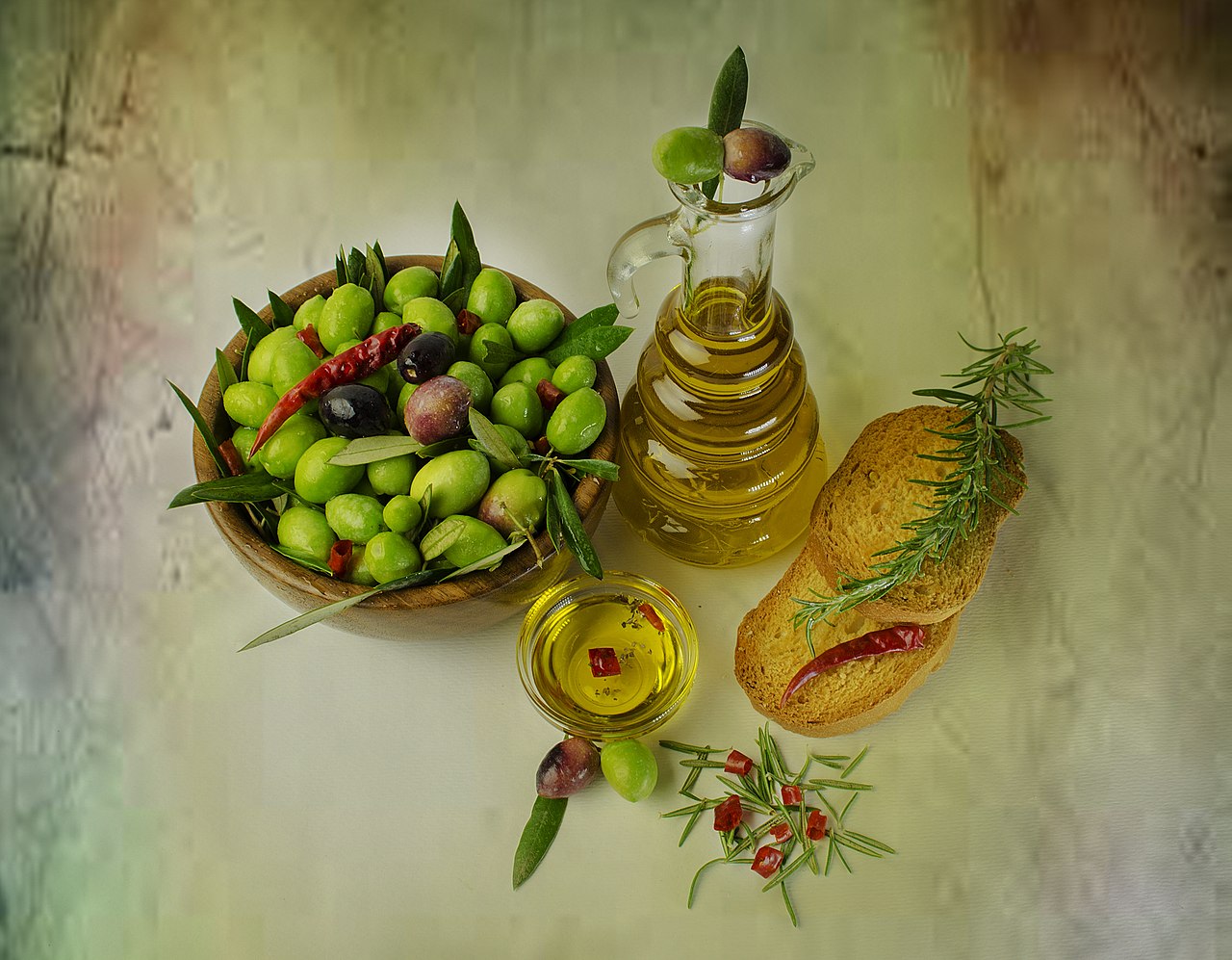


Types and quality grades
Olive oil is sold in several quality grades based on how it was extracted and on measurable chemical and sensory properties. The highest-quality category, Extra Virgin, is obtained solely by mechanical means and must meet strict chemical limits and taste criteria: it has low free acidity and is free of sensory defects. More processed products include virgin, refined, and pomace oils; refining commonly employs heat and chemical treatments to neutralize strong flavors and remove impurities. The label terminology can be confusing—terms such as “pure” or “light” refer to flavor intensity or refinement rather than calorie content.
- Extra Virgin: cold-extracted, low acidity, positive sensory attributes.
- Virgin: mechanically extracted but with slightly higher acidity or minor defects.
- Refined: treated to remove off-flavors; often blended with virgin oil for cooking oils.
- Pomace: made from olive-residue using solvents and refining.
Composition and sensory characteristics
Olive oil is rich in monounsaturated fats, chiefly oleic acid, which comprises the majority of its fatty acid profile. It also contains smaller amounts of polyunsaturated and saturated fats, fat-soluble vitamins (notably vitamin E), and a range of phenolic compounds and antioxidants that contribute to stability and flavour. Bitterness and a peppery or pungent finish are often regarded as positive sensory markers tied to polyphenol content rather than defects; acidity figures on labels refer to free fatty acids and not to taste.
Uses and cultural importance
Olive oil has broad culinary and nonculinary uses. In cooking it is prized for dressings, sautés and as a finishing ingredient that adds aroma and mouthfeel. Outside the kitchen it appears in cosmetics, has roles in traditional medicine practices, and historically served as a fuel for oil lamps. Its central place in Mediterranean cooking and culture has led to widespread recognition; observational studies link diets rich in olive oil to lower rates of cardiovascular disease, making it a preferred fat in many dietary recommendations.
Practical notes and notable facts
When buying olive oil, consider harvest or best-by dates, storage in dark bottles, and origin information; oils are best kept cool and away from light to slow oxidation. Tasting and certification panels help identify genuine extra virgin products, while adulteration and mislabeling remain challenges in global markets. Olive oil's moderate to high smoke point makes many grades suitable for frying and everyday cooking, though delicate extra virgin oil is often used raw or added near the end of cooking to preserve flavor.
For further reading on production methods, chemical standards and culinary applications see specialized resources and testing organizations: vegetable oil overview, extraction and pressing, olive fruit biology, olive tree cultivation, olive varieties, cosmetic uses, traditional uses, fuel history, lamp fuel, fatty acid composition.
Related articles
Author
AlegsaOnline.com Olive oil: production, types, uses, and health aspects Leandro Alegsa
URL: https://en.alegsaonline.com/art/72389
Sources
- doi.org : 10.1109/JSEN.2014.2321323
- r0.unctad.org : United Nations Conference on Trade and Development.