
Adamite — zinc arsenate mineral
Adamite is a zinc arsenate hydroxide mineral (Zn2(AsO4)(OH)) known for yellow to green crystalline colors, brittle tenacity, occurrence in oxidized arsenic-rich deposits, and popularity with collectors.
Overview
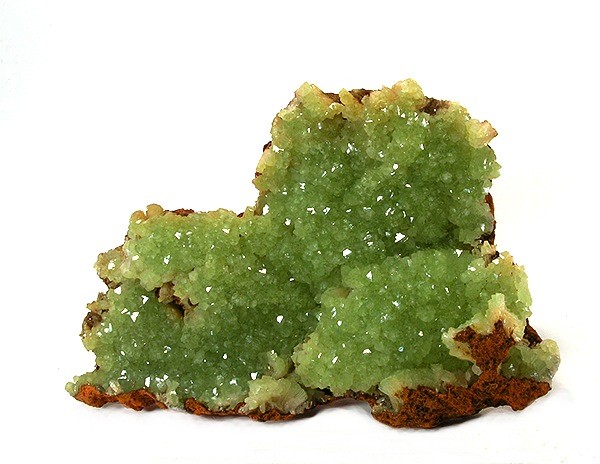
Adamite is a secondary zinc arsenate hydroxide mineral that forms in the oxidized zones of arsenic-bearing zinc deposits. Its chemical composition is commonly written as Zn2(AsO4)(OH). Adamite is prized for its bright, often translucent crystals and range of hues, which include yellow, green, purple and pink. It is non-radioactive and relatively soft, so it must be handled with some care.
Classification and brief data about adamite are useful to identify it in hand samples and collections.
Image gallery
3 Images

Physical characteristics
Adamite typically crystallizes in small prismatic or botryoidal clusters and may produce well-formed crystal faces that reflect light attractively. Its tenacity is brittle and the mineral can be scratched by a copper penny, indicating a low hardness. Commonly observed colors include bright yellow to yellow-green, but manganese, cobalt or other substitutions can yield purple or pink varieties. Adamite is not radioactive.
Collectors and mineralogists often note its vitreous to subadamantine luster and its tendency to form on matrix alongside other oxide and arsenate minerals. For an introduction to its crystal habits see crystal descriptions.
Occurrence and history
The mineral was named for the French mineralogist Gilbert-Joseph Adam (1795–1881), who studied and described it. Adamite occurs in the oxidized portions of ore deposits where arsenic and zinc are present. Notable localities include dry, oxidized regions such as parts of the Atacama Desert in Chile and other classic mining districts. Regional guides and specimen catalogs often list specific localities; see references at Chilean localities and historical notes.
Uses, collecting and care
- Gem and jewelry use is limited because adamite is brittle and soft; it is mainly a collector's mineral.
- Specimens are valued for color, crystal form and rarity; fluorescent varieties exist and are exhibited by some collectors.
- Because it contains arsenic, specimens should be handled with reasonable care and stored away from children and pets; avoid inhaling dust from broken samples.
For practical collecting tips and market information consult specimen guides or dealer pages marked color guides and price guides.
Notable distinctions and facts
Adamite is often grouped with other secondary arsenate minerals and can be distinguished from lookalikes by its crystal habit, association with zinc ores, and simple tests for softness and luster. Because its colors can vary dramatically, identification sometimes requires simple chemical or X-ray tests performed by laboratories or advanced hobbyists. Further photographic examples and mineralogical data are available at resources such as mineral color references and specimen databases.
For additional reading, consult general mineralogy introductions or specialized articles on arsenate minerals at classification notes and crystal references.
Related articles
Author
AlegsaOnline.com Adamite — zinc arsenate mineral Leandro Alegsa
URL: https://en.alegsaonline.com/art/872
Sources
- webmineral.com : Mineral Data Sheet