
Agate: banded chalcedony variety of quartz, formation, types, and uses
Agate is a banded form of microcrystalline quartz used as gemstone and ornamental stone; formed by rhythmic silica deposition in cavities, with many varieties, historical uses, and lapidary treatments.
Overview
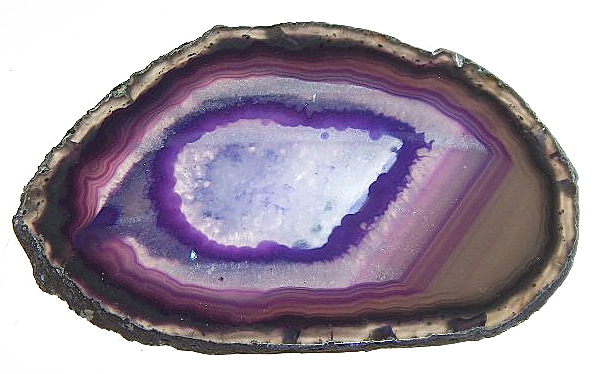
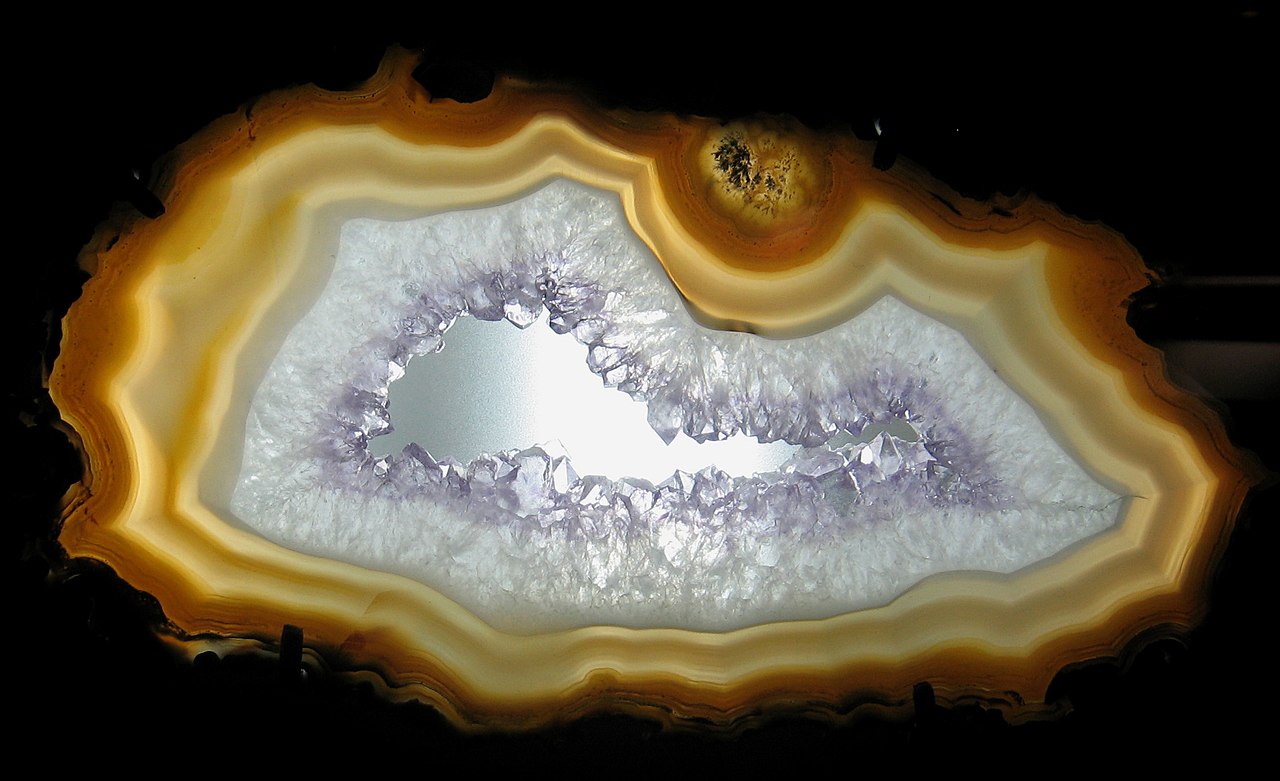
Agate is a common name for banded varieties of chalcedony, a microcrystalline form of quartz. As a type of mineral, agate is valued for its layered patterns and durability. The banding appears as concentric layers, waves, or other geometric patterns and can display a wide spectrum of colors caused by trace elements and microscopic inclusions.
Image gallery
10 Images





Formation and geology
Most agates form when silica-rich fluids fill cavities in volcanic or sedimentary rocks. Over long geological timescales, silica precipitates in successive layers, producing the characteristic bands. Pressure, temperature and chemistry during deposition control color and texture; crystalline interiors sometimes develop where open space remains, producing geodes that may include crystalline quartz or other minerals such as amethyst.
Varieties and characteristics
- Banded agate: clear concentric layers of contrasting color.
- Moss and dendritic agate: contain dark, tree-like inclusions of iron or manganese oxides.
- Fire agate: iridescent play of color from microscopic layers.
- Physical traits: hardness about 6.5–7 (Mohs), waxy to vitreous luster, typically translucent to opaque.
Uses and cultural importance
Agate has been used for thousands of years in jewelry, cameos, seals, and small carved objects. Lapidaries cut and polish agate into cabochons, beads, and bookends; slices reveal striking patterns prized by collectors. In many cultures agates were also attributed protective or healing properties, a usage rooted in tradition rather than science.
Notable facts and distinctions
Not all chalcedony is agate—banding distinguishes agate from related forms such as jasper (more opaque) or chalcedony without pattern. Agates are often enhanced: stabilized, dyed, or heat-treated to alter or intensify color. Because they occur worldwide in many special localities, particular types of agate (for example, Botswana agate or Laguna agate) are named for their source and sought by collectors.
Further reading
For introductory mineral descriptions and collecting resources, consult general mineral guides or geological summaries at reputable sources: quartz overview, industry descriptions of minerals, and specific accounts of crystalline geodes and related minerals such as amethyst.
Questions and answers
Q: What is agate?
A: Agate is a mineral that belongs to the quartz family.
Q: What are the different kinds of agate?
A: Different kinds of agate can come in many different colors.
Q: Where are agate deposits primarily found?
A: Agate deposits are primarily found in large rocks such as boulders.
Q: How long does it take for agates to form?
A: Agates take 50 million years to form.
Q: What are the characteristics of agate?
A: Agate is characterized by colored band patterns inside various rocks.
Q: What is often found together with agates?
A: Often, agates are also accompanied by Amethyst deposits inside.
Q: Is agate a commonly known mineral?
A: Agate is a commonly known mineral, especially among gemstone enthusiasts.
Related articles
Author
AlegsaOnline.com Agate: banded chalcedony variety of quartz, formation, types, and uses Leandro Alegsa
URL: https://en.alegsaonline.com/art/1338