
Purple (color) — characteristics, history, uses, and distinctions
An accessible overview of purple: how it is perceived and produced, its historical significance from ancient dyes to modern design, cultural meanings, and how it differs from violet.
Overview
Purple is commonly described as a color produced by combining red and blue light or pigments. People often use the word to cover a wide range of reddish-bluish hues. For a basic reference, see purple, and its constituent colors blue and red.
Image gallery
10 Images




Visual characteristics
Purple is perceived when the eye's long- and short-wavelength cone receptors respond simultaneously to light; in terms of pigments it results from mixing red and blue dyes or paints. In color systems, the precise appearance of purple depends on the medium: additive mixing (light) differs from subtractive mixing (inks and paints).
History and origin
The color has long associations with prestige and rarity. In antiquity, expensive dyes such as the famed Tyrian purple were extracted from sea snails and reserved for elite garments. The earliest recorded English use of the word "purple" dates back to the year 975, indicating its long-standing presence in language and culture. For more on early usages, consult historical references.
Uses and examples
Purple appears across many fields: artists and designers use it for visual contrast and mood; fashion and heraldry have favored it for status; and contemporary brands employ it to suggest creativity or luxury. Typical applications include:
- Interior and graphic design to create depth and richness
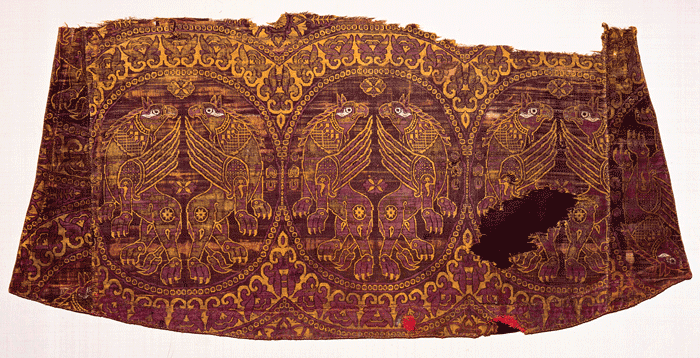
- Textiles and clothing historically linked to ceremonial or noble attire
- Modern digital media, where purple tones are created by combining red and blue channels
Symbolism and cultural meaning
Across cultures, purple can signify royalty, spirituality, mystery, or creativity. Meanings vary by context and shade: lighter purples may suggest delicacy, while deep purples often convey formality or power.
Distinctions and notable facts
It is useful to distinguish purple from violet: violet is a spectral color at the short-wavelength end of visible light, whereas purple is a nonspectral mixture of red and blue. This distinction explains why some languages treat them as separate terms and why they occupy different roles in science and art. For practical color work, designers rely on color models and samples rather than loose names, because "purple" can describe a wide range of hues and tones.
For further exploration of the color's properties, cultural history, and technical reproduction, follow the linked references above or consult specialist sources on pigments and color theory.
Author
AlegsaOnline.com Purple (color) — characteristics, history, uses, and distinctions Leandro Alegsa
URL: https://en.alegsaonline.com/art/80149