
Age of the Earth: how scientists determine Earth's age
Modern estimates place Earth's age at about 4.54 billion years. This article explains the evidence, radiometric methods, oldest materials, history of the problem, uncertainties, and why the age matters.
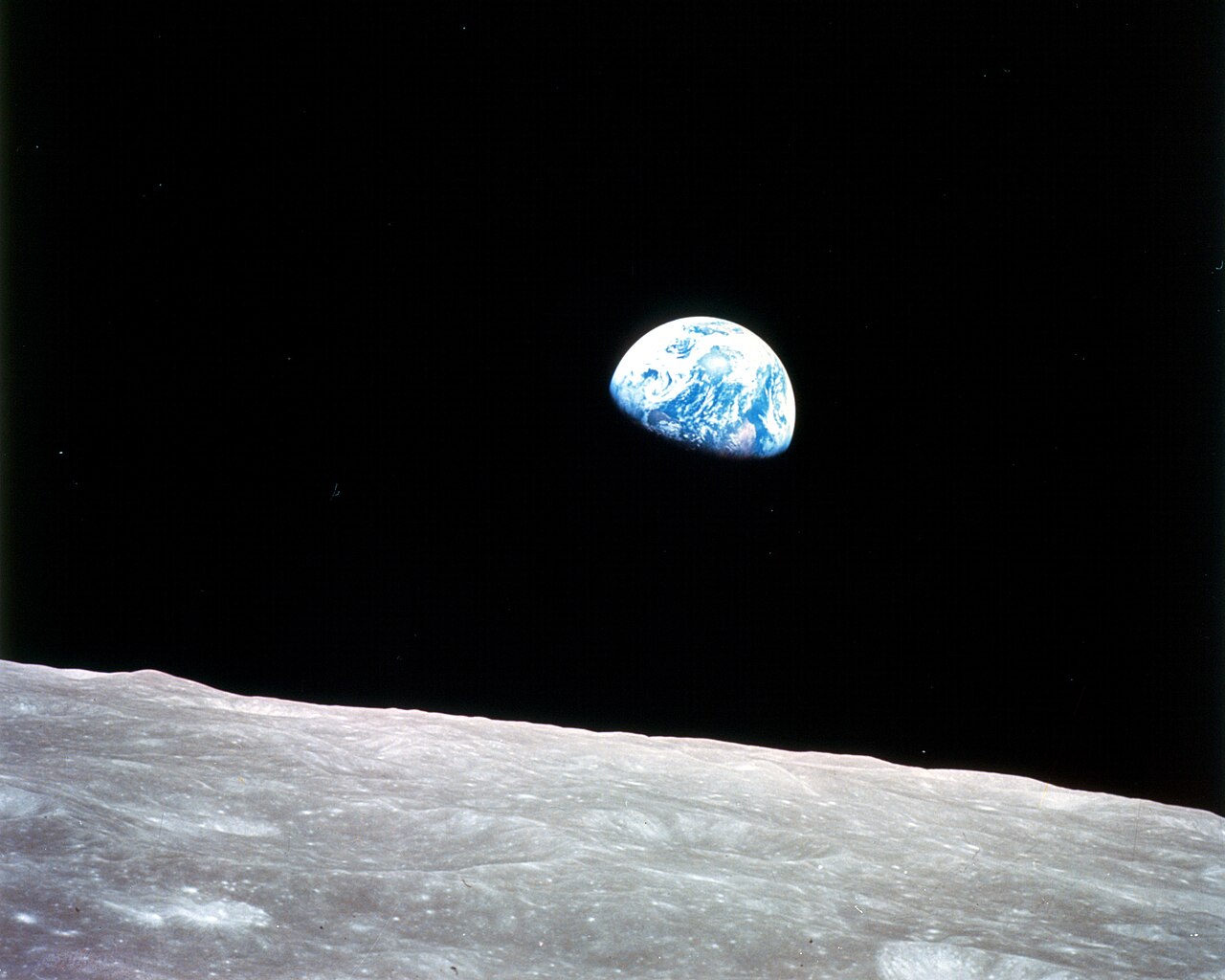
The age of the Earth is estimated at a little over 4.5 billion years; many references cite about 4.54 billion years as the best modern value. Establishing that number required centuries of inquiry because, for most of human history, the planet's deep-time history and its formative processes were unknown. Early cosmologies and natural chronologies ranged widely in approach and result; only with developments in physics, chemistry and geology did a precise, testable estimate become possible. For discussion of older perspectives and basic concepts, see historical summaries and material on the nature of our planet.
Image gallery
10 Images





Methods and primary evidence
The principal method used to date Earth is radiometric dating, which measures the decay of radioactive isotopes locked inside minerals. Earth scientists working in the 20th century refined these techniques and established a robust framework for interpreting the results; see work by modern Earth scientists for methodology. Key among dated samples are tiny, durable mineral grains — notably zircon — which can survive many geologic events and preserve ancient isotopic ratios. The oldest terrestrial minerals are zircon crystals, often described as small crystals with resilient chemistry; their composition (including uranium and lead) allows reliable age determination using the uranium–lead system, as with zircon-based studies.
Oldest materials: zircons and meteorites
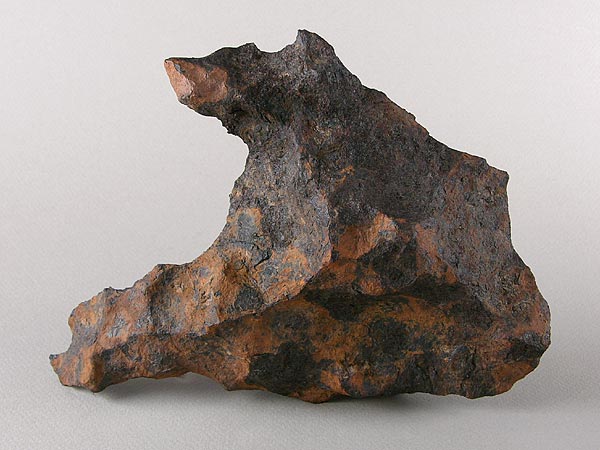
Two complementary lines of evidence set Earth's age. First, the oldest known minerals found on Earth are zircons from the Jack Hills region; these crystals yield ages of at least 4.4 billion years, preserving a record of the planet's earliest crustal fragments. See reports from the Jack Hills locality and work on specimens recovered in Western Australia. Second, the most ancient solids dated anywhere in the solar system are calcium–aluminium-rich inclusions (CAIs) within primitive meteorites; CAIs yield an age near 4.567 billion years and provide an upper bound for the age of the solar system and, by extension, Earth. For discussion of these inclusions and their significance, consult resources on CAIs and on how meteorite ages place an upper limit on Earth's formation.
How the age is inferred
Determining Earth’s age is not a single measurement but a set of concordant observations. Scientists compare isotopic systems (for example uranium–lead, samarium–neodymium, and rubidium–strontium), date different sample types (zircons, lunar rocks, and meteorites), and check for consistency among laboratories. When multiple, independent clocks point to the same general interval, confidence increases. A number of practical and theoretical checks — calibrations of decay constants, cross-validation with different minerals, and comparison with solar-system materials — underpin the consensus estimate.
Uncertainties, limits and refinements
No single date is absolute: measured ages carry analytical uncertainties and interpretive assumptions. Geologic processes such as metamorphism can reset isotopic systems; later impacts, erosion, or hydrothermal alteration can disturb minerals. Researchers therefore select samples that have been least disturbed and apply careful correction methods. Ongoing refinements adjust small fractions of a percent as laboratory methods and isotope standards improve, but the overall picture — that Earth formed in the first few tens of millions of years after solar-system formation — remains robust.
Importance and notable implications
Knowing Earth's age places the emergence of continents, oceans, and life in a temporal framework. The gap between CAI formation and the oldest terrestrial zircons spans only a few hundred million years, indicating rapid early accretion and differentiation. This timing informs models of planetary formation, the late heavy bombardment, and the early conditions for habitability. For summaries and further reading, consult general overviews and specialist entries referenced above via the linked topics.
- Primary chronological anchors: CAIs in meteorites and terrestrial zircons (CAIs, zircons).
- Common radiometric systems: uranium–lead, samarium–neodymium, rubidium–strontium.
- Representative locations and studies: Jack Hills, Western Australia, historical surveys and methodological reviews (history, modern science).
For further reading on specific methods, the geological record, and the solar-system context, follow the linked topics above or consult authoritative textbooks and review articles available through academic repositories and geological surveys.
Questions and answers
Q: How old is the Earth?
A: The Earth is estimated to be a little over 4.5 billion years old.
Q: How was the age of the Earth determined?
A: The age of the Earth was determined by using radioactive dating methods.
Q: What are the oldest minerals on Earth?
A: The oldest minerals on Earth are small crystals of zircon from the Jack Hills of Western Australia, which are at least 4.4 billion years old.
Q: What are Ca-Al-rich inclusions?
A: Ca-Al-rich inclusions are the oldest known solid bits found in meteorites that were formed within the solar system and they are 4.567 billion years old.
Q: How long has it been since humans first tried to solve this problem?
A: For most of human history, humans have been trying to solve this problem and determine basic facts about our planet's age.
Q: When did scientists start making modern estimates for determining Earth's age?
A: Scientists started making modern estimates for determining Earth's age during the twentieth century.
Q:What does knowing about Ca-Al-rich inclusions tell us about our planet's age?
A: Knowing about Ca-Al-rich inclusions tells us that it gives an upper limit for our planet's age as well as an estimate for when our solar system was formed.
Related articles
Author
AlegsaOnline.com Age of the Earth: how scientists determine Earth's age Leandro Alegsa
URL: https://en.alegsaonline.com/art/1360
Sources
- doi.org : 10.1038/35051550
- pubmed.ncbi.nlm.nih.gov : 11196637
- geology.wisc.edu : "Zircons are forever"
- doi.org : 10.1046/j.1400-0952.2003.01042.x
- ui.adsabs.harvard.edu : 2002Sci...297.1678A
- doi.org : 10.1126/science.1073950
- worldcat.org : 0036-8075
- pubmed.ncbi.nlm.nih.gov : 12215641
- ui.adsabs.harvard.edu : 2005Natur.436.1127B
- doi.org : 10.1038/nature03882
- pubmed.ncbi.nlm.nih.gov : 16121173
- doi.org : 10.1511/2007.66.3755
- gallica.bnf.fr : "Sur les radiations émises par phosphorescence"
- web.lemoyne.edu : translated by Carmen Giunta
- nature.com : Bouvier, Audrey and Meenakshi Wadhwa, "The age of the solar system redefined by the oldest Pb-Pb age of a meteoritic inclusion"