
Baked Alaska: history, composition, technique and variations
Baked Alaska is a showpiece dessert of ice cream and cake encased in meringue and briefly baked. This article explains its ingredients, insulating science, origins, common variations, and serving notes.
Overview: Baked Alaska is a classic hot-and-cold confection that combines frozen ice cream with a cake base and a browned meringue shell. The contrast of temperatures and textures is the defining attraction: a crisp or toasted meringue exterior surrounds ice cream that remains frozen until served. For a basic introduction see dessert and the role it plays in celebratory menus.
Image gallery
7 Images

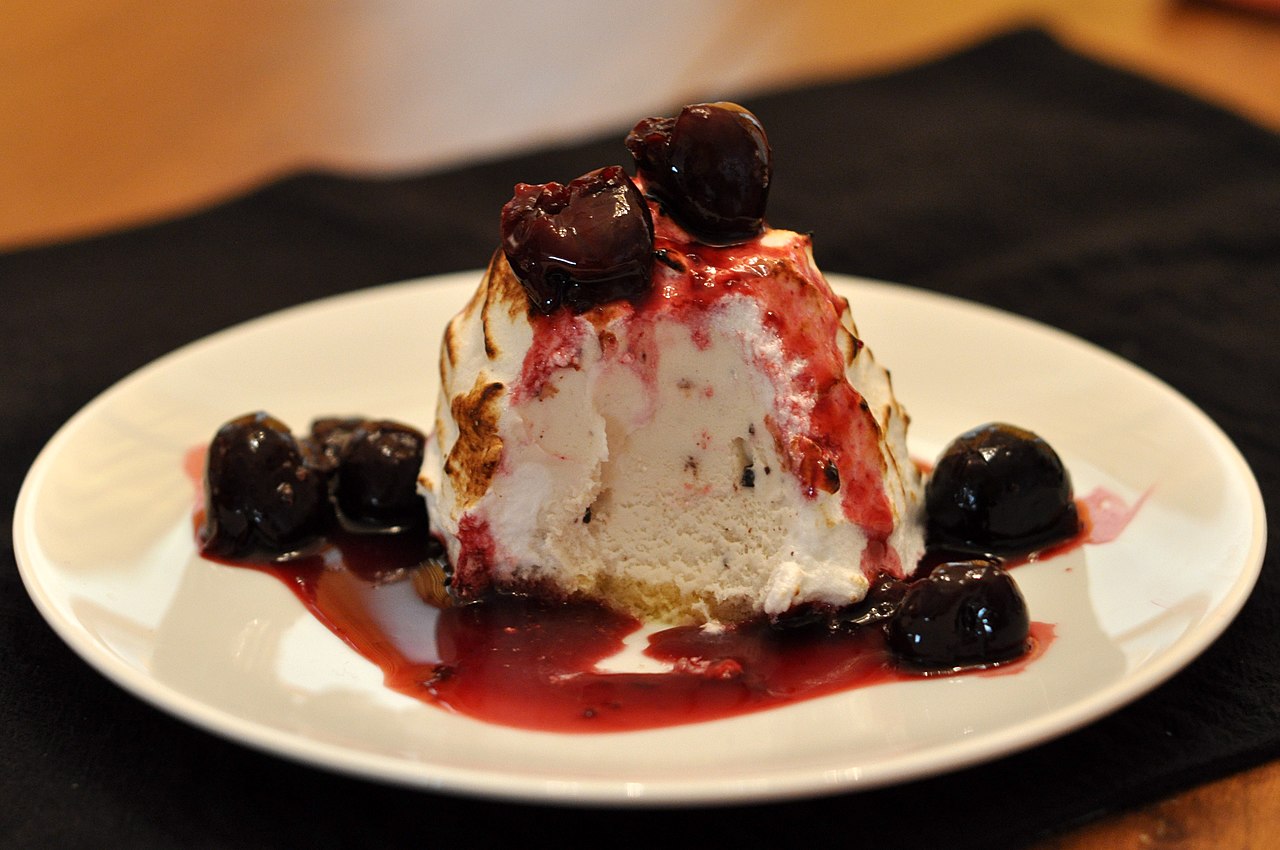


Ingredients and assembly
The components are simple but require timing. Typical elements include a layer of ice cream molded over or above a thin layer of sponge cake or, in some regional variants, a slice of Christmas pudding. The whole is covered in a fluffy meringue made from whipped egg whites and sugar. Common steps are listed below.
- Prepare and freeze the ice cream shape.
- Place on the cake or base and cover completely with meringue.
- Cook briefly—by baking in a very hot oven or by torching—until the meringue is browned.
How it works
The reason the ice cream survives the short exposure to heat is that meringue traps air and acts as an insulator. A high oven temperature or quick application of a blowtorch browns the meringue surface before significant heat reaches the frozen center. Some presentations add a splash of alcohol and briefly flambé the surface for dramatic effect.
History and name
The name "Baked Alaska" is commonly linked to a late-19th-century American dining scene; Delmonico's restaurant in New York is credited with popularizing the title in 1867 to commemorate the acquisition of the Alaska territory and its cold climate. The technique itself echoes older European frozen desserts and molded ice creams, such as French bombe-style preparations.
Variations and cultural notes
Different countries and chefs have adapted the concept. French and European menus may list related items under names like "omelette norvégienne" or "bombes glacées." Restaurants sometimes substitute bases, change ice cream flavors, or present individual-sized portions. For historical menus and restaurant references see Delmonico's and broader American culinary traditions.
Practical tips: assemble components well chilled, use a thick meringue coat, and brown meringue quickly. Baked Alaska is often used for special occasions; a quirky calendar note marks February 1 as Baked Alaska Day. For further reading and recipes consult general culinary guides or specific resources listed here, here and here. Additional informational links: oven techniques, dessert types overview, and ice cream basics.
Related articles
Author
AlegsaOnline.com Baked Alaska: history, composition, technique and variations Leandro Alegsa
URL: https://en.alegsaonline.com/art/8394
Sources
- foodreference.com : "Baked Alaska: History, Facts & Recipes for this classic dessert"
- statesymbolsusa.org : "American Holidays - National Holidays - Food Holidays"