
Meringue: whipped egg-white dessert — types, technique and uses
Meringue is a light, airy dessert made by whipping egg whites with sugar. This article explains basic ingredients, common methods (French, Swiss, Italian), culinary uses, history, and practical tips for success.
A meringue is a light, airy preparation created by whipping egg whites with sugar until they form a stable foam. The finished product can be crisp, chewy or marshmallow-like depending on the method and baking. Typical flavoring agents include vanilla and small amounts of almond or coconut extract; many recipes call for a stabilizer such as cream of tartar, a little acid, or cornstarch to help the foam keep its structure. For general background see dessert references and ingredient guides such as egg whites and sugar.
Basic ingredients and technique. The core ingredients are egg whites and sugar. Whites are usually beaten until soft or stiff peaks form while sugar is added gradually to dissolve and strengthen the foam. A small amount of acid (lemon juice or cream of tartar) can improve stability; cornstarch is sometimes folded in to produce a dryer, crisper shell with a soft interior. Temperature, beat speed and the order of addition matter: common faults include under-dissolved sugar, overbeating, and loss of volume due to grease or yolk contamination. Italian and Swiss methods use heat to partially or fully cook the whites or sugar, which increases stability and reduces food-safety concerns.
Image gallery
8 Images




Types and forms
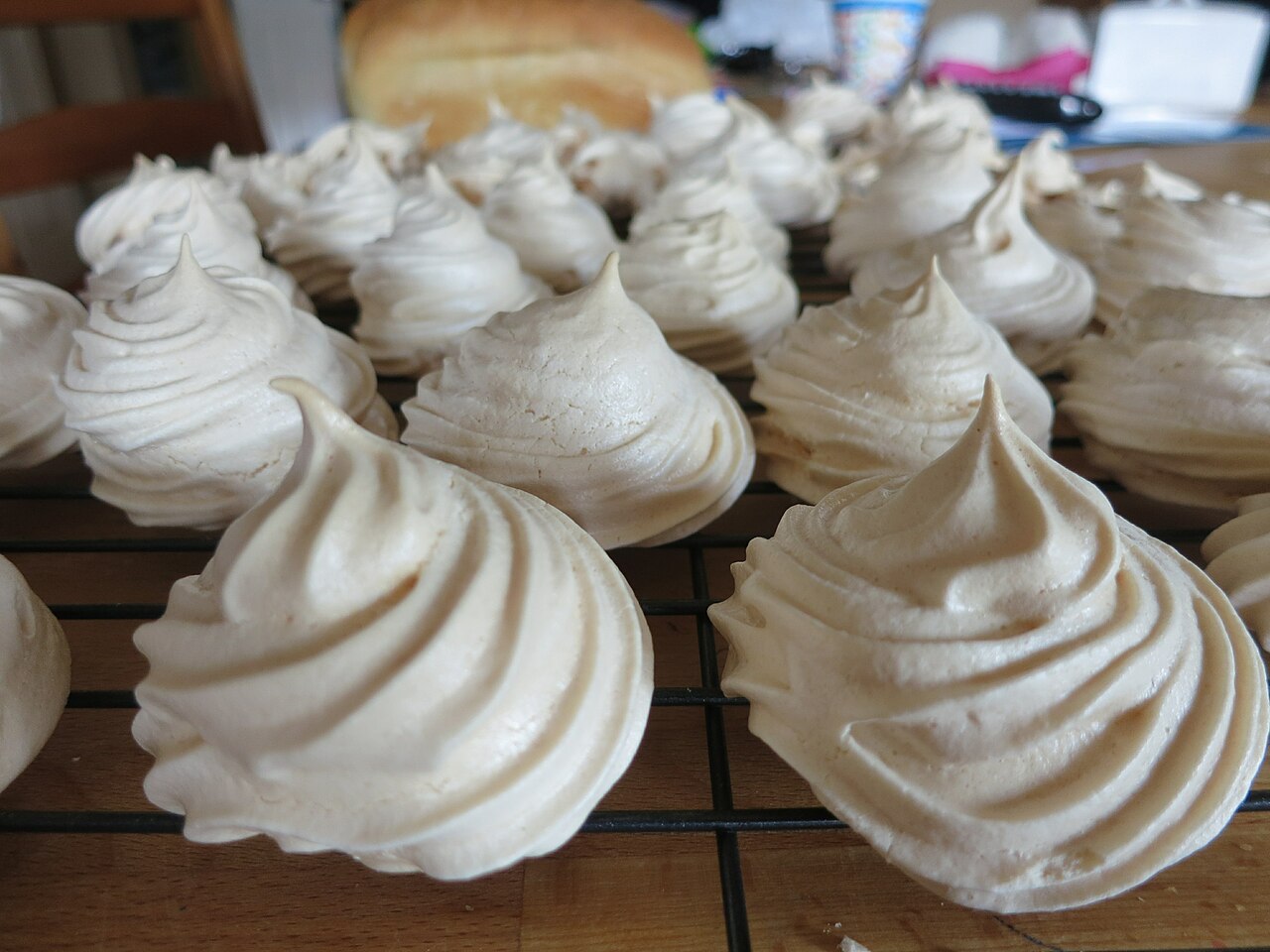
- French meringue – the simplest form: raw whites whipped with sugar, often piped and baked into crisp cookies or shells.
- Swiss meringue – sugar and whites warmed together over a bain-marie before whipping, producing a glossy, denser foam used for buttercreams and some pavlovas.
- Italian meringue – hot sugar syrup is poured into whipping whites, creating a cooked, very stable meringue used for frostings and some confections.
- Variations range from large baked pavlovas to small piped kisses, or soft meringue toppings that are briefly browned for pies.
Uses and examples. Meringue appears across many desserts: as crisp cookies (meringue kisses), as the airy shell of a pavlova, as the browned topping of a lemon meringue pie, or folded into mixtures for an Eton mess. Italian meringue is a common component of buttercream and mousse where a stable foam is needed. Chefs may flavor meringues with vanilla (vanilla), almond (almond) or cocoa for variety.
History and notable facts. The exact origin of meringue is uncertain; similar egg-white confections appear in European cookery from the 17th and 18th centuries onward. Different national traditions and technical refinements produced the distinct French, Swiss and Italian approaches that are in wide use today. Because raw egg whites are involved, cooked methods (Swiss or Italian) are preferred when food safety is a concern.
Practical tips. For best results use a very clean, dry bowl and utensils; separate whites carefully to avoid yolk contamination; whites whip more easily at room temperature; avoid making meringues on very humid days since moisture softens crisp shells. Copper bowls and a small acid addition both help stabilize the foam by strengthening proteins. Store baked meringues in an airtight container away from humidity to preserve texture.
Questions and answers
Q: What is a meringue?
A: A meringue is a dessert made from whipping egg whites and sugar, and it can also have cream of tartar or cornstarch to hold it together.
Q: How is a meringue prepared?
A: A meringue is prepared by whipping egg whites and sugar together until it becomes fluffy and stiff.
Q: What are the additional ingredients used in some meringue recipes?
A: Some additional ingredients used in some meringue recipes include cream of tartar or cornstarch, which helps to hold it together.
Q: What are meringue's common flavors?
A: Meringues are often flavored with vanilla and a small amount of almond or coconut extract.
Q: What are the characteristics of a meringue?
A: Meringues are light, airy, and sweet.
Q: Is a meringue a common dessert?
A: Yes, meringues are a common dessert, popular for their light and sweet taste.
Q: What is the pronunciation of meringue?
A: Meringue is pronounced as /məˈræŋ/.
Related articles
Author
AlegsaOnline.com Meringue: whipped egg-white dessert — types, technique and uses Leandro Alegsa
URL: https://en.alegsaonline.com/art/63984