
Richard Taylor (Confederate general)
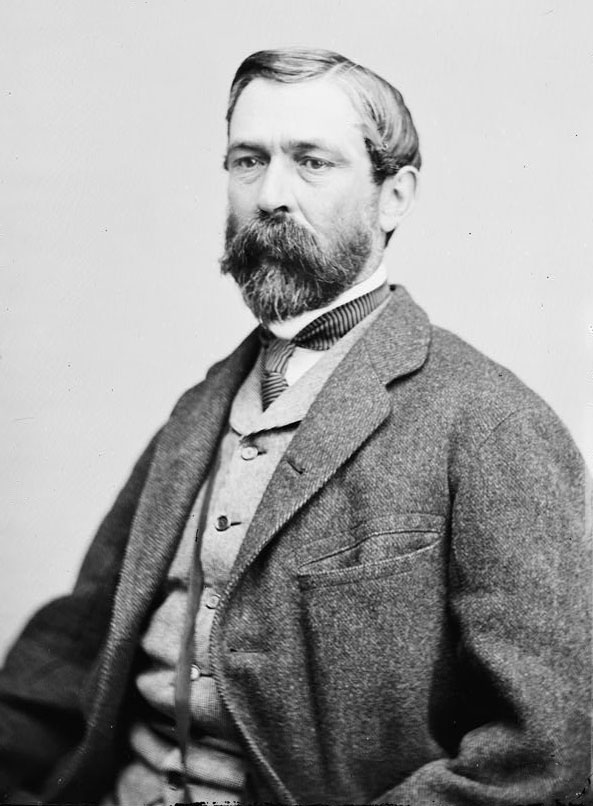
Confederate general Richard Taylor (1826–1879), son of President Zachary Taylor, was a Louisiana plantation owner and military leader noted for defending western Louisiana and his role in the Red River Campaign.
Overview
Richard Taylor (January 27, 1826 – April 12, 1879) was an American planter, politician and Confederate general during the American Civil War. A native of Kentucky and the son of U.S. President Zachary Taylor, he combined agricultural management with public life before assuming significant military commands in the Trans-Mississippi and later the Western theaters of the war.
Image gallery
2 Images
Early life and background
Taylor was born in Kentucky and educated in the North, graduating from Yale College. After his father's death he became a Louisiana sugar planter, managing property and enslaved labor in the years before the Civil War. He took part in local politics and social affairs typical of the Southern planter class, balancing business interests with a growing involvement in his state's public matters.
Civil War service
At the outbreak of the Civil War Taylor raised and led a Louisiana regiment. He rose quickly through Confederate ranks, advancing to brigadier and then to major general. Much of his wartime activity centered on western Louisiana, where he was charged with organizing defenses against Union incursions. Taylor won a reputation for aggressive field operations, improvisation under supply constraints, and the ability to coordinate smaller commands to delay or repel larger Federal forces.
His command in the District of West Louisiana brought him into conflict with other Confederate leaders, most notably General Edmund Kirby Smith, who held overall authority west of the Mississippi. Disagreements over strategy and resource allocation were important in Confederate command dynamics; Taylor was transferred east of the river in 1864 and subsequently directed operations in parts of Mississippi and Alabama until Confederate forces surrendered in 1865.
Legacy and significance
Taylor's military career is often cited for his local tactical successes and for the challenges he faced operating in a theater that was logistically isolated after the fall of the Mississippi River. As a son of a president who became a Confederate general, his life illustrates the divided loyalties and complex social networks of the era. After the war he returned to civilian life, managing his affairs and remaining a figure of regional historical interest until his death in New York City in 1879.
Selected timeline
- Born January 27, 1826 — birth reference
- Graduated from Yale, 1845 — education
- Inherited Louisiana plantation after his father's death — inheritance
- Raised the 9th Louisiana Infantry and became colonel — regimental service
- Promoted to brigadier general, October 1861 — promotion
- Promoted to major general, July 1862 — promotion
- Commanded District of West Louisiana; fought in the Red River Campaign, 1864 — campaign
- Transferred east of the Mississippi; operations in Mississippi and Alabama until 1865 — later command
- Died April 12, 1879 in New York City — death
Further notes and reading
For balanced study, consult biographies and primary-source collections that examine Taylor's correspondence, battlefield reports and postwar reflections; these shed light on Confederate command relationships and the conduct of war in the Trans-Mississippi. Taylor's father, President Zachary Taylor, shaped the family's public profile, and Taylor's interactions with leaders such as state figures and regional commanders influenced his military assignments. Additional resources cover the social history of Louisiana planters, the military organization of Confederate forces, and campaigns in which he served.
Related articles
Author
AlegsaOnline.com Richard Taylor (Confederate general) Leandro Alegsa
URL: https://en.alegsaonline.com/art/82728
Sources
- civilwar.org : "Richard Taylor Lieutenant General January 27, 1826 – April 12, 1879"
- militaryhistory.about.com : "American Civil War: Lieutenant General Richard Taylor"