
Relic: Sacred Remains and Objects of Veneration
A relic is an object preserved and venerated for its association with a sacred or notable person. This article surveys types, historical development, religious roles, authenticity issues, and notable examples worldwide.
Overview
A relic is an object preserved and venerated because of its direct association with a person regarded as holy, exemplary, or otherwise significant. In many traditions a relic may be a piece of the body (bone, tooth, hair), a personal possession, or an item believed to have been touched by a revered individual. The term is closely connected to the idea of objects kept with religious importance and is often applied to material remains that afford a tangible connection to a life or event. Relics are usually carefully preserved, sometimes displayed in specially designed containers or shrines called reliquaries; the English word and many scholarly terms derive from the Latin reliquiae ('remains') and the related concept of a reliquary.
Image gallery
10 Images




Classification and common features
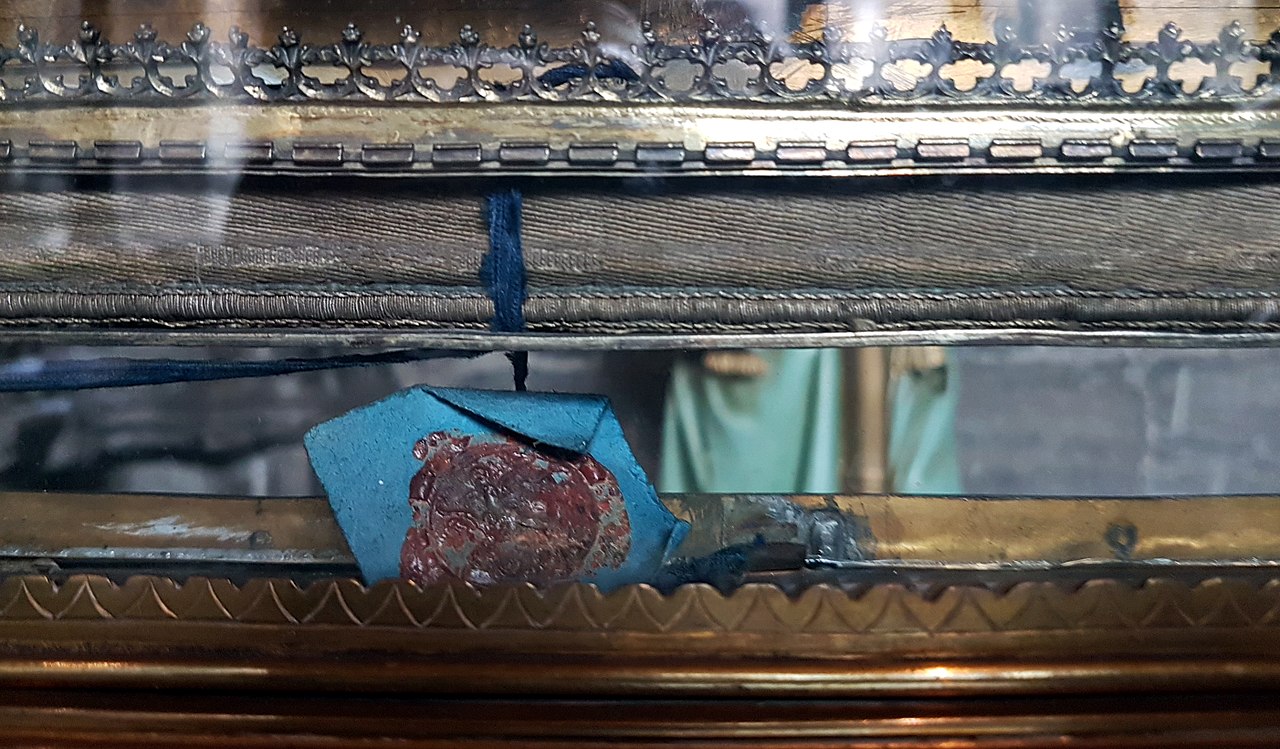
Scholarly and religious practice commonly distinguishes relics by their degree of physical contact with the person commemorated. First-class relics are bodily remains, second-class relics are items owned or used by the person, and third-class relics are objects touched to a first- or second-class relic. Relics are frequently accompanied by inscriptions, certificates, or documented chains of custody when available. Presentation varies from simple wrapped fragments to elaborate metalwork, and rituals around relics—processions, public display on feast days, liturgical use—are important to their meaning.
Relics in major religious traditions
Buddhist communities often enshrine the physical remains or funerary goods of important teachers within stupas or temples; these practices play a role in devotional life and the architecture of sacred sites (Buddhist traditions). In Christianity the veneration of relics developed in late antiquity and the medieval period, becoming a focal point for pilgrimage and local identity; practices vary between denominations and periods (some denominations, including parts of Christian traditions, give formal recognition to certain relics). Hindu contexts preserve items associated with saints and gurus and use relics within temple worship (Hindu practice). Indigenous and shamanic systems may preserve objects believed to contain ancestral or spirit power and use them in healing or communal rites (shamanic and folk traditions).
History, movement, and social functions
The veneration and movement of relics have had social, political, and economic consequences. Translation of relics (the formal relocation of a relic to a new shrine) could boost a town's prestige, generate pilgrimage revenue, and reframe liturgical calendars. Reliquaries themselves often became prestigious art objects, showing high levels of craftsmanship in metalwork, stone setting, and enamel. Beyond devotion, relics have served as symbols of continuity with foundational figures and as instruments of communal memory.
Authenticity, controversy, and regulation
Questions of provenance and authenticity frequently accompany relics. Because relics can attract pilgrims, donors, and political attention, forgeries and competing claims have a long history. Religious authorities and historians use documentary records, episcopal inventories, and material analysis to evaluate claims; in some traditions certain relics are officially catalogued and authenticated, while in others the devotional value does not depend on strict historical proof. Museums and conservators approach relics primarily as cultural and material objects, balancing preservation, research access, and respect for living devotional practices.
Notable examples and cautionary notes
Well-known items often cited in literature and devotion include a widely venerated Tooth of the Buddha, legendary objects such as the Holy Grail of Christian lore, and relics associated with the Passion like claimed fragments of the True Cross. Religious traditions also preserve items linked to prophetic or foundational figures; for example, some communities revere artifacts associated with the lives of lawgivers and founders such as the Staff of Moses. Careful scholarship treats such claims with caution, distinguishing between devotional meaning and historical proof.
Modern contexts: museums, law, and conservation
In modern settings relics appear in museums, churches, and private collections, raising questions about heritage law, repatriation, and appropriate curation. Conservators document condition and stabilise materials, while scholars publish provenance studies that can affirm, complicate, or revise traditional attributions. Legal and ethical debates continue when relics cross cultural boundaries or when communities request the return of items considered sacred.
Conclusion
Relics remain a widespread human practice for making the past present and for linking communities to persons and events deemed spiritually or morally significant. Whether studied as objects of art, as tokens of devotion, or as contested heritage, relics illuminate how material culture participates in religious life and social memory. For focused studies, consult specialized catalogues, conservation reports, and the literature of individual religious traditions for documentation and contextual analysis.
- Relics and devotional practice: communities vary in how they balance access and preservation.
- Art and reliquaries: many reliquaries are important works of applied art and craft.
- Research and ethics: scholars, museums, and religious custodians negotiate provenance and care.
Related articles
Author
AlegsaOnline.com Relic: Sacred Remains and Objects of Veneration Leandro Alegsa
URL: https://en.alegsaonline.com/art/82022