
Religion in China: traditions, history, and contemporary practice
An overview of major religious traditions in China—Buddhism, Taoism, Confucianism, Chinese folk religion, Islam, Christianity and Judaism—and their historical development, cultural roles, and modern regulation.
Religion in China encompasses a wide range of beliefs and practices that have shaped Chinese society for millennia. Indigenous traditions such as ancestor veneration and local cults coexist alongside institutional systems like Buddhism, Taoism, and the moral-political teachings associated with Confucianism. Many people also follow forms of Chinese folk religion, which blends ritual, local deities, and communal festival life. These currents often overlap, producing a syncretic religious landscape rather than sharply separated confessions.
Image gallery
10 Images


Main traditions
- Buddhism: Introduced from South and Central Asia, it developed distinct Chinese schools and has a long monastic and lay presence.
- Taoism: An indigenous tradition emphasizing harmony with the Dao, ritual practice, and a body of scripture and clergy.
- Confucianism: A system of ethics and social philosophy that has functioned as both a moral framework and a public ideology.
- Chinese folk religion: Local worship of ancestors, gods, and spirits integrated into daily and communal life.
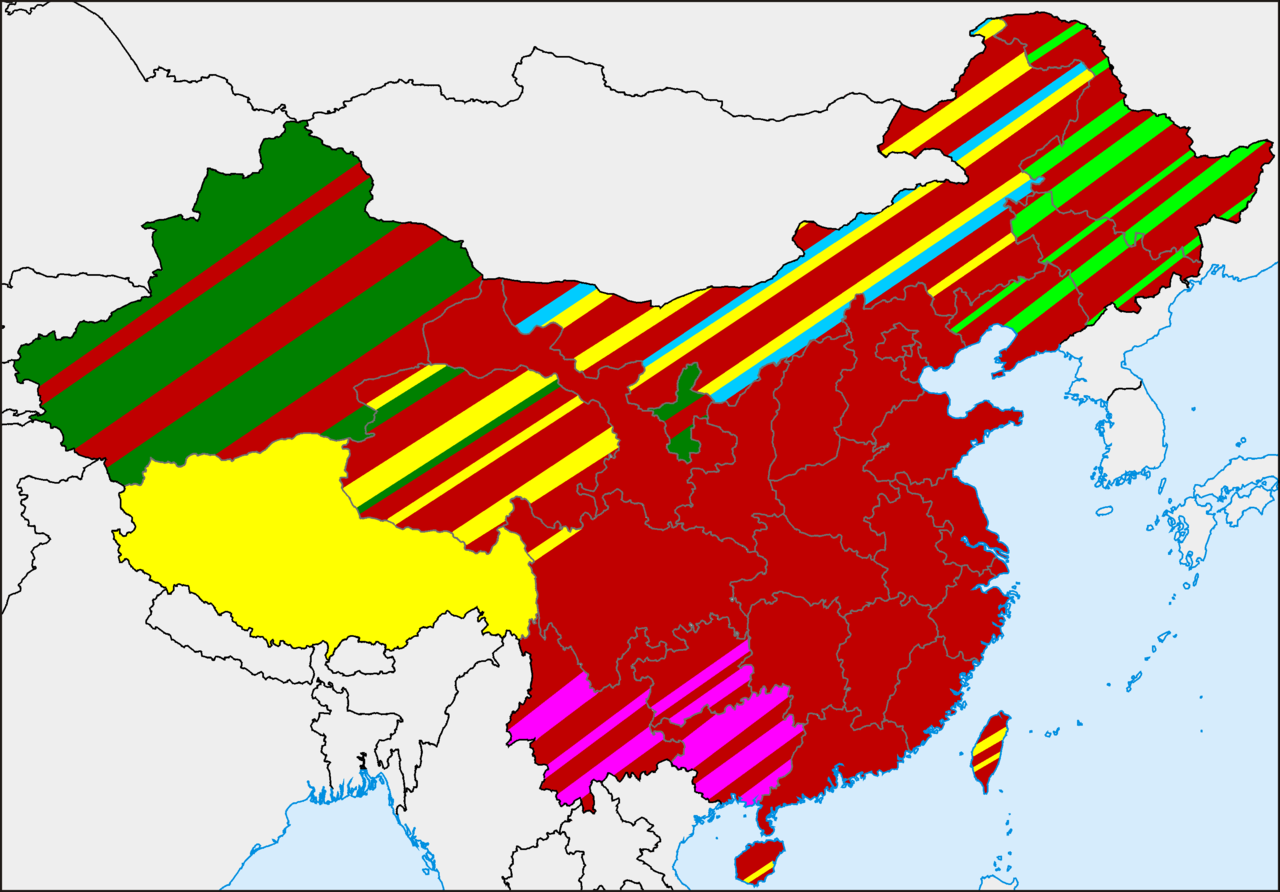
Abrahamic faiths have also been present in China for centuries. Islam arrived via trade routes and has long been practiced among groups such as the Hui people and the Uyghur people. Christianity—both Catholic and Protestant forms—has communities in many regions, and a small Jewish community historically lived in places such as Kaifeng. These traditions coexist with native systems and have contributed to China’s cultural diversity.
Historically, religious life in China has been dynamic: native cults and philosophical schools emerged in antiquity; Buddhism spread and sinicized after entering from the Silk Road; and Confucianism became embedded in imperial institutions. The 20th century brought major shifts: republican and communist periods altered the public role of religion, the Cultural Revolution suppressed many practices, and since the late 20th century there has been a notable revival alongside state regulation.
Today the government recognizes several major religions and requires organized groups to register with official associations. This regulatory framework coexists with vibrant popular practice—temples, festivals, pilgrimage, and ritual observance remain important in daily life and cultural identity. At the same time, there are ongoing debates and international attention to how religious freedom and ethnic minority practices are managed in specific regions.
Understanding religion in China therefore means attending to long-standing traditions, patterns of coexistence and blending, the historical shifts of the modern era, and the contemporary balance between communal practice and state policy.
Questions and answers
Q: What are some of the main religions in China?
A: The main religions in China are Buddhism, Chinese folklore, Taoism and Confucianism.
Q: Are Abrahamic religions practised in China?
A: Yes, Abrahamic religions are also practised in China.
Q: Is there a Jewish community living in China?
A: Yes, there is a Kaifeng Jewish community living in China.
Q: When was Islam introduced in China?
A: Islam was introduced in China since the Tang Dynasty.
Q: Who are the Muslims in China?
A: The Hui people and Uyghur people are Muslims in China.
Q: Is Chinese folklore considered a religion?
A: Yes, Chinese folklore is considered a religion in China.
Q: How many other religions are practised in China apart from the main ones mentioned?
A: There are many other religions practised in China apart from the main ones mentioned.
Related articles
Author
AlegsaOnline.com Religion in China: traditions, history, and contemporary practice Leandro Alegsa
URL: https://en.alegsaonline.com/art/82028