
Pygmy hippopotamus (Choeropsis liberiensis)
A compact overview of the pygmy hippopotamus: appearance, behavior, range, ecology, conservation concerns, and how it differs from the common hippopotamus.
Overview
The pygmy hippopotamus (Choeropsis liberiensis) is a reclusive, mainly nocturnal mammal native to the wetlands and dense forests of West Africa. It occupies a very different ecological niche from its larger relative, the common hippopotamus, and is adapted for movement on land as well as for life near water. Most historic and current records place strong populations in and around Liberia, which influenced the specific name liberiensis and is reflected in regional accounts and conservation work (Liberia, West Africa).
Image gallery
10 Images


Physical characteristics
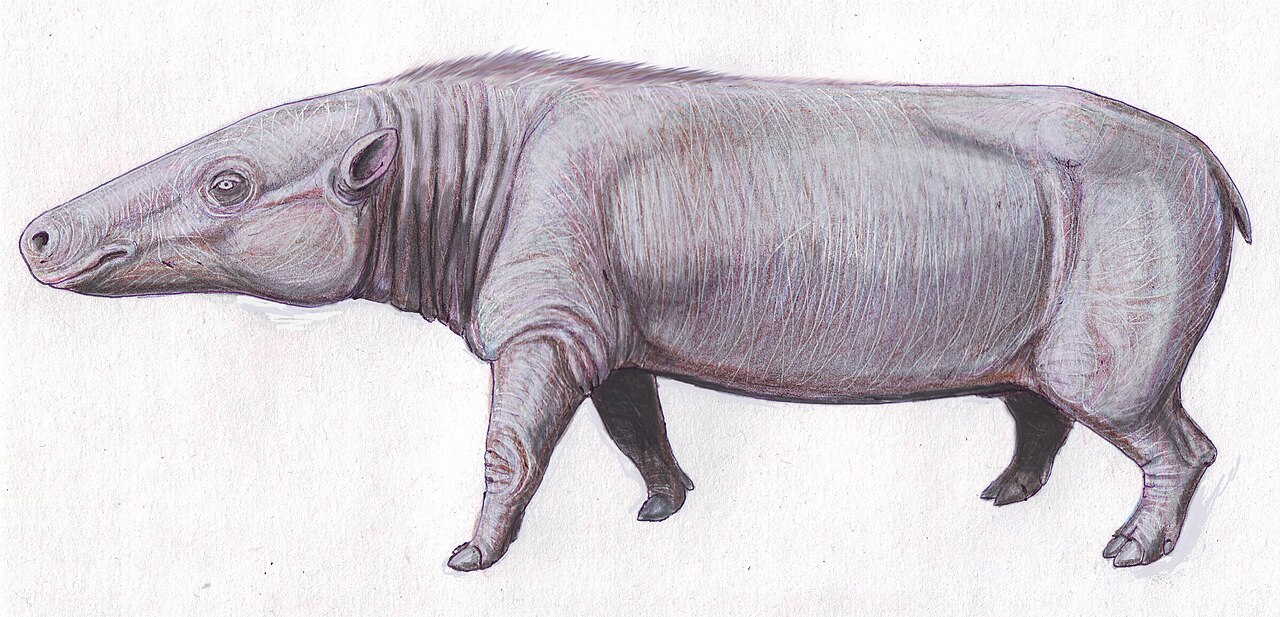
Pygmy hippos are considerably smaller than common hippos and have proportionally shorter legs, a less barrel-shaped body, and a head that is less broad. Their eyes and ears sit lower on the head than in many other semi-aquatic mammals, features that allow them to feed and move through shallow water without exposing much of the body. They possess thick, nearly hairless skin that requires regular moisture; as a result they stay close to streams, swamps, and marshes. Anatomical and behavioral traits reveal a suite of terrestrial adaptations as well as the semi-aquatic habits shared with other members of the family Hippopotamidae (Hippopotamidae).
Behavior, diet and reproduction
The pygmy hippopotamus is mainly solitary and has a largely nocturnal or crepuscular activity pattern. It forages on the forest floor for plant material, including ferns, broad-leaved understory vegetation, grasses and fallen fruit. Typical food items reported in field studies include ferns (ferns), broad-leaved plants (broad-leaved plants), grasses (grasses) and fruits (fruits), which it browses quietly at night. Reproductive behavior is flexible: mating and calving can take place in shallow water or on land, depending on local conditions.
Distribution, habitat and threats
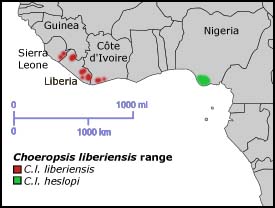
Pygmy hippos occur in fragmented populations across Liberia, Sierra Leone, Guinea and Ivory Coast, favoring swampy forest, riverine galleries and seasonally flooded lowlands. Their reliance on both water and intact forest makes them highly vulnerable to habitat loss. Major threats are forest clearance for agriculture and timber, human settlement, and hunting. Conservationists have highlighted the species for protection, captive-breeding programs and habitat preservation, because small, isolated populations are more susceptible to local extinction. Where present in national parks or protected areas, they benefit from legal safeguards and monitoring, but enforcement and habitat connectivity remain challenges.
Differences from the common hippopotamus and cultural notes
Although both species belong to the same family, the pygmy hippo is far more adapted to forest life and is more terrestrial in its habits than the large, river-dwelling common hippopotamus (common hippopotamus). Pygmy hippos are usually solitary rather than forming large groups, and their quiet, secretive behavior makes them difficult to study in the wild. In places where people encounter them, they figure in folklore and local ecological knowledge. Scientific and zoo collections have contributed to public awareness and research, but the species remains less familiar than its larger relative.
Conservation actions and how to learn more
- Habitat protection and restoration of riverine forests and wetlands help maintain populations.
- Anti-poaching measures and community-based conservation reduce direct threats.
- Captive breeding and international cooperation support genetic diversity and public education.
For further technical resources and species accounts, consult regional wildlife authorities and international conservation organizations. Additional overviews and images are available through field guides and museum collections; see specialist pages and databases for in-depth status reports (terrestrial adaptations, adaptations explained).
Relevant links and resources: species profile, range information, Liberian records, family Hippopotamidae, comparative species, terrestrial adaptations, adaptive traits, fern diet, plant diet, grass diet, fruit diet.
Related articles
Author
AlegsaOnline.com Pygmy hippopotamus (Choeropsis liberiensis) Leandro Alegsa
URL: https://en.alegsaonline.com/art/80216