
Pyrrharctia isabella (Isabella tiger moth)
A common North American moth whose woollybear caterpillar survives freezing and variable life cycles; notable for its cold tolerance, multi-year Arctic development, and distinctive banded larva.
Overview
Pyrrharctia isabella, commonly called the Isabella tiger moth, is a moth of temperate and subarctic regions of North America and parts of the Arctic. The species is best known for its hairy larva, the banded woollybear, which has become a familiar subject in natural history and popular folklore. Adults are short-lived and nocturnal, while the larval stage can show remarkable resilience to cold.
Image gallery
8 Images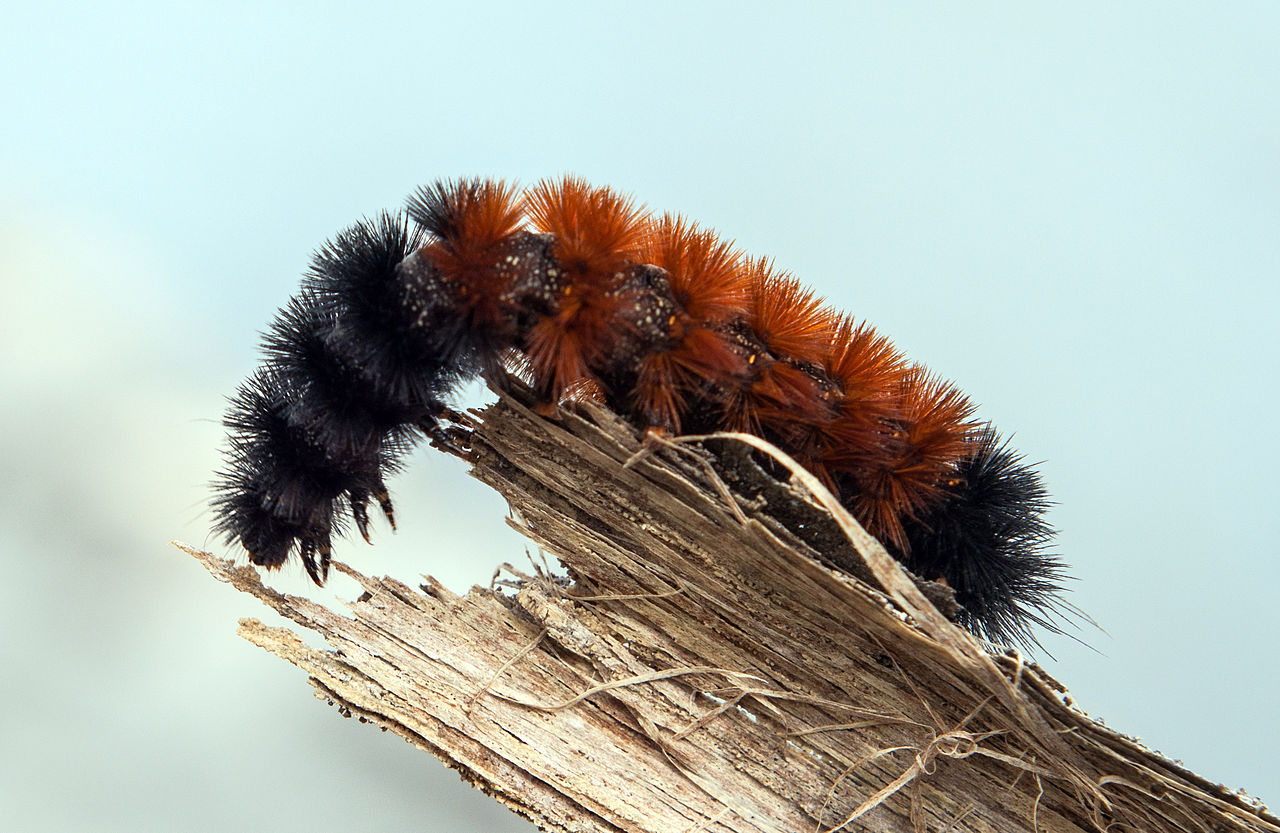


Identification and key characteristics
Adult Isabella tiger moths typically display warm orange to yellowish forewings marked with small dark spots and paler hindwings, with a generally stout, fuzzy body. The caterpillar — the banded woollybear — is densely covered in bristly hairs, usually with dark bands at each end and a lighter band in the middle. Important features include:
- Fur-like setae: give the larva its common name and provide some protection.
- Color bands: vary among individuals and populations, and have been the source of weather lore and informal predictions.
- Taxonomy: placed in the family Erebidae (formerly grouped with tiger moths in Arctiidae).
Life cycle and cold tolerance
The species undergoes a complete metamorphosis: egg, larva (woollybear), pupa, and adult. In many temperate areas the species produces one or two broods per year, depending on local climate and the length of the growing season. In these regions the larva feeds through summer and overwinters once before pupating and emerging as an adult (temperate broods).
In contrast, populations at higher latitudes and in Arctic habitats face extremely short summers and long, harsh winters. Woollybear larvae in those regions can take multiple years to complete development, freezing solid each winter and thawing the next spring. During cold periods they produce body fluids that act as cryoprotectants — mixtures of sugars and other compounds that reduce ice damage to tissues — allowing them to survive repeated freezes and resume feeding when conditions permit (spring thaw and emergence).
Behavior, ecology and examples
Woollybears feed on a wide range of herbaceous plants and low shrubs, making them generalist herbivores in many ecosystems. Their hairy bodies can deter some predators and may help in thermoregulation. Adults are primarily active at night and have a short reproductive window; mating and egg-laying occur soon after emergence. The caterpillar’s ability to endure extreme cold means that in some Arctic and subarctic populations a single larva may endure several winters before pupating — similar strategies are known in other cold-adapted Lepidoptera (larval biology).
Human interest and notable facts
Beyond scientific interest in freeze tolerance, the banded woollybear has a place in folklore: popular myths associate band width with predicted winter severity, though such claims lack scientific support. The species also serves as an accessible subject for education about insect life cycles and physiological adaptation to cold. Conservation concerns for Pyrrharctia isabella are generally limited, as it remains common across much of its range, but local populations can be affected by habitat change and pesticides.
Further reading
For overviews of cold adaptation in insects and more on regional life-history variation, see general entomology and Arctic ecology resources (Arctic studies, temperate region summaries). Additional species-specific notes and larval photographs can be found via educational links and naturalist guides (seasonal observations, life-stage images).
Questions and answers
Q: Where does the Isabella tiger moth live?
A: The Isabella tiger moth lives in temperate and cold northern regions, including the Arctic.
Q: What is the name of its caterpillar?
A: Its caterpillar is called the banded woollybear larva.
Q: What happens to the banded woollybear larva during winter?
A: The banded woollybear larva overwinters and freezes solid.
Q: How does the banded woollybear larva avoid cold damage?
A: It produces a body fluid which helps its tissues avoid cold damage.
Q: What does the banded woollybear larva do in the spring?
A: In the spring it thaws out, emerges from its hibernaculum, eats, and grows in the short Arctic summer.
Q: How many broods does Pyrrharctia isabella have in temperate climates?
A: In temperate climates, this species has one or two broods depending on its location.
Q: How long does a woollybear of another species live before it pupates and becomes an adult?
A: A woollybear of another species lives through as many as 14 winters, before it pupates and becomes an adult, having only a few-day mating period.
Related articles
Author
AlegsaOnline.com Pyrrharctia isabella (Isabella tiger moth) Leandro Alegsa
URL: https://en.alegsaonline.com/art/80250