
Punica — the pomegranate genus
Punica is a small genus of fruit-bearing deciduous shrubs and small trees in the family Lythraceae, best known for the pomegranate and its cultural, culinary, and horticultural roles.
Overview
Punica is a small botanical genus of plants cultivated and valued for their distinctive fruit. Members of the genus are typically deciduous in temperate climates and grow as multi-stemmed shrubs or occasionally as single-stemmed small trees. Historically cultivated for millennia, the most familiar species is the common pomegranate, widely grown for its edible seeds and ornamental flowers.
Image gallery
7 Images


Characteristics
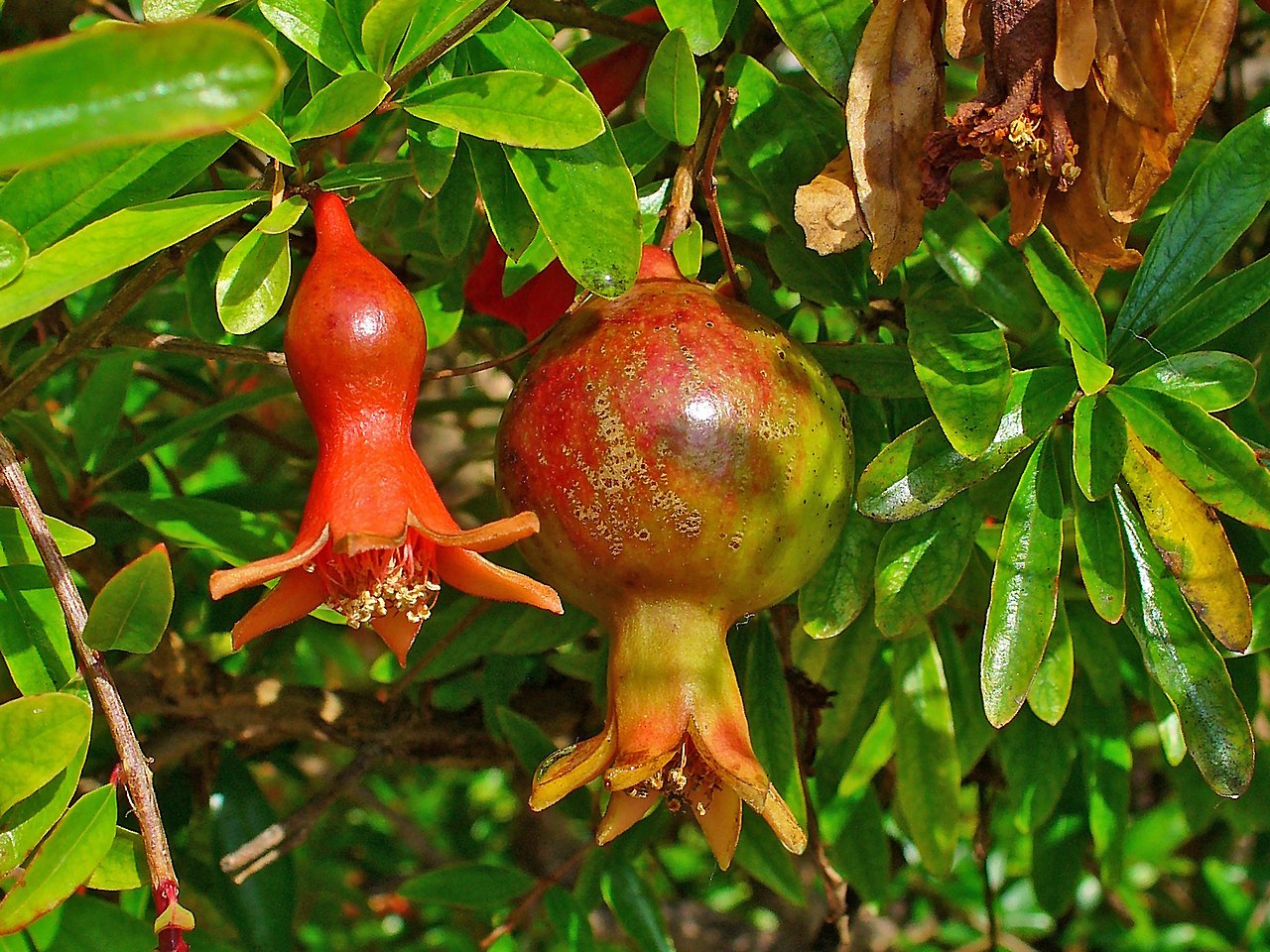
Punica species share a set of recognizable features. They usually produce glossy, opposite leaves, showy tubular flowers in shades of red or orange, and a rounded fruit with a leathery rind enclosing many juicy seeds. Growth habit and size vary with climate and pruning, and plants may form thickets from suckering stems.
- Leaves: simple, opposite, glossy.
- Flowers: conspicuous, bisexual, often orange-red.
- Fruit: a berry-like capsule containing arils (seed coverings) valued for flavor and color.
Taxonomy and species
Punica has traditionally been treated as a distinct group but modern classifications place it within the family Lythraceae. Two species are commonly recognized: the widely cultivated Punica granatum (the common pomegranate) and a less widespread species native to an island region that is smaller and genetically distinct. Botanical study has clarified relationships within this lineage while showing affinities to other members of the loosestrife family.
History, cultivation, and distribution
Punica has a long association with human agriculture and culture. Native ranges and early domestication are associated with parts of Eurasia and the Mediterranean basin, but cultivation spread widely because of the fruit's culinary versatility and ornamental appeal. Pomegranates tolerate a range of soil types and are often grown in gardens and orchards in warm temperate and subtropical climates; they respond well to pruning and can be propagated by cuttings or seeds.
Uses and cultural importance
The arils of Punica fruit are eaten fresh, juiced, or used in cooking and beverages; they are also valued for decorative and symbolic roles in many cultures. Beyond food use, plants are grown as landscape specimens for their attractive flowers and form. Traditional medicinal uses have been recorded in various cultures, though specific health claims should be evaluated with modern research.
Notable distinctions
Punica differs from many common fruit trees in its combination of shrub-like habit, ornamental flowers, and a fruit that is a multiple-seeded berry rather than a simple drupe. Conservation attention sometimes focuses on the rarer species with restricted ranges. For further botanical details and horticultural guidance, readers can consult general plant references and specialized resources: genus overview, fruit descriptions, leaf and life-cycle notes, growth form, tree vs shrub distinctions, and taxonomic treatments in family accounts.
Related articles
Author
AlegsaOnline.com Punica — the pomegranate genus Leandro Alegsa
URL: https://en.alegsaonline.com/art/80066
Sources
- commons.wikimedia.org : Punica
- species.wikimedia.org : Punica
- ars-grin.gov : "Genus: Punica L."
- biodiversitylibrary.org : "Species Plantarum, Tomus I"
- hort.purdue.edu : "Pomegranate, Punica granatum L."
- theplantlist.org : "Punica"
- wikidata.org : Q4959355
- species.wikimedia.org : Punica
- ville-ge.ch : 194213
- id.biodiversity.org.au : 59057
- eol.org : 71220
- gd.eppo.int : 1PUNG
- florabase.dpaw.wa.gov.au : 44711
- efloras.org : 127653
- gbif.org : 3188663