
Pyrola (wintergreens): overview, taxonomy and ecology
Pyrola, commonly called wintergreens or shinleaves, is a small group of evergreen woodland herbs in the heath family (Ericaceae). This entry covers identification, classification, ecology and conservation.
Overview
Pyrola is a small genus of low-growing, evergreen herbaceous plants commonly referred to as wintergreens or shinleaves. They are characteristic members of shaded, cool temperate woodlands, bog margins and other acidic, moist habitats across northern temperate regions. Plants typically produce a basal rosette of leathery leaves and an erect flowering stalk bearing small, urn- or bell-shaped flowers.
Image gallery
4 Images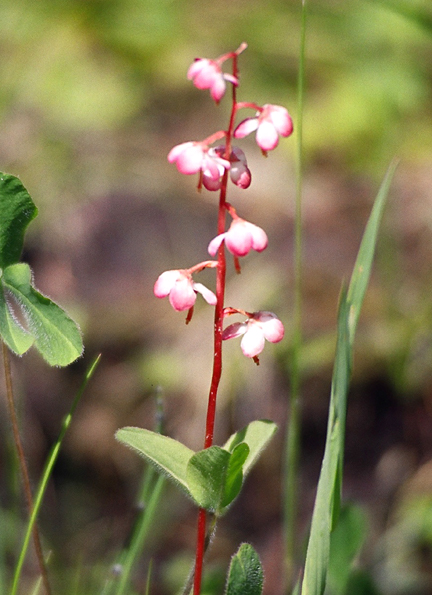


Appearance and identifying features
Key field characters include a basal cluster of evergreen leaves, single or few-flowered racemes, and symmetrical, five-parted flowers often nodding or slightly reflexed. Flower color ranges from white to pinkish or greenish. Typical features are:
- Evergreen, often rounded to oblong basal leaves.
- Flower stalks that rise above the leaf rosette with small cup-shaped blossoms.
- Adaptation to acidic, shaded soils and woodland humus layers.
Taxonomy and classification
Pyrola belongs to the heath family Ericaceae and is placed in the subfamily Pyroloideae. Historically the group was sometimes treated as a separate family, Pyrolaceae, but modern morphological and molecular studies place it within Ericaceae. The common name "wintergreen" is also applied to unrelated genera such as Gaultheria, which are different despite a shared family association in broader treatments.
Ecology and biology
Species of Pyrola are associated with forest understories where light is limited. Many form mycorrhizal partnerships with soil fungi, and several species are known to be partially mycoheterotrophic (mixotrophic), obtaining carbon both via photosynthesis and from fungal partners. These relationships help them persist on nutrient-poor soils and make them sensitive to changes in soil fungal communities.
Distribution, conservation and uses
Pyrola species occur across North America, Europe and Asia in temperate to boreal zones. They are not major horticultural or commercial plants, though they have been mentioned in traditional herbal accounts. Conservation concerns focus on habitat loss, woodland disturbance and drainage of wetlands; some species are locally rare and benefit from habitat protection and careful forest management.
For general information on related genera and family treatments see a plant family overview (Ericaceae summary), regional floras (temperate flora guides) and taxonomic resources (classification databases).
Related articles
Author
AlegsaOnline.com Pyrola (wintergreens): overview, taxonomy and ecology Leandro Alegsa
URL: https://en.alegsaonline.com/art/80244