
Puja (Hinduism): ritual worship, forms, and social role
Puja is a Hindu ritual of reverence and worship involving offerings, mantras, and symbolic gestures, performed in homes and temples to honor deities, guests, ancestors, and important occasions.
Overview
Puja (Sanskrit pūjā) is a ritual act of reverence practiced widely in Hinduism to honor a deity, a revered person, or a sacred event. The term denotes gestures and offerings made to express devotion, respect, and gratitude. It is commonly performed in household shrines, temples, and public ceremonies, and related devotional rituals appear in other South Asian religions.
Image gallery
10 Images




Components and sequence
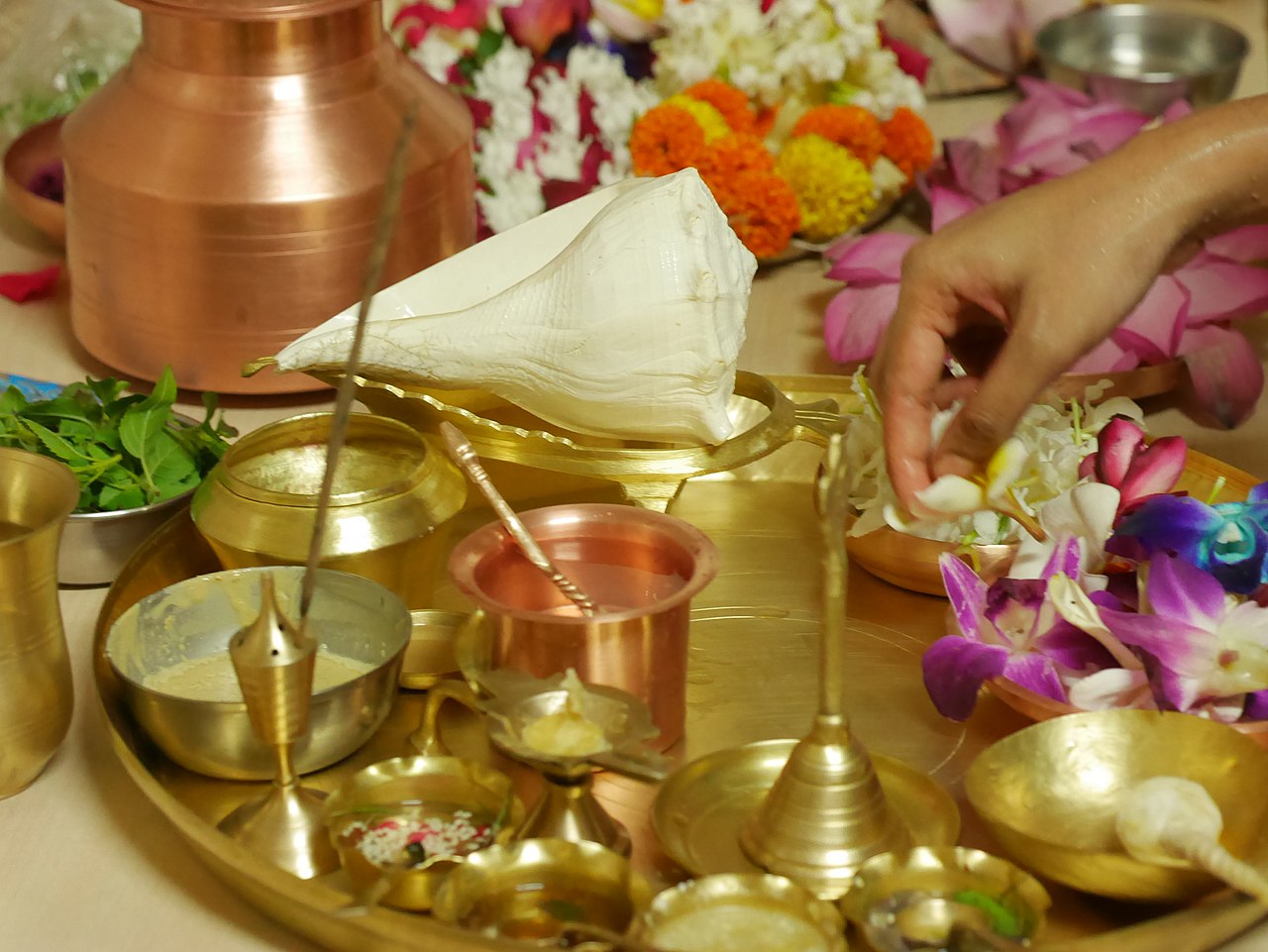
A typical puja can vary from a brief daily observance to an elaborate festival rite. Common elements include invocation of the presence of the deity, recitation of mantras or prayers, presentation of offerings, symbolic acts such as waving a lamp (aarti), and distribution of blessed food (prasada). The sequence emphasizes attention, purification, and reciprocity between worshipper and divine presence.
- Invocation: calling or visualizing the deity.
- Offerings: flowers, water, incense, food, light.
- Chanting: mantras or sacred names.
- Aarti and prasada: concluding light ritual and shared food.
Settings and participants
Puja is adaptable: it may be conducted privately by a household member, led by a temple priest, or organized as a communal observance. Some rituals require specific materials or priests trained in liturgical forms, while many lay practices are simple and accessible. The social role of puja often extends to marking life-cycle events and communal festivals.
History and development
Roots of Hindu worship include ancient Vedic sacrificial practices, but the present forms of puja developed over centuries as temple worship and devotional movements expanded. Different regions and sects shaped distinct styles: some emphasize image-based devotion, others prioritize scriptural recitation or meditative practices. The form of puja continues to evolve with changing social and technological contexts.
Uses, importance, and variations
Puja serves multiple purposes: personal devotion, communal identity, celebration of rites of passage, and remembrance of the dead. Variations range from daily altar rituals to large-scale festival pujas that attract thousands. Similar devotional rites exist in Buddhism, Jainism, and Sikhism, where offerings and recitations create shared devotional spaces.
Notable facts and modern trends
Contemporary adaptations include simplified household pujas, ecumenical and secularized ceremonies, and digitally mediated or streamed pujas for dispersed communities. Despite changes in form, the core functions—ritual attention, symbolic exchange, and communal affirmation—remain central to puja’s continuing relevance.
Further reading
- Devanagari script and the word pūjā
- General descriptions of Hindu prayer services
- Ritual structures and liturgy
- Sanskrit etymology and lexical notes
- Concepts of reverence and worship
- Deity-centered forms of puja
- Puja and commemorative observances
- Puja-like practices in Buddhism
- Puja practices in Jainism and Sikhism
Related articles
Author
AlegsaOnline.com Puja (Hinduism): ritual worship, forms, and social role Leandro Alegsa
URL: https://en.alegsaonline.com/art/79987
Sources
- commons.wikimedia.org : Puja
- wisdomlib.org : "Puja, 14 Definition(s)"