
Devanagari: script, structure, history and modern use
Devanagari is a Brahmic abugida used across South Asia to write Sanskrit, Hindi, Marathi, Nepali and many regional languages. It features a headline, vowel diacritics, conjunct consonants and extensive digital support.
Devanagari (देवनागरी) is a member of the Brahmic family of scripts and is classed as an abugida, in which consonant letters carry an inherent vowel and separate marks indicate other vowels. Written left-to-right, Devanagari is recognised by a continuous horizontal stroke above the letters, called the shirorekha or headline. It is employed both for classical liturgical texts and for a wide range of modern languages from northern and central South Asia, broadly described as North Indian language traditions.
Image gallery
2 Images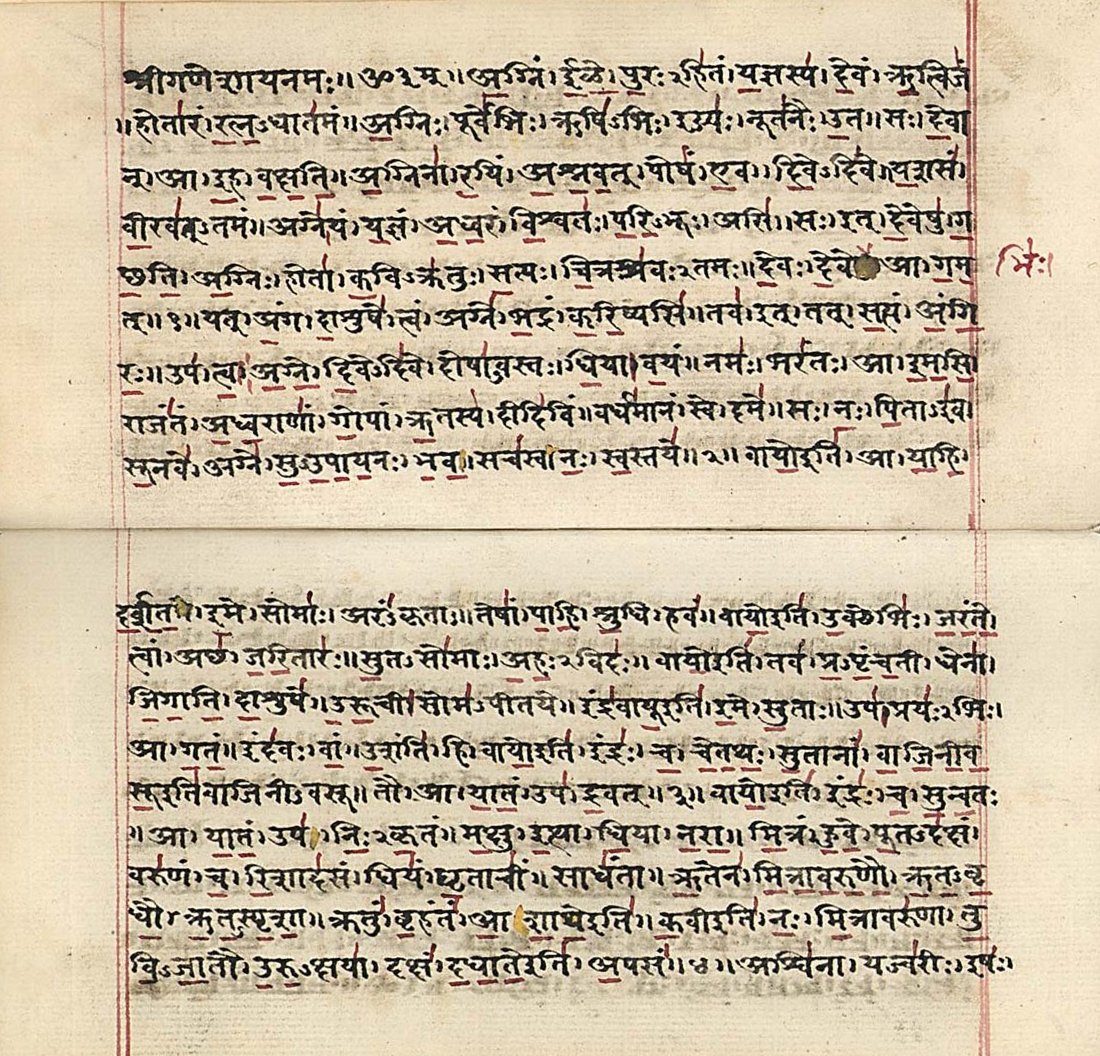

Structure and orthography
The script distinguishes independent vowel letters and vowel signs (matras) that attach to consonants. A virama or halant sign removes the inherent vowel to form pure consonants; consonant clusters are normally written as conjuncts or ligatures that fuse two or more consonant shapes. Devanagari letters represent phonetic segments rather than morphemes, and the same basic inventory is adapted to different phonologies by adding diacritics or additional letters. Vowel length, aspiration and retroflexion are commonly marked, and the script also includes its own set of numerals in traditional use.
History and development
Devanagari evolved from earlier North Indian scripts descended from Brahmi. Over many centuries the forms and orthographic conventions stabilized as it became a principal vehicle for Sanskrit and, later, for regional vernacular literatures. In the modern era orthographies were standardised for education, administration and publishing, and Devanagari was adapted for languages with differing sounds through additional letters and pronunciation conventions.
Languages and regional use
- Sanskrit — the classical liturgical and scholarly language that preserved many traditional spellings.
- Hindi — a major modern standard language that uses a simplified, standardised orthography.
- Marathi — uses Devanagari with a long literary tradition and some distinct orthographic features.
- Bihari — a group of related languages and dialects often written in Devanagari in contemporary contexts.
- Konkani — one of several scripts used historically; Devanagari is an official script for some communities.
- Bhili and other regional languages employ Devanagari or local variants for literacy and publishing.
- Nepali — the state language of Nepal, written in Devanagari for official and literary use.
- Bhojpuri and many smaller languages make practical use of Devanagari for education and media.
- Kashmiri — sometimes written in Devanagari alongside other scripts, depending on community and region.
- Sindhi — in some contexts Devanagari is used as an alternative to Perso-Arabic-based scripts.
Typography, computing and learning
Modern typography and digital rendering support complex conjuncts, vowel placement and the headline; Unicode encodes the full Devanagari block and rendering engines shape glyphs for ligatures and combining marks. Standard transliteration schemes are used in scholarship and language teaching to represent Devanagari in Latin letters. Learners typically begin with independent vowels and the basic consonant set, then practice matras, halant use and common conjuncts. Variants in handwriting, regional orthographies and font choices influence how the script appears in print and on screen.
Related articles
Author
AlegsaOnline.com Devanagari: script, structure, history and modern use Leandro Alegsa
URL: https://en.alegsaonline.com/art/26960