
Proceratosaurus — a small Middle Jurassic tyrannosauroid
Small Middle Jurassic theropod from England. An early relative of tyrannosaurids, known from partial skull remains; about 3 m long and important for understanding early coelurosaur evolution.
Overview
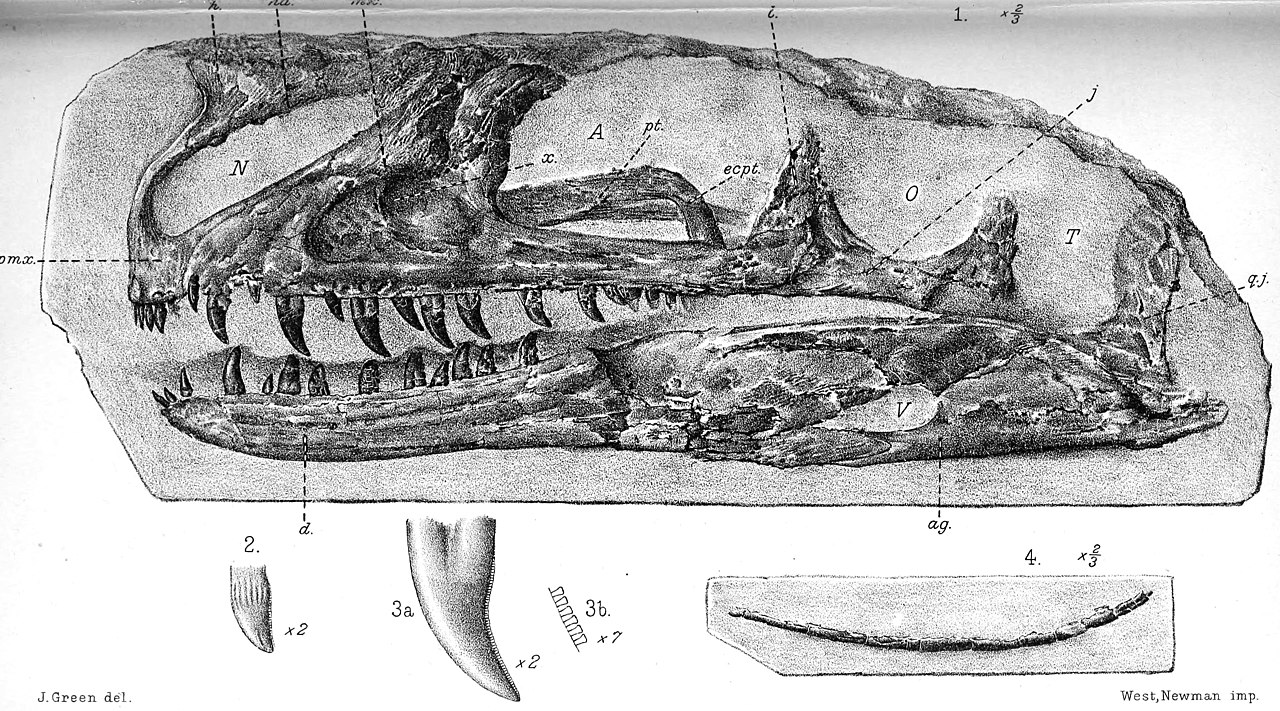
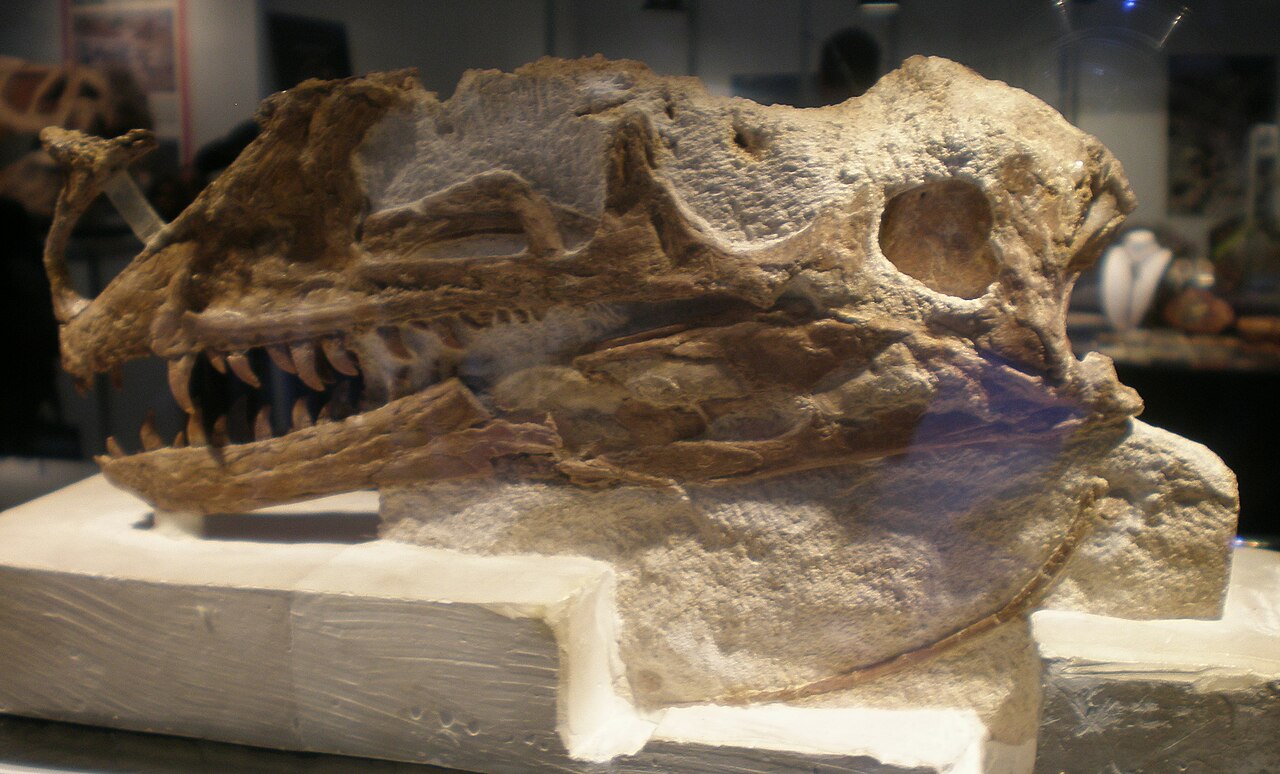
Proceratosaurus was a small, bipedal dinosaur that lived in the Middle Jurassic, roughly 165 million years ago. Its remains were recovered in Gloucestershire in England. Known primarily from cranial material, it has been interpreted as a carnivorous theropod that hunted or scavenged small vertebrates.
Image gallery
10 Images



Discovery and naming
The type specimen was found in the early 20th century and described soon afterward. Early researchers compared it to other rostrally crested theropods and initially suggested a link to Ceratosaurus. Later reexamination of the skull and associated bones led to a reassignment: it is best placed among early relatives of the tyrannosauroid lineage rather than the ceratosaur line.
Anatomy and classification
Proceratosaurus is classified as a basal member of the coelurosaurs and is often regarded as one of the earliest known relatives of the group that culminated in the great tyrannosaurids such as Tyrannosaurus. Anatomical features of the snout and skull roof distinguish it from more primitive theropods: several authors note a short nasal crest and skull proportions consistent with early theropod evolution. Its placement shows that some traits associated with later tyrannosaurids began evolving well before the Upper Cretaceous.
Size, diet and paleoecology
Estimates based on the preserved remains suggest an animal about 3 m long and weighing on the order of 60 kg. As a small predator it likely fed on small animals and juveniles of larger species, using agile locomotion and grasping teeth suited to a carnivorous lifestyle. Its environment would have been a mosaic of forests and floodplains typical of European Middle Jurassic faunas.
Significance and distinctions
- Important early tyrannosauroid: provides evidence that the tyrannosauroid branch was already distinct in the Middle Jurassic.
- Cranial crest: a modest crest on the snout helps separate it from similarly sized theropods.
- Size contrast: much smaller than the later, giant tyrannosaurids, illustrating long-term evolutionary changes within the group.
Context and continuing study
Proceratosaurus illustrates how fragmentary fossils can alter interpretations of dinosaur relationships. Initial comparisons suggested it was an ancestor of Ceratosaurus, but modern analyses favor placement close to early coelurosaurs and the roots of tyrannosauroids. Ongoing revision of Middle Jurassic European fossils continues to refine its exact position and ecological role, making the genus a useful reference point in studies of theropod evolution and biogeography.
For summary resources and further reading consult general dinosaur databases and museum pages that cover Middle Jurassic theropods: see entries on regional faunas and basal coelurosaurs (carnivorous theropods, dinosaur summaries) and specialized reviews of early tyrannosauroids (Middle Jurassic context, Gloucestershire finds).
References and specimen details are available through paleontological catalogs and institutional records that list the type specimen and subsequent revisions (England collections, geological timescale notes, theropod anatomy, Upper Cretaceous comparisons).
Questions and answers
Q: When did Proceratosaurus exist?
A: Proceratosaurus existed approximately 165 million years ago during the Middle Jurassic period.
Q: Where was Proceratosaurus found?
A: Proceratosaurus was discovered in Gloucestershire, England in 1910.
Q: What type of dinosaur was Proceratosaurus?
A: Proceratosaurus was a carnivorous theropod dinosaur.
Q: What was Proceratosaurus thought to be an ancestor of?
A: Proceratosaurus was initially thought to be an early ancestor of Ceratosaurus.
Q: What was Proceratosaurus actually an ancestor of?
A: Proceratosaurus was actually an ancestor of the coelurosaurs, and thus an early ancestor of Tyrannosaurus and its relatives in the Upper Cretaceous period.
Q: How long was Proceratosaurus in life?
A: Proceratosaurus was about 3 meters long in life.
Q: What was the weight of Proceratosaurus?
A: Proceratosaurus weighed up to 60 kilograms.
Related articles
Author
AlegsaOnline.com Proceratosaurus — a small Middle Jurassic tyrannosauroid Leandro Alegsa
URL: https://en.alegsaonline.com/art/79321
Sources
- news.bbc.co.uk : news.bbc.co.uk/1/hi/sci/tech/8340922.stm
- onlinelibrary.wiley.com : onlinelibrary.wiley.com/doi/10.1111/j.1096-3642.2009.00591.x/abstract