
Procoptodon: giant short-faced kangaroos of Pleistocene Australia
Procoptodon is a genus of large, short-faced kangaroos that lived in Pleistocene Australia; best known is P. goliah, the largest kangaroo, a specialized browser adapted to open, arid landscapes and extinct in the late Pleistocene.
Overview
Procoptodon is a genus of large, short-faced macropods that inhabited what is now Australia during the Pleistocene. These animals are notable for their atypical skull shape and size: the best-known species, Procoptodon goliah, was the largest kangaroo recorded in the fossil record. Fossils of Procoptodon show adaptations for life as a browser in the variable climates of Pleistocene Australia.
Image gallery
8 Images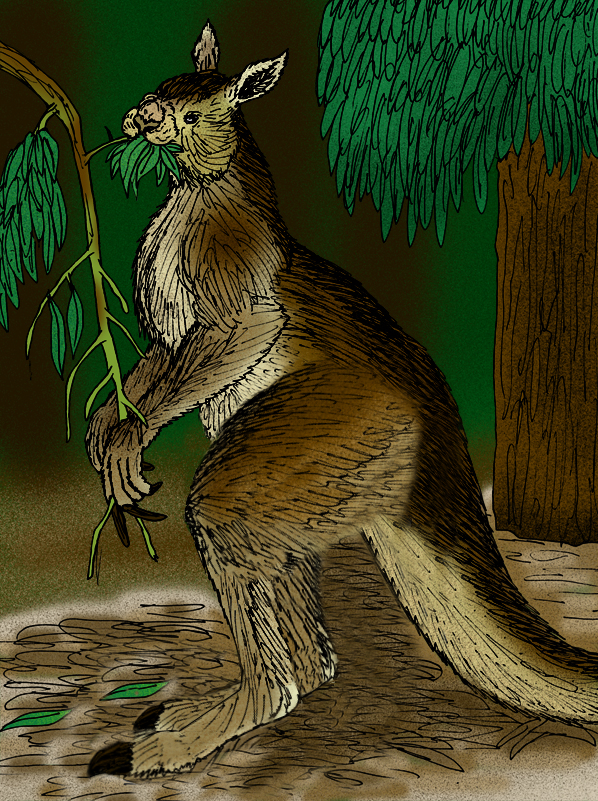


Physical characteristics
Procoptodon are often called "short-faced kangaroos" because of their unusually foreshortened skulls and forward-facing eyes, features that probably improved binocular vision for reaching and selecting foliage. Compared with living macropods they had a flatter face, robust forelimbs, and different hindfoot anatomy. Their feet appear to have emphasized a large central toe with reduced lateral digits, suggesting a different weight distribution than modern hopping kangaroos. Short-faced kangaroos also display dental and jaw features consistent with processing leaves and woody shrubs.
Diet, water needs and locomotion
Evidence from teeth and jaw wear indicates Procoptodon were primarily browsers rather than grazers: leaves, shrubs and saltbushes made up a large part of their diet. In particular, analyses suggest species such as P. goliah fed heavily on saltbush-type plants and therefore required reliable water sources to cope with a salty diet. Their great body mass—P. goliah stood around two metres tall and has been estimated at roughly 200–240 kg—means they were probably unable to hop rapidly like modern kangaroos. Instead, their limb structure implies a heavier, more deliberate form of locomotion, possibly a slow bipedal stride or other non-hopping gait. Changes in climate affected food and water availability, and the contraction of wooded or shrubby habitat reduced suitable browsing areas (habitat).
Fossil record and extinction
Fossils of Procoptodon are found across a range of Pleistocene deposits and include well-preserved skulls and limb bones that have allowed detailed reconstructions. These kangaroos disappeared during the late Pleistocene; causes likely included a combination of environmental change and pressures associated with the arrival and spread of human hunters. Archaeological and paleontological evidence supports at least occasional predation by humans alongside habitat loss from changing climates.
Species, ecological role and notable facts
Species in the genus varied considerably in size and proportions. Examples include:
- Procoptodon goliah — the largest known species, up to about 2 m tall and several hundred kilograms in mass.
- Procoptodon gilli — a much smaller species, around 1 m tall.
As large browsers, Procoptodon would have been important consumers of woody vegetation, shaping plant communities in Pleistocene Australia. Their distinctive anatomy and extinction at the end of the Pleistocene make them a key subject in discussions about megafaunal extinction, human impacts, and the response of large marsupials to rapid environmental change.
Questions and answers
Q: What is Procoptodon?
A: Procoptodon is a genus of giant short-faced kangaroo that lived in Australia during the Pleistocene epoch.
Q: Which species of Procoptodon was the largest?
A: P. goliah was the largest species of Procoptodon and the largest kangaroo known to have existed, standing about 2 meters (6.6 feet) tall and weighing about 200-240 kg (440-530 lb).
Q: What did Procoptodon eat?
A: Procoptodon were browsers and ate leaves from trees and shrubs. Saltbushes were their main food source, and Procoptodon goliah relied on free-standing water to help process its salt-laden diet.
Q: Did Procoptodon hop like kangaroos today?
A: It is likely that Procoptodon did not hop like their relatives do today, due to their large size.
Q: What caused the decline of Procoptodon?
A: A combination of climate change (cooling and shrinking of forest areas) and predation (hunting) by aboriginal humans probably contributed to the decline of Procoptodon.
Q: Which species of Procoptodon was the smallest?
A: Procoptodon gilli was the smallest species of Procoptodon, only about 1 meter (3 ft 3 in) tall.
Q: Was Procoptodon a grazer like kangaroos today?
A: No, Procoptodon were browsers and not grazers like kangaroos today.
Related articles
Author
AlegsaOnline.com Procoptodon: giant short-faced kangaroos of Pleistocene Australia Leandro Alegsa
URL: https://en.alegsaonline.com/art/79328
Sources
- fmnh.helsinki.fi : "Mikko's Phylogeny Archive: Macropodidae - kenguroos" · web.archive.org
- australianmuseum.net.au : "Procoptodon goliah"
- journals.plos.org : journals.plos.org/plosone/article?id=10.1371/journal.pone.0109888
- pnas.org : pnas.org/content/106/28/11646
- eds.b.ebscohost.com : Aridity, faunal adaptations and Australian late Pleistocene extinctions
- wikidata.org : Q131971
- eol.org : 4449990
- fossilworks.org : 40161
- gbif.org : 4826148