
Procyonidae: raccoons, coatis, kinkajous and relatives
Procyonidae is a family of small to medium carnivoran mammals native to the Americas, including raccoons, coatis, kinkajous, ringtails and olingos. Members vary widely in diet, locomotion and social behaviour.
Overview
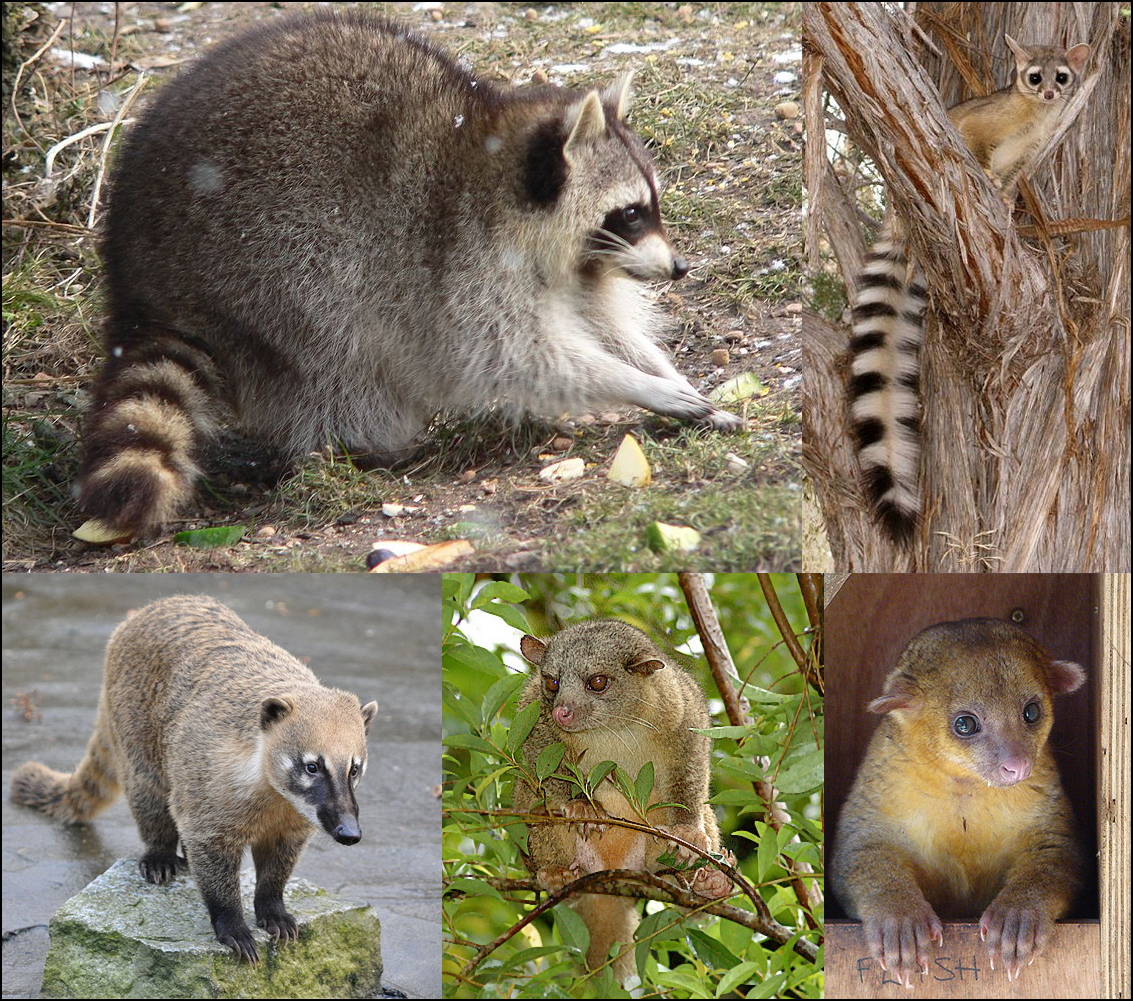
The Procyonidae are a family of mammals in the order Carnivora. Procyonids are native to the Americas, where they occupy habitats from temperate woodlands to tropical rainforests and arid regions. The family includes familiar species such as raccoons and coatis as well as less well known arboreal taxa. Members range from mainly terrestrial to highly arboreal in habit and show a wide variety of diets and life histories.
Image gallery
8 Images


Characteristics
Procyonids are generally small to medium-sized, often with elongated bodies, long tails (frequently ringed) and facial markings. Many possess dextrous forepaws that they use to manipulate food and objects. Activity patterns are commonly nocturnal, though some species are diurnal or cathemeral. Fur, dentition and limb proportions vary with ecology, from fruit-eating kinkajous to ground-oriented ringtails.
Taxonomy and evolution
The family contains several genera traditionally recognised by morphology and supported by genetic studies. Procyonids are part of the musteloid assemblage and are related to groups such as mustelids and skunks. Fossil evidence and molecular data indicate an origin and early diversification in North America, followed by southward dispersal into Central and South America for many lineages.
Behavior, diet and reproduction
Dietary habits are flexible: many procyonids are opportunistic omnivores that eat fruit, invertebrates, eggs and small vertebrates, while some specialize on particular resources. Social systems vary; for example, coatis often form daytime social groups, whereas raccoons are largely solitary. Reproductive strategies are generally seasonal with females producing a litter of several young and providing maternal care until independence.
Distribution and ecological roles
Native across North, Central and South America, procyonids inhabit forests, scrublands, mountains and urban areas. Arboreal species can act as seed dispersers and pollinators in tropical forests, while terrestrial species influence invertebrate and small vertebrate populations. Some species have adapted well to human environments and have been introduced outside their native ranges, with varied ecological consequences.
Human interactions and conservation
- Conservation issues include habitat loss, collisions with vehicles, hunting and capture for the pet trade; several species are of conservation concern while others are common and adaptable.
- Procyonids often come into conflict with people as crop pests or urban scavengers, but they are also subjects of ecological research and wildlife management.
- Management and conservation efforts typically emphasize habitat protection, conflict mitigation and research into population status and disease ecology.
Notable genera
- Procyon — raccoons, adaptable omnivores common in a variety of landscapes.
- Nasua — coatis, social and often diurnal foragers with elongated snouts.
- Potos — the kinkajou, a nocturnal, fruit-eating, arboreal species with prehensile abilities.
- Bassariscus — ringtail and cacomistle, with slender bodies and agility in trees and cliffs.
For systematic treatments and regional species accounts consult specialist literature and faunal guides that cover taxonomy, behavior and conservation in greater detail.
Related articles
Author
AlegsaOnline.com Procyonidae: raccoons, coatis, kinkajous and relatives Leandro Alegsa
URL: https://en.alegsaonline.com/art/79332