
Propithecus (sifakas): lemurs of Madagascar
Propithecus, or sifakas, are a genus of diurnal lemurs endemic to Madagascar, noted for vertical leaping, characteristic bipedal hops on the ground, folivorous-frugivorous diets, social groups, and conservation concern.
Overview
Propithecus, commonly called sifakas, is a genus of medium- to large-sized primates in the family Indriidae. Endemic to Madagascar, these animals are part of the broader group of lemurs and are best known for their long hind limbs, vertical clinging and leaping between trees, and an unusual bipedal hopping gait when moving across the ground. Taxonomy has been revised repeatedly; current accounts recognize around nine species, with boundaries and names continuing to be refined by scientists.
Image gallery
10 Images


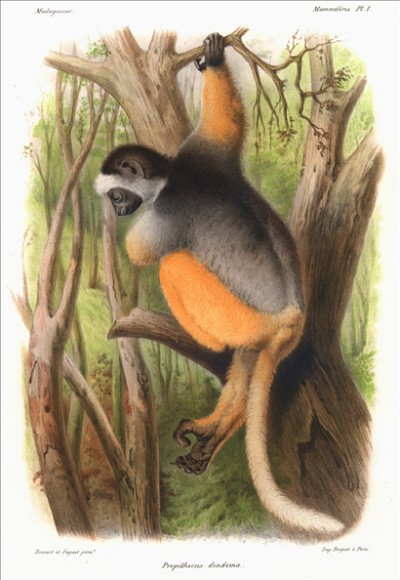
Physical characteristics
Sifakas have a compact torso, powerful elongated hind limbs, and shorter forelimbs, adaptations for rapid launches between vertical supports. Feet and hands are adapted for grasping trunks and branches. Their tails are long and used for balance but are not prehensile. Coat color and pattern vary among species, from predominantly white to richly patterned pelage with combinations of black, brown, tan and gold, often aiding species recognition.
Locomotion
In the canopy sifakas move by vertical clinging and leaping: they push off with the hind legs and land on vertical supports. On the ground their movement is notable—an upright, sideways bipedal hop with arms held up for balance. This distinctive terrestrial gait is visible in several well-known species and is a striking behavioral adaptation when crossing open areas.
Diet and feeding
Sifakas are primarily folivorous and frugivorous, feeding on leaves, fruits, flowers and seedpods depending on seasonal availability. Their digestive systems and feeding behavior are adapted to a leafy diet in many species, while some will take larger quantities of fruit when available. Foraging typically occurs in the forest canopy, and many species influence seed dispersal and plant dynamics.
Social structure and reproduction
Group sizes and social organization vary by species and habitat. Many sifakas live in small social groups that may include related females and males; dominance hierarchies often exist and females can be dominant in some populations. Reproduction is generally seasonal in Madagascar; females typically produce a single infant after a gestation period typical for medium-sized lemurs. Young are carried by the mother and gradually begin independent locomotion during their first months.
Habitat and distribution
Sifakas occupy a range of forest types across Madagascar, from dry deciduous forests in the west to humid eastern rainforests and transitional areas. Different species have different and sometimes restricted ranges; habitat specificity contributes to vulnerability when forests are fragmented or cleared.
Threats and conservation
Many sifaka species face serious threats from habitat loss, fragmentation, and hunting. Deforestation for agriculture, logging and charcoal production has reduced available habitat, and small, isolated populations are at greater risk from local extinctions. Several species have been assessed as endangered or critically endangered, and conservation attention focuses on protected areas, habitat restoration, and community-based management. Conservation success depends on combining scientific research, local engagement and sustainable land-use planning.
Taxonomy and notable species
- Coquerel's sifaka (a common western species known from dry forests)
- Diademed sifaka (a large, colorful rainforest species)
- Verreaux's sifaka (well known for its elegant terrestrial hops)
Research and human interactions
Research on sifakas contributes to broader understanding of primate locomotion, social behavior and conservation biology. Field studies, population surveys and genetic work help clarify species limits and inform management. Education, ecotourism that supports local communities, and collaborative conservation programs are important tools for protecting sifakas and the unique ecosystems of Madagascar.
Related articles
Author
AlegsaOnline.com Propithecus (sifakas): lemurs of Madagascar Leandro Alegsa
URL: https://en.alegsaonline.com/art/79458