
Playground slide
An introduction to playground slides: design, materials, safety, varieties (including water slides and helter-skelters), history and common uses in public play areas.
Overview
A playground slide is a play structure that allows a person to descend a sloped surface by sitting or lying down and sliding from a raised platform to the ground. Slides are among the most familiar features of public play areas and are designed primarily for young children, though larger versions appear in water parks and amusement venues. Typical use involves climbing to a launch point and using gravity to travel down a smooth chute to a safe stopping area.
Image gallery
10 Images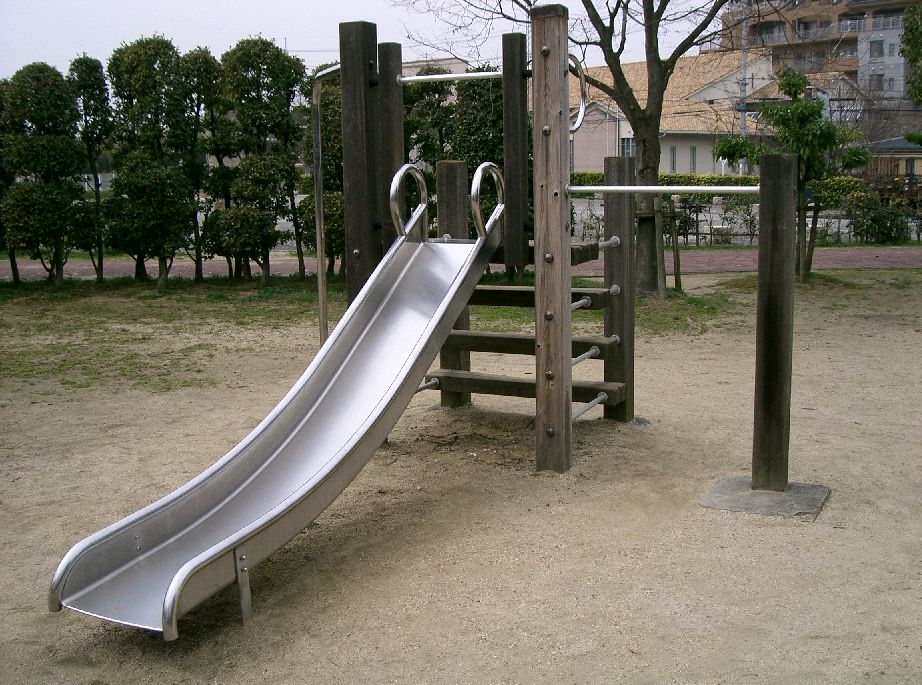


Design and main parts
Most slides share a common arrangement: an access element such as a ladder or steps, a platform or landing at the top, the sliding surface (often called the chute), side rails or edges to guide the rider, and a run-out zone at the bottom. The access may include handrails and guard panels. Surfaces are finished to be smooth and low-friction so a rider can move easily; edges and openings are sized to reduce the chance of entrapment.
Materials
Slides are built from a variety of materials, each with distinct characteristics. Traditional slides were often made from metal, which is durable but can become hot in sunlit conditions. Modern playgrounds commonly use molded plastic that resists heat, corrosion and provides smoother curves. In some settings, treated wood is used for aesthetic or naturalistic designs; wood requires preservation and regular inspection. Manufacturers may also use composite materials or coatings to improve wear resistance.
Safety, supervision and maintenance
Safety considerations cover slope steepness, height, edge protection, and the surfacing beneath the slide to cushion falls. Caregivers are advised to supervise young children, encourage sitting feet-first positions, and discourage sliding on the back or stomach, behaviors that increase injury risk on taller slides. Routine maintenance includes checking fastenings, smoothing rough spots, and ensuring the landing area remains free of debris. Playground standards and local regulations often specify clearances and performance tests.
Varieties and where they're used
Slides come in many forms: straight, wavy, spiral and enclosed tube types for parks; tall multi-lane slides at fairs; and massive threadlike towers called helter-skelters in amusement contexts. Pools and water parks use specialized water slides—sometimes called chutes—that end in a splashdown. Playgrounds in schools and public parks install slides to promote physical activity, balance and confidence in playgrounds visited by children.
History and cultural notes
The idea of sliding down a slope is ancient, but purpose-built playground slides emerged with the formal playground movement in the late 19th and early 20th centuries. Early industrial materials made metal slides common in mid-century playfields; later concerns about heat and injury spurred the move to plastics and safer designs. Slides remain a persistent element of play equipment because they are simple, immediately rewarding, and adaptable to a wide range of ages and settings.
For more detailed technical guidance, maintenance checklists, or standards, consult manufacturers and local safety resources represented by industry publications and regulatory bodies (see links and supplier materials for specifics).
Children | Playgrounds | Ladder/Steps | Backs or stomachs | Metal | Plastic | Wood
Related articles
Author
AlegsaOnline.com Playground slide Leandro Alegsa
URL: https://en.alegsaonline.com/art/77400