
Quonset Hut: Prefabricated Semi-Cylindrical Steel Shelter
Quonset huts are lightweight, prefabricated semi-cylindrical steel buildings developed in the U.S. for rapid wartime construction; they later found broad civilian and industrial reuse worldwide.
Overview
A Quonset hut is a simple, prefabricated building characterized by its half-cylindrical or semicircular cross-section and lightweight steel construction. The curved roof and walls form a single continuous shell that provides structural strength with minimal framing. Components were manufactured offsite and then shipped in sections to be assembled where needed, making the hut an efficient form of temporary or semi-permanent shelter. For general information about building types, see building types.
Image gallery
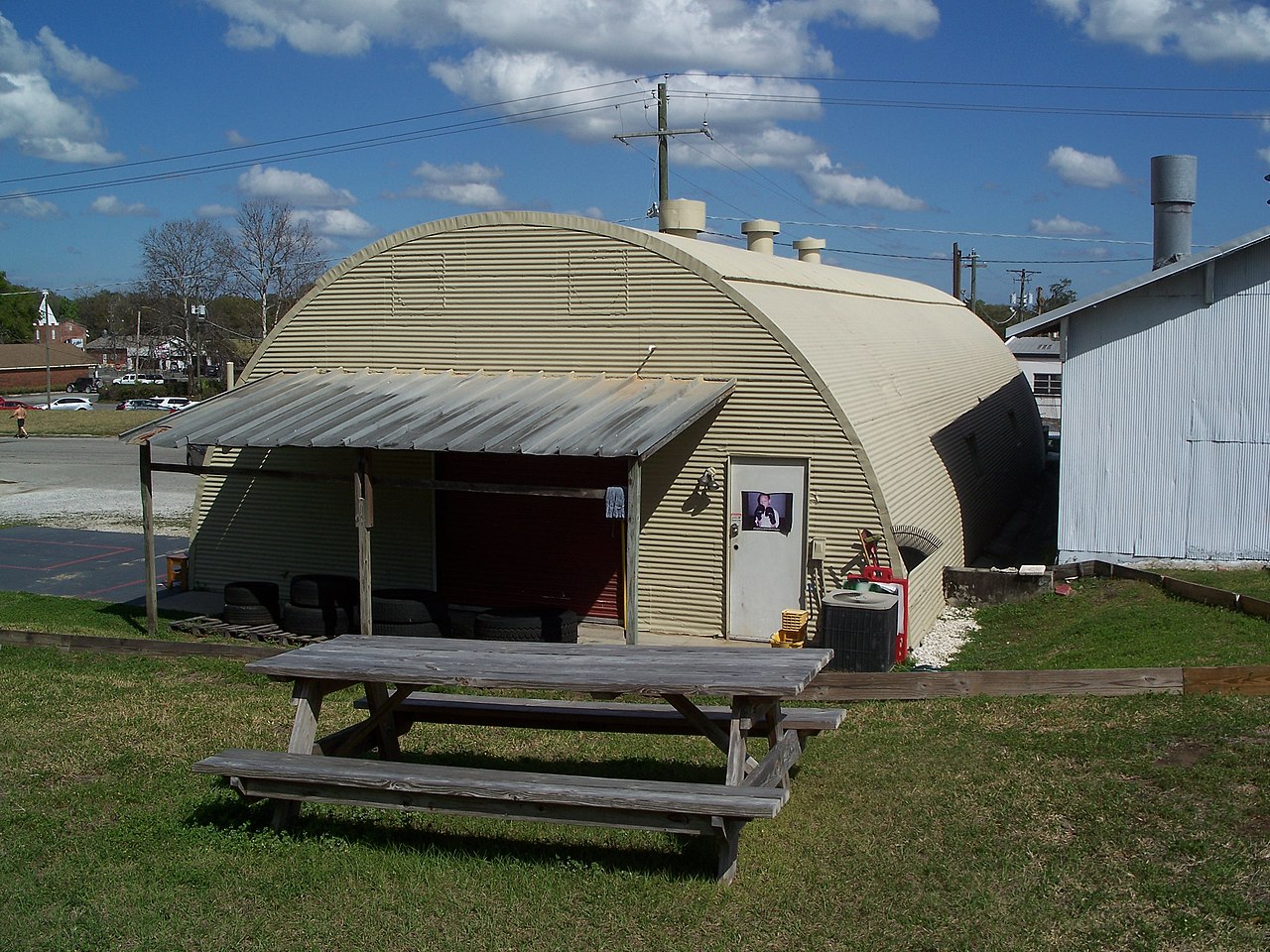
10 Images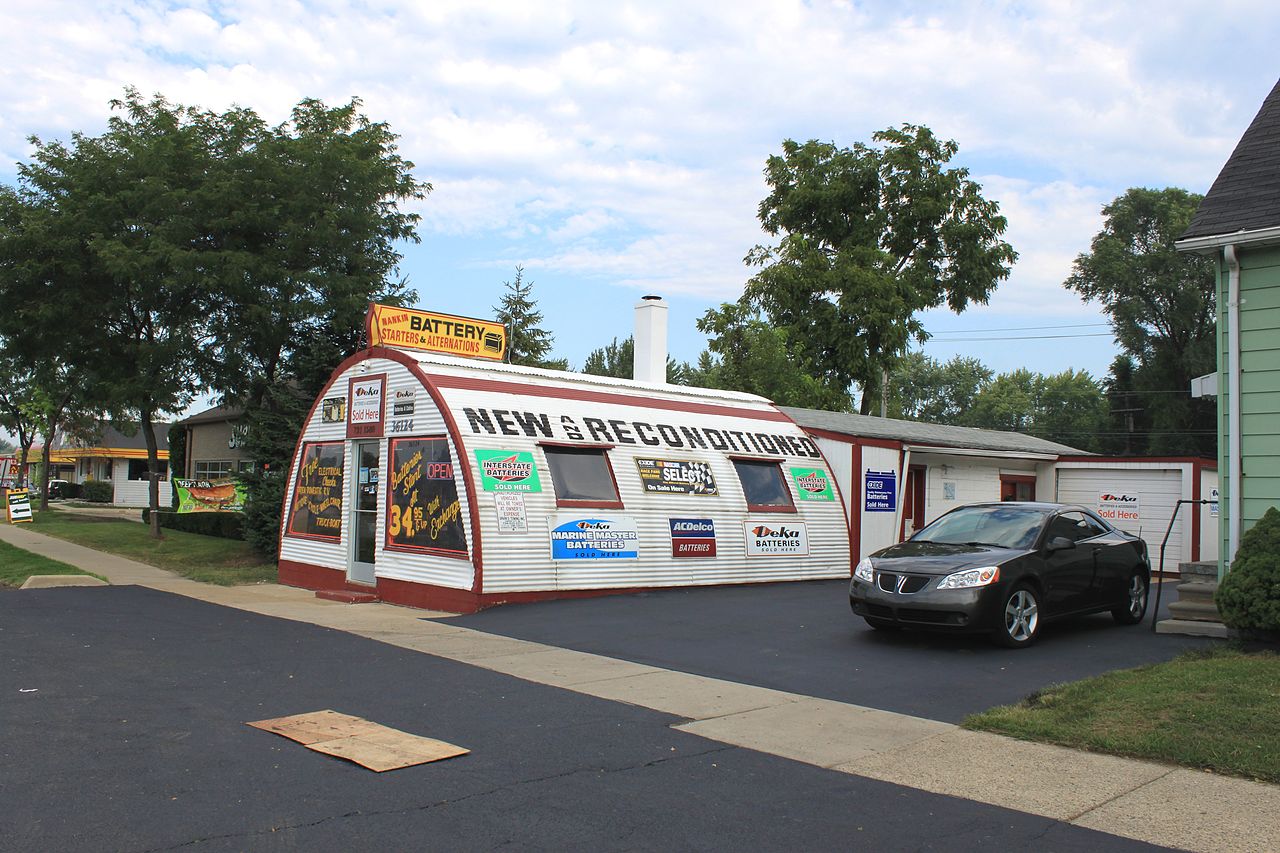





Design and materials
Typical Quonset huts are made from corrugated, galvanized steel panels fastened to a simple framework or directly to end walls. Corrugation increases stiffness while thin-gauge steel keeps weight and shipping volume low; galvanization reduces corrosion and extends service life. The semicircular profile sheds wind and snow and eliminates separate roof members, which simplifies construction. Common improvements include insulating liners, wooden or concrete floors, and end-wall openings for doors and windows. For detail on steel construction, see steel materials and for the semicircular form, see structural geometry.
History and development
The Quonset hut was developed in the United States as a light, easily transported structure inspired by earlier military designs. It evolved from the British Nissen hut of World War I, which introduced the idea of a semicylindrical corrugated shelter. The American version was produced at Quonset Point in Rhode Island, a name that became the generic term for the product. Mass production accelerated during the early 1940s to meet wartime demand; hundreds of thousands were manufactured and deployed in many theaters of operation during World War II. The Nissen connection and wartime roots are well documented in sources on military architecture from the British side British designs and on broader wartime timelines World War I and World War II. The origin story and design development are covered in discussions of industrial production design history and American military logistics United States.
Uses and adaptations
Quonset huts were used for barracks, medical stations, offices, workshops, storage, and even chapels and classrooms. After the war, surplus huts were sold or repurposed for civilian uses: small businesses, agricultural storage, temporary housing, and community buildings. Their easy assembly and low cost made them attractive in postwar reconstruction and in rural or remote settings. Typical modern adaptations include improved insulation, HVAC retrofits, and permanent foundations.
Characteristics, advantages, and limitations
- Advantages: rapid assembly, low cost, portability, resistance to internal collapse due to arch action.
- Limitations: limited headroom at the sides, less efficient use of vertical wall space, potential condensation issues without insulation.
- Construction: prefabricated in factories and assembled on site; see factory production notes manufacturing.
Variants, legacy, and preservation
Various sizes and end-wall arrangements were produced, and modern manufacturers sometimes recreate the form for storage or architectural novelty. The Quonset hut is often compared with the Nissen hut, which is similar in concept but differs in proportions and historic origin. Many original huts survive in military museums, on former bases, or as adapted commercial buildings, serving as reminders of mid‑20th‑century prefabrication and wartime logistics. For further reading about preservation and examples, consult resources on prefabricated architecture and adaptive reuse architecture resources.
Notable facts: the name derives from the production site at Quonset Point; mass-produced huts played a significant role in rapid deployment and postwar rebuilding; and the simple, robust arch form continues to inspire economical building solutions. Additional technical references and photographs can be found through archival collections and specialized publications materials, design, and historical studies war-era records.
Questions and answers
Q: What is a Quonset hut?
A: A Quonset hut is a building made of steel with two side-walls having the shape of a half-circle.
Q: How are Quonset huts made?
A: Quonset huts are made at a factory and then later put together at their location using corrugated and galvanized steel.
Q: Where was the Quonset hut first designed?
A: The Quonset hut was first designed in the United States.
Q: What was the Nissen hut?
A: The Nissen hut was a similar type of structure made by the British during World War I, on which the Quonset hut was based.
Q: How many Quonset huts were made during World War II?
A: Hundreds of thousands of Quonset huts were made during World War II.
Q: What happened to the leftover Quonset huts after the war?
A: After the war, the leftover Quonset huts were sold to the public.
Q: Where did the name "Quonset" come from?
A: The name "Quonset" comes from the site where they were first made, which was Quonset Point at the Davisville Naval Construction Battalion Center in Davisville, Rhode Island.
Related articles
Author
AlegsaOnline.com Quonset Hut: Prefabricated Semi-Cylindrical Steel Shelter Leandro Alegsa
URL: https://en.alegsaonline.com/art/80611
Sources
- alaskastructures.com : "Benefits and Applications of the Quonset Hut Design"