
Placodonts: Triassic marine reptiles adapted for shell‑crushing
Placodonts were distinctive Triassic marine reptiles with broad, crushing teeth and often heavy armor; they occupied nearshore ecosystems and became extinct by the end of the Triassic.
Overview
Placodonts were a specialized group of shallow‑water reptiles that lived during the Triassic period. They are best known for stout, flattened teeth adapted to a durophagous diet of hard‑shelled prey, and for a range of body forms from lizardlike to heavily armored. Most placodont fossils come from deposits laid down in marine coastal and lagoonal environments, where they fed on mussels, clams and other benthic invertebrates such as shellfish.
Image gallery
10 Images


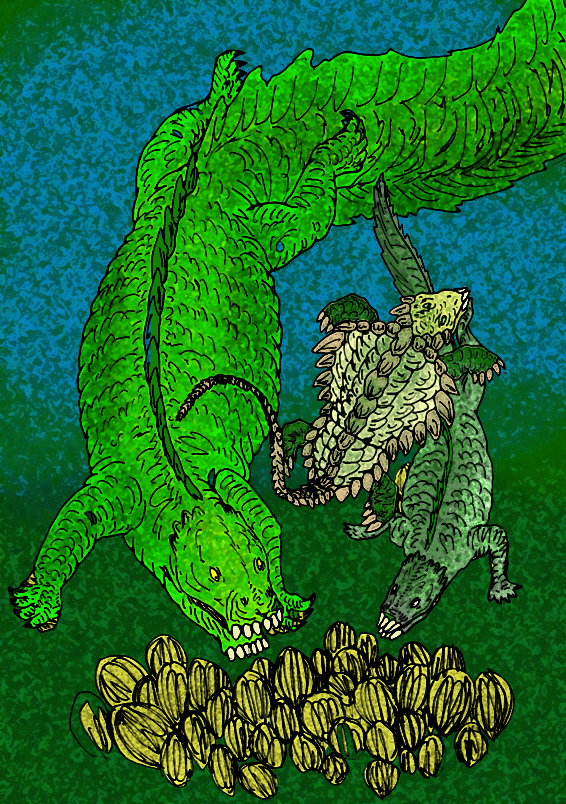
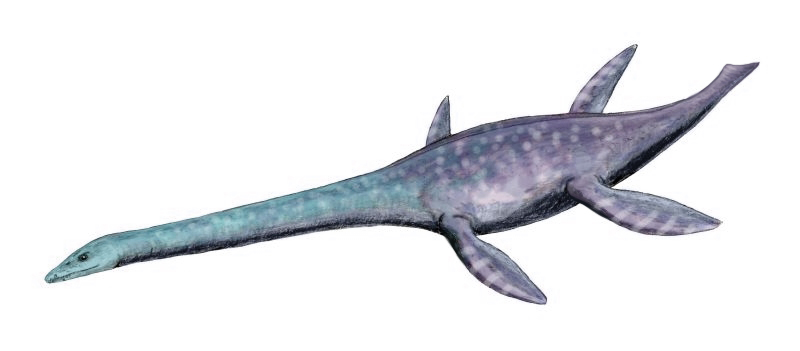


Anatomy and adaptations
Placodonts combined a bulky body, robust skull and powerful jaw muscles with broad, rounded teeth suited to crushing. Their dentition typically included paired tooth plates on the palate and flattened teeth on the lower jaw. Some species retained a relatively gracile, elongate body with minimal armor, while others developed extensive dermal bone and a turtle‑like shell. These modifications helped with protection, buoyancy control and feeding in shallow, turbulent waters.
Relationships and classification
Placodonts belong to the larger sauropterygian radiation. They are usually placed within the order Sauropterygia (sometimes referenced with related names such as Placodontoidea in older literature), the same broad grouping that gave rise to more familiar marine reptiles including the long‑necked plesiosaurs. Within placodonts, paleontologists recognize a spectrum of forms rather than a single body plan, reflecting ecological diversity among family groups and genera.
Fossil record and distribution
Fossils of placodonts are recovered primarily from nearshore marine sediments, indicating they lived in shallow seas and coastal lagoons; many specimens are preserved in what are described as marine sediments. They are especially common in deposits of the Middle Triassic and Upper Triassic, when their specialized feeding niche was widespread. Remains have been found across what used to be the shallow seaways of the Tethys region and adjacent basins, demonstrating a broad geographic distribution in Triassic seas.
Ecology, behavior and extinction
Placodonts appear to have been benthic foragers, walking or swimming close to the sea floor while cracking shellfish with their heavy teeth. Some heavier, armored species may have been slow swimmers that relied on protection rather than speed. Although shell‑eating niches persisted into later eras, placodonts themselves disappear from the fossil record at the close of the Triassic, a time marked by several environmental disturbances and faunal turnovers that reshaped marine communities during the later phases of the Mesozoic.
Significance and notable facts
- Placodonts illustrate convergent evolution: several developed turtle‑like armor independently while retaining a distinct reptilian ancestry.
- They show how specialization — in this case, a diet focused on hard‑shelled invertebrates — can produce a recognizable suite of anatomical traits across related species.
- Well‑known genera such as Cyamodus and Henodus demonstrate the range from armored to flatter, plate‑toothed forms and are often cited in discussions of Triassic coastal ecosystems.
Together, these features make placodonts an instructive example of how vertebrates adapted to niche feeding roles in early Mesozoic seas. For further details on their anatomy, classification and fossil sites, see specialist literature and museum collections that summarize current discoveries and interpretations (Triassic, marine, shellfish, Sauropterygia, Placodontoidea, plesiosaurs, marine sediments, Middle Triassic, Upper Triassic, Mesozoic).
Questions and answers
Q: What were Placodonts?
A: Placodonts were a group of Triassic marine reptiles which had heavy flat teeth.
Q: What were the teeth of Placodonts used for?
A: The teeth of Placodonts were used for crushing shellfish.
Q: What group did Placodonts belong to?
A: Placodonts belonged to the Order Sauropterygia, the group that includes Plesiosaurs.
Q: What was the size range of Placodonts?
A: Placodonts were mostly between 1 to 2 metres (3 to 7 ft) in length, up to a maximum 3 metres (10 ft) long.
Q: When did Placodonts live?
A: Placodonts lived in marine sediments of the Middle and Upper Triassic, 235-250 million years ago.
Q: Why did Placodonts go extinct?
A: Placodonts went extinct at the end of the Triassic, likely due to some event that disturbed their lifestyle. The end-Triassic had several extinction events which are not well understood.
Q: When was the first Placodont specimen discovered?
A: The first Placodont specimen was discovered in 1830, and the group was very widely distributed.
Related articles
Author
AlegsaOnline.com Placodonts: Triassic marine reptiles adapted for shell‑crushing Leandro Alegsa
URL: https://en.alegsaonline.com/art/77197