
Placoderms — Armoured Devonian Jawed Fishes
Extinct class of armoured fishes (Placodermi) from mid-Silurian to Devonian, early gnathostomes notable for bony head and thoracic plates, diverse ecologies, and evidence of early live birth.
Overview
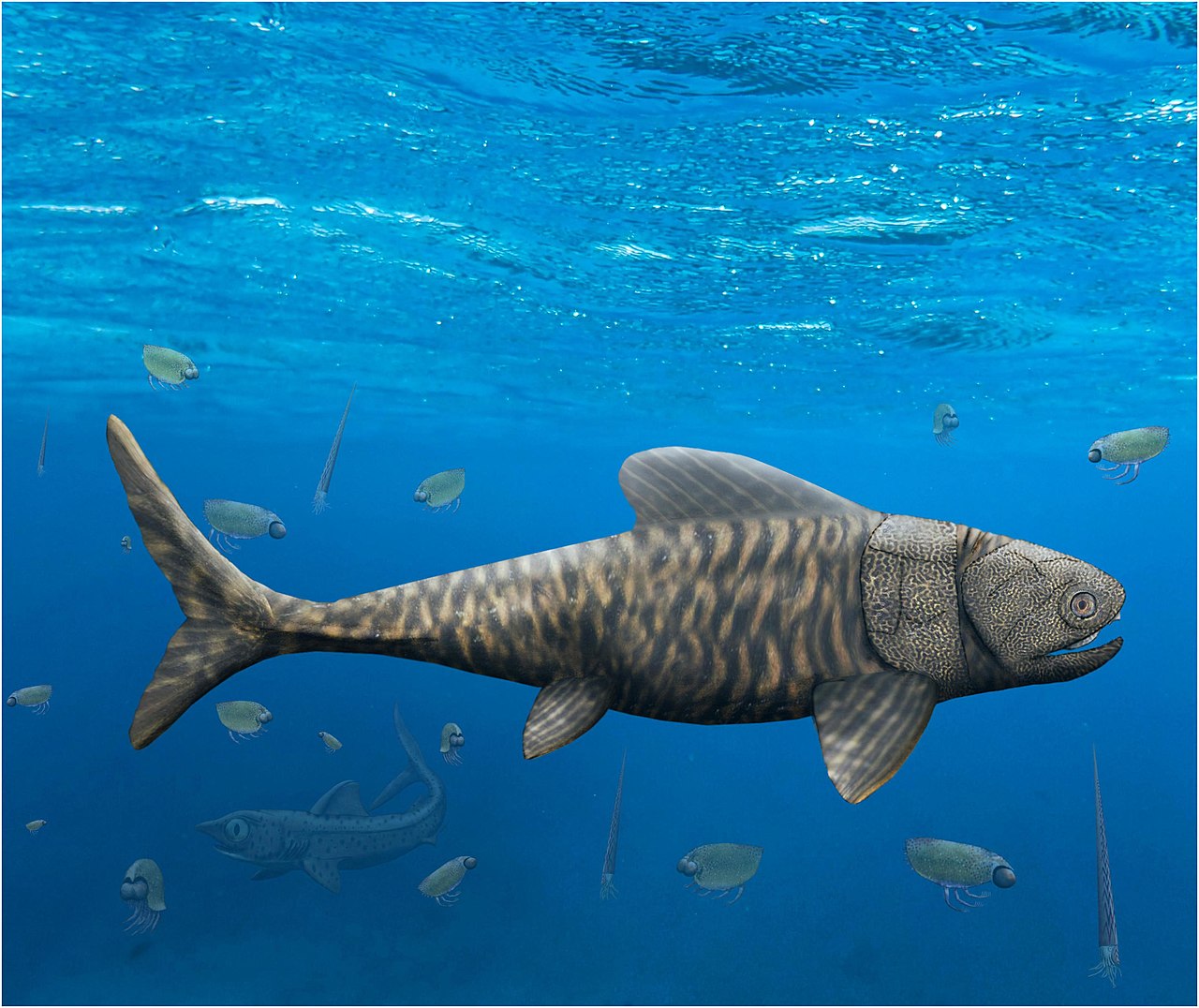
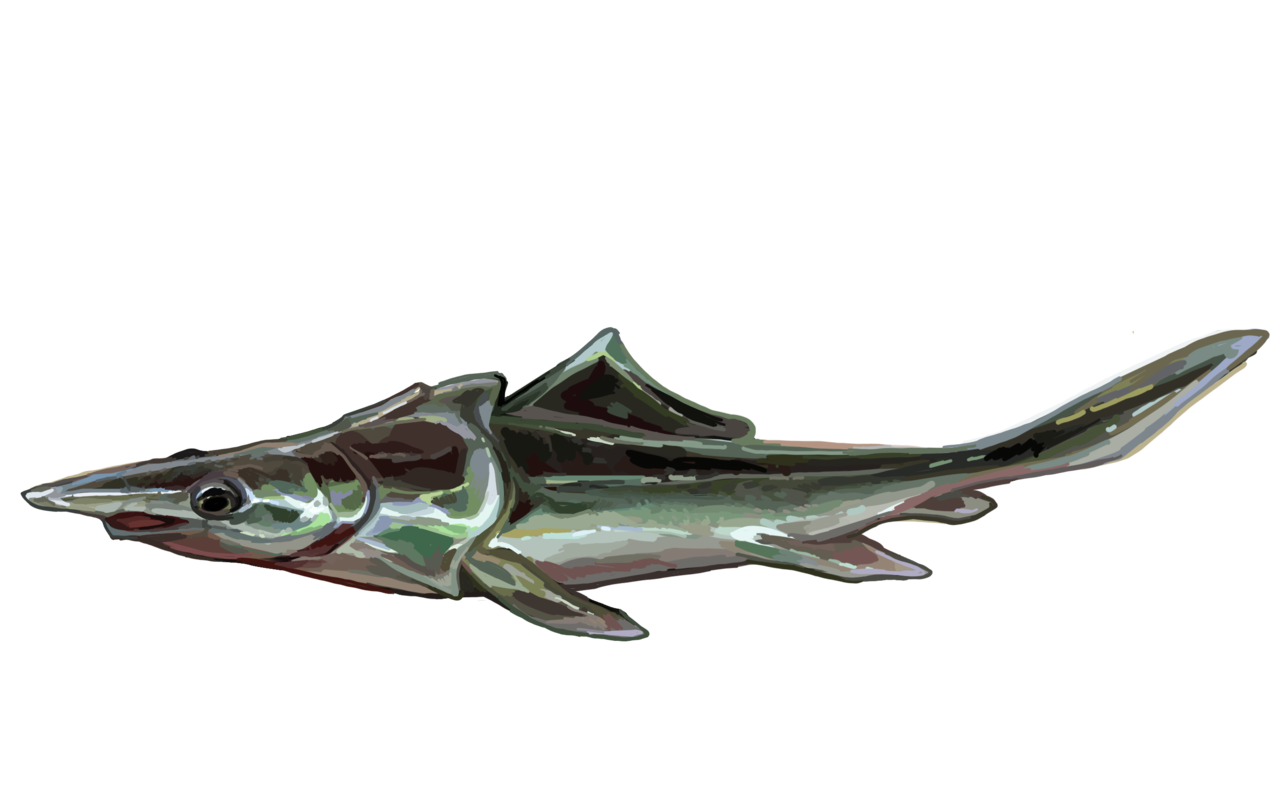
Placoderms (class Placodermi) were a diverse group of extinct armoured fishes that first appeared in the mid-Silurian and became widespread through the Devonian period. Their most conspicuous feature was a series of bony plates that protected the head and thorax, while the posterior body could be scaled or naked depending on the species. Placoderms include some of the earliest known jawed vertebrates and occupied many ecological roles from bottom-dwelling hunters to active pelagic predators.
Image gallery
10 Images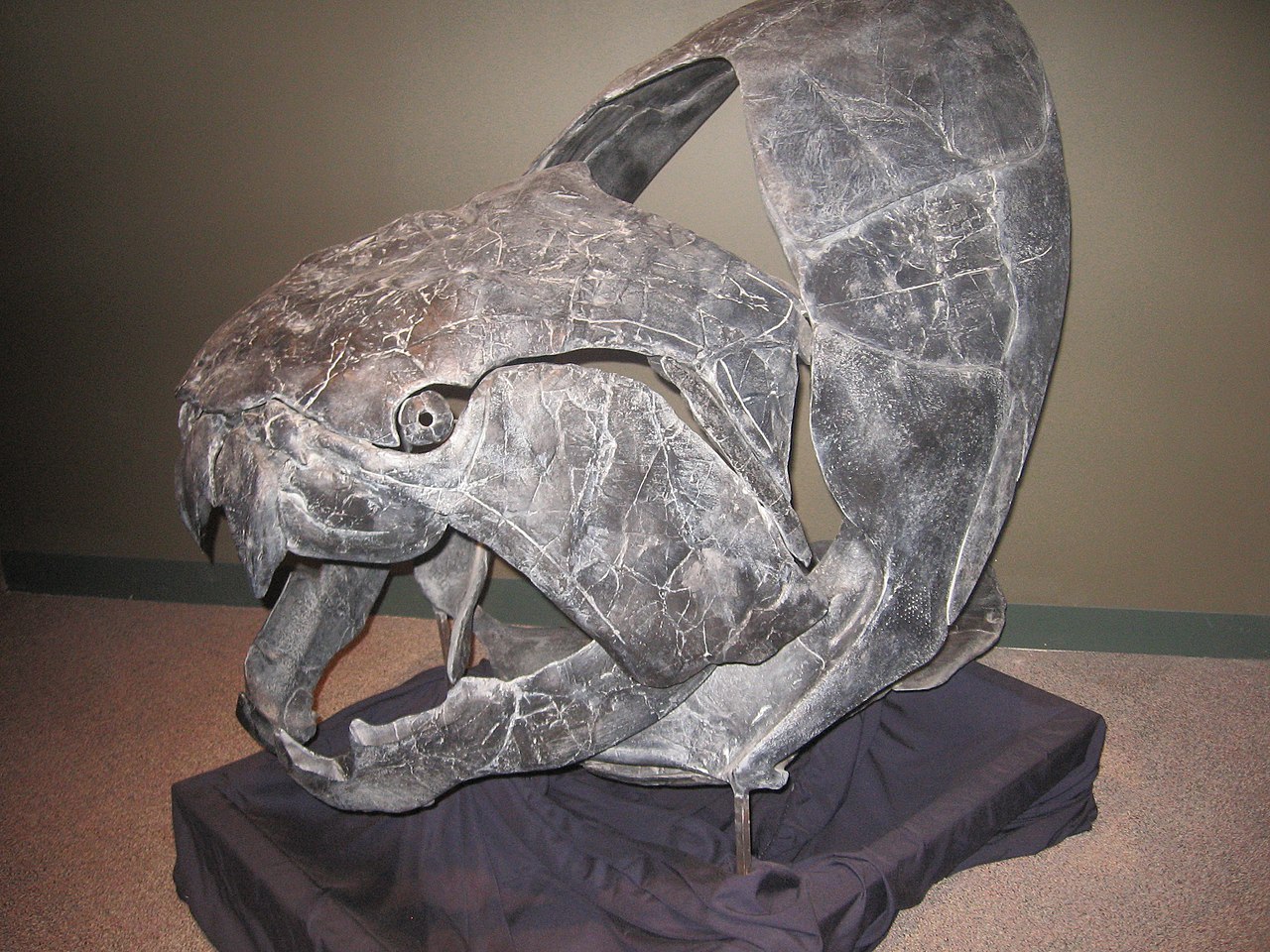




Anatomy and biology
Placoderm anatomy is characterized by a rigid, articular series of dermal plates forming a protective 'helmet' and chest shield. Beneath this armour lay jointed skull and thoracic elements that allowed head movement relative to the body. Their jaws were not true homologues of modern bony fish jaws in every detail, but they represent an early acquisition of gnathostome-style biting apparatus. Body size varied widely: many species were small and benthic, while famously large genera reached several metres in length and functioned as apex predators. Fossil evidence has also revealed internal reproductive structures and embryos in some specimens, indicating internal fertilization and instances of live birth in at least one genus.
Fossil record and major localities
Placoderm remains are most abundant in Devonian marine and nearshore sediments. Classic sources include the Old Red Sandstone deposits of what were then contiguous regions of present-day North America and western Europe. More recently, exceptionally preserved specimens have been recovered from the Gogo Formation in Western Australia, a Late Devonian reef deposit notable for three-dimensional fossils with soft-tissue detail. These discoveries have supplied exceptional anatomical data that clarify plate arrangements, jaw structure, and aspects of muscle and organ placement.
History of study and classification
Scientific interest in placoderms dates to early paleontological surveys of fossil fishes; nineteenth- and twentieth-century investigators recognized their distinctiveness and debated their relationships to other jawed vertebrates. Researchers such as Louis Agassiz described early discoveries, and later anatomists refined placoderm systematics and emphasized their role among basal gnathostomes. The precise evolutionary relationships between placoderms and living jawed vertebrates remain an area of active study, with interpretations shifting as new fossils and phylogenetic analyses appear.
Ecology, notable genera and extinction
During the Devonian — often called the "Age of Fishes" — placoderms filled many trophic niches. Many were benthic predators or scavengers; others were active swimmers in the water column. Notable genera include Dunkleosteus and Gorgonichthys, large durophagous predators, and Materpiscis, a smaller reef-associated form known from a specimen containing an embryo. A combination of environmental perturbations and biotic turnovers during the Late Devonian led to a decline in diversity; by the end of the Devonian the entire class had disappeared from the fossil record.
Notable facts
- Placoderms represent some of the earliest jawed vertebrates and illustrate early experiments in vertebrate armour and feeding mechanics.
- Exceptional fossils preserve anatomical detail that is rarely available for Paleozoic fishes.
- Evidence for internal fertilization and viviparity in at least one placoderm makes them central to discussions of early vertebrate reproductive evolution.
Notable genera
- Dunkleosteus — a large armored predator of the Late Devonian.
- Gorgonichthys — another large placoderm known from fragmentary remains.
- Materpiscis — reef-associated genus with fossil embryo evidence.
- Other genera include antiarchs and arthrodires, groups that display wide anatomical variety.
Further resources
- Etymology and name
- Taxonomic overview
- Armoured prehistoric fish
- Silurian period context
- Devonian period overview
- Head anatomy
- Thoracic shield
- Body covering variations
- Origins of jaws
- Gnathostome connections
- Late Devonian extinctions
- Marine ecosystems
- Faunal turnover
- Old Red Sandstone deposits
- Paleogeography
- European fossil localities
- Continental shelf environments
- Scottish fossil sites
- Historical descriptions
- Gogo Formation discoveries
- Devonian reef systems
- Pelagic and benthic zones
Questions and answers
Q: What is the Placoderms class?
A: The Placoderms (Placodermi) were a class of armoured prehistoric fish that lived from the mid Silurian to the end of the Devonian period. Their head and thorax were covered by armoured plates; the rest of the body was scaled or naked, depending on the species.
Q: What is unique about one species of placoderm?
A: A 380 million year old fossil of one species is the oldest-known example of live birth.
Q: When did placoderms become extinct?
A: Placoderms became extinct at the end of the Devonian period.
Q: Where are most placoderm fossils found?
A: Most placoderm fossils are found in strata from North America and western Europe, as well as continental shelf areas around them.
Q: Who wrote a survey about fossil fish?
A: Louis Agassiz wrote a survey about fossil fish in 18th century.
Q: Who showed that placoderms were genuine jawed fish?
A: Eric Stensiö showed that placoderms were genuine jawed fish in 19th century.
Q: Where have more recent remarkable fossils been found?
A: Remarkable fossils have been found in Gogo formation of northern Western Australia, which is a former Upper Devonian reef system with 25 species discovered so far.
Related articles
Author
AlegsaOnline.com Placoderms — Armoured Devonian Jawed Fishes Leandro Alegsa
URL: https://en.alegsaonline.com/art/77196
Sources
- species.wikimedia.org : Placodermi
- news.bbc.co.uk : "Fossil reveals oldest live birth"