
Peterloo Massacre (1819): crowd, charge and political repercussions
The Peterloo Massacre occurred at St Peter's Field, Manchester on 16 August 1819 when cavalry charged a large reform meeting, killing several people and wounding hundreds; it shaped British reform debates.
Overview
The Peterloo Massacre took place on 16 August 1819 at St Peter's Field in central Manchester, England. Contemporary accounts describe a vast assembly of working people and reformers — often estimated at 60,000–80,000 — who had gathered to demand parliamentary reform, more representative government and relief from economic hardship. The site is sometimes identified by its map coordinates (53°28′41″N 2°14′49″W).
Image gallery
10 Images




Background and causes
The immediate backdrop to the meeting included economic distress and political restriction. After the end of the Napoleonic Wars in 1815 there was a period of high food prices, periodic famine and chronic unemployment in many industrial areas. The introduction of protectionist Corn Laws kept grain prices high, adding to popular anger. At the same time, political power remained tightly limited by property qualifications and other restrictions on the vote (commonly described as limited suffrage), which made reform appeals more urgent for many workers and radicals.
The meeting and the charge
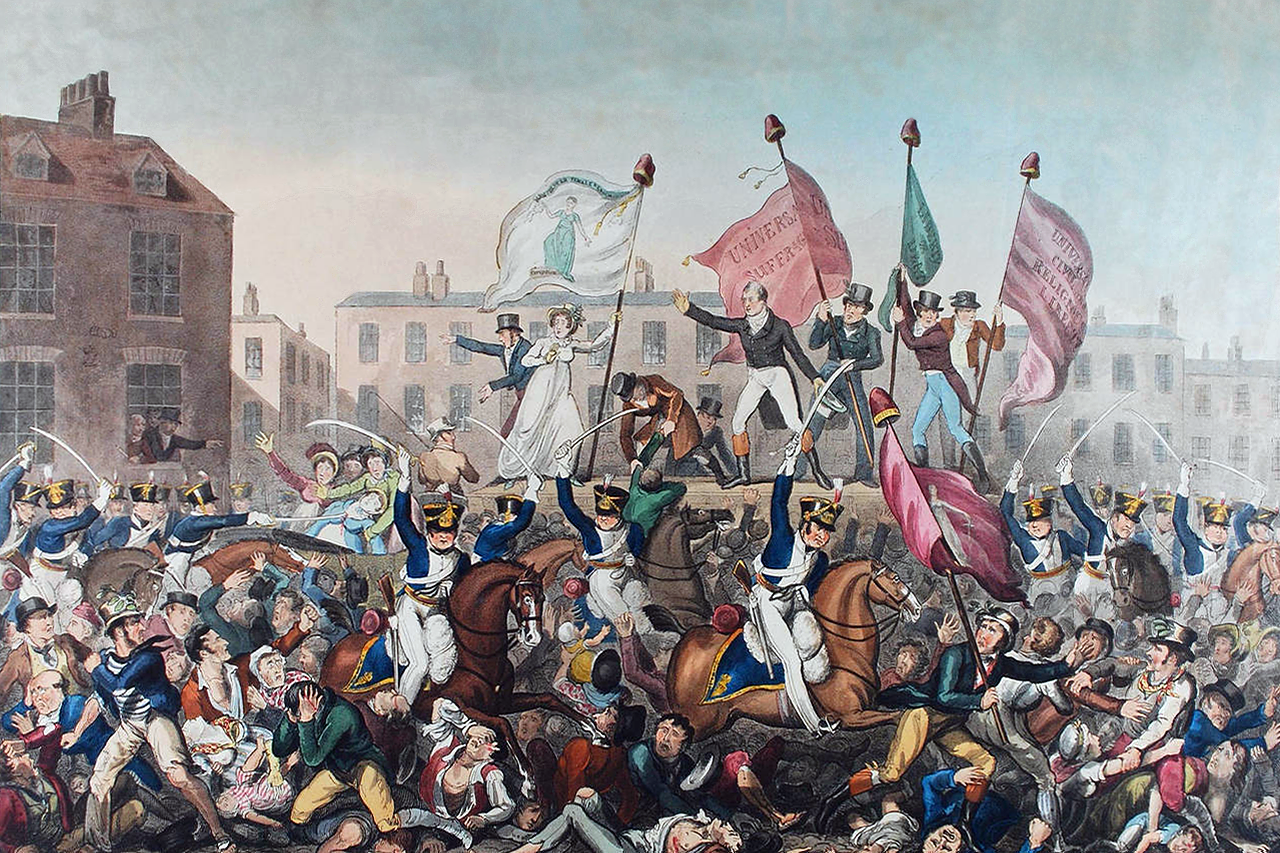
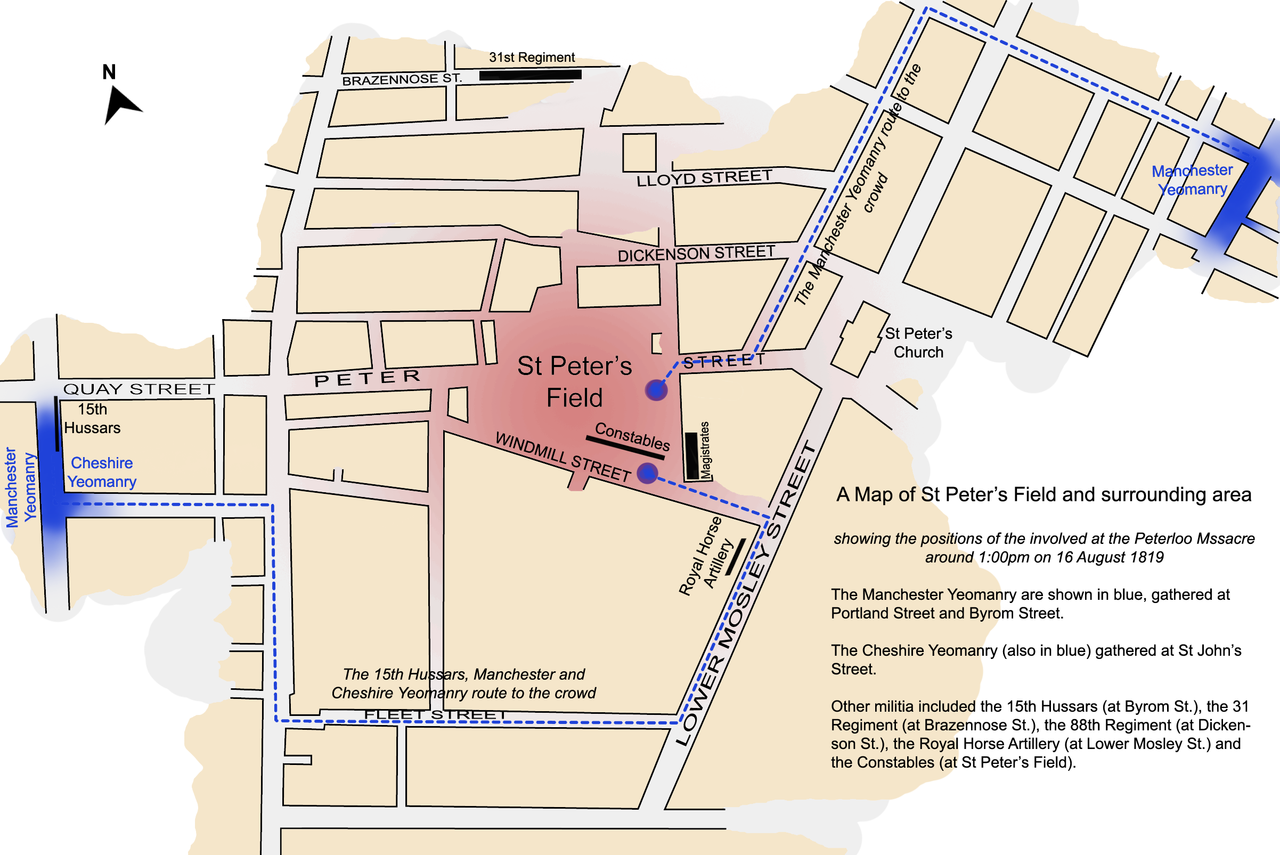
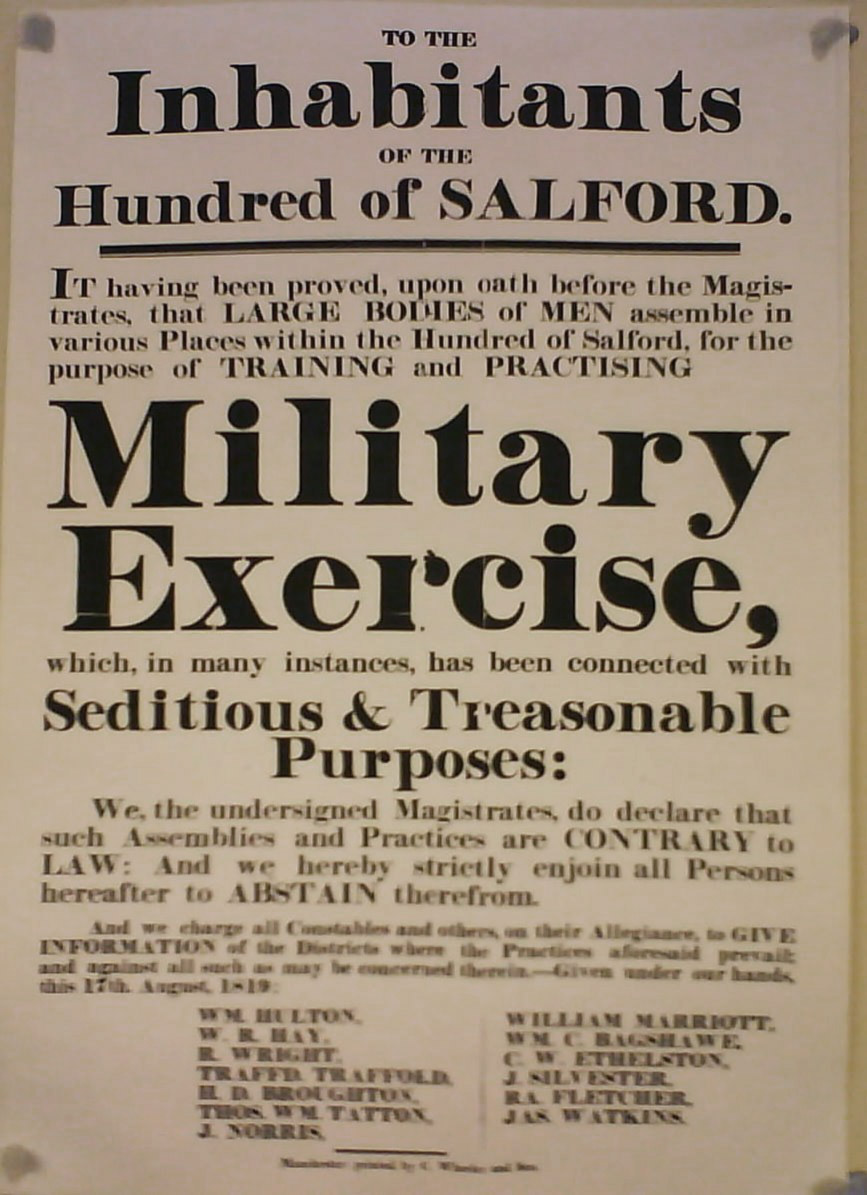
The demonstration was organised by the Manchester Patriotic Union and intended to be addressed by the reform orator Henry Hunt. It was a largely peaceful assembly until local magistrates, alarmed by the size of the crowd and fearful of disorder, decided to arrest Hunt and other leaders. They called on local forces and the military. In the ensuing operation, mounted troops — including local yeomanry and regulars referred to generically as cavalry — moved into the crowd. Reports say they charged with drawn sabres, creating panic and chaos among the assembled people.
Casualties and immediate aftermath
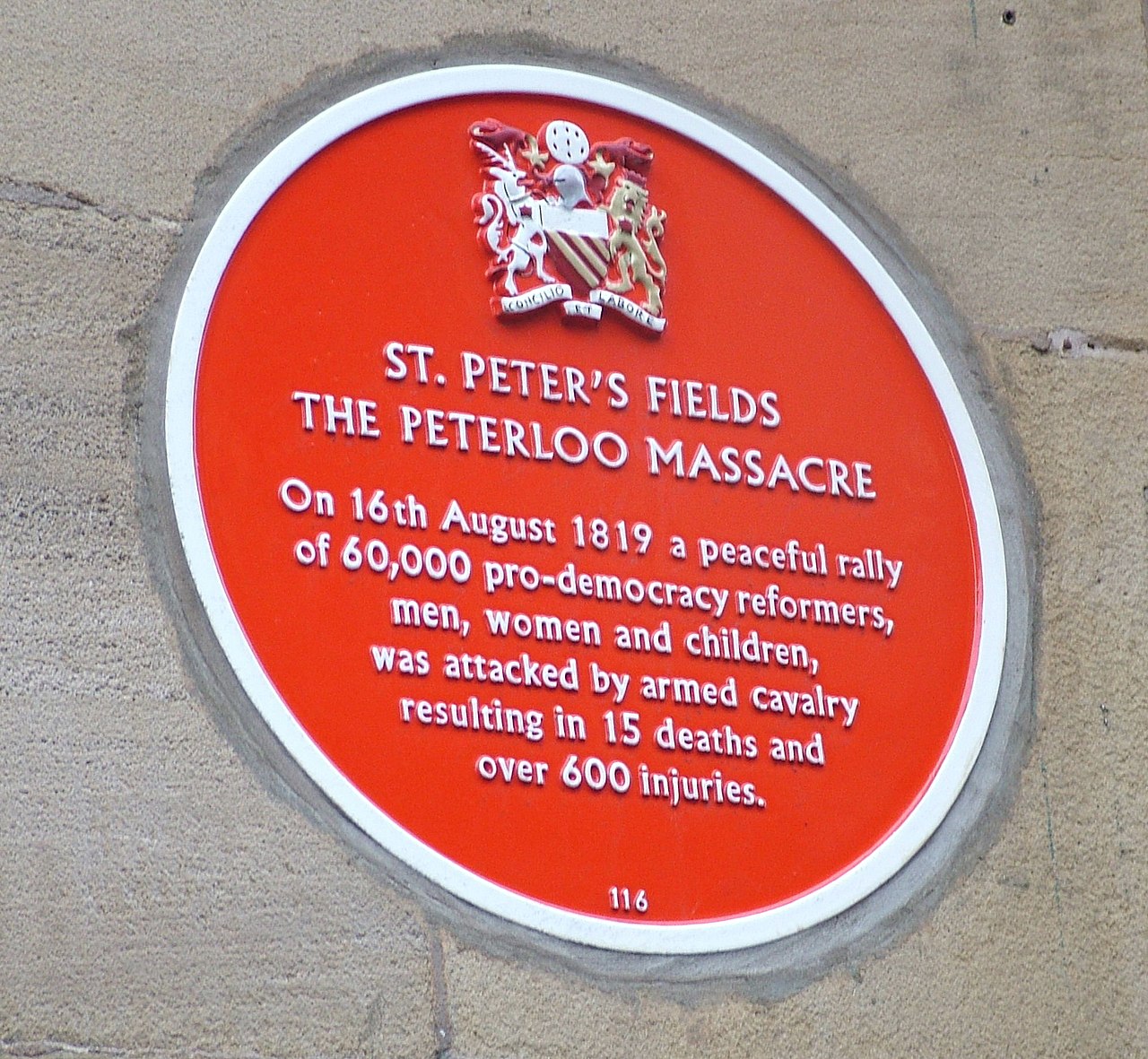
Contemporary and later inquiries recorded fatalities and many injuries. Estimates commonly cited in histories note that about eighteen people were killed and several hundred were wounded in the melee, though precise counts vary. The incident was quickly dubbed "Peterloo" in ironic reference to the British victory at Waterloo, highlighting the contrast between a battlefield triumph abroad and a violent repression at home.
- Typical casualty summary: about 18 dead and several hundred injured.
- Key actors involved: reform speakers and organisers, local magistrates, and mounted troops called in to disperse the meeting.
Political consequences and longer-term significance
The massacre provoked an intense national debate. Many newspapers and pamphleteers condemned the authorities' actions, while others defended the magistrates. Parliament responded with repressive legislation intended to curb radical meetings and publications; the episode also strengthened moderate reformers' arguments that the system needed change. In the longer term Peterloo became a symbol of working-class suffering and the costs of political exclusion, feeding movements that eventually contributed to later reforms such as the Reform Act 1832.
Commemoration and historical assessment
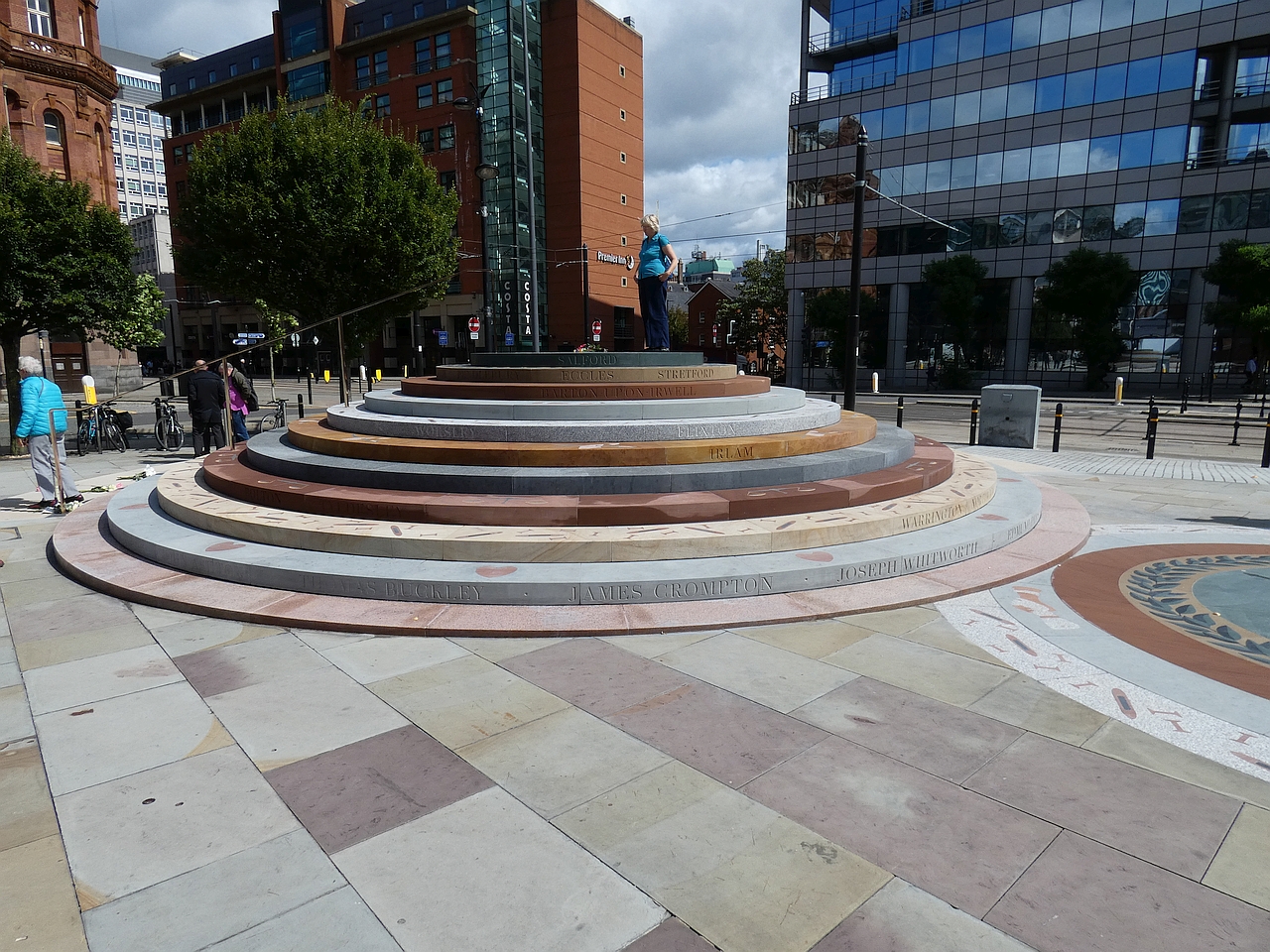
Peterloo remains a prominent event in British social and political memory. It is studied as an example of early nineteenth-century protest, state response to mass mobilization, and the tensions of industrialising society. Modern memorials, scholarship and public ceremonies reflect on the victims, the causes of the protest, and the episode's place in the broader story of democratic reform in Britain. For further context see accounts of the demonstration itself and the organisations involved, including the Manchester Patriotic Union and the nature of popular protest in the period (demonstration, magistrates). Other useful entry points are discussions of military roles and terminology (cavalry, sabres), and contemporary labels and ironies (Waterloo). Additional references cover the social conditions that helped precipitate the event — economic hardship (famine, unemployment) and political restrictions such as limited suffrage and trade measures like the Corn Laws. Eyewitness narratives and later analyses also focus on what happened when officials attempted to arrest Hunt and other speakers (charged, demonstration).
For readers seeking primary-source reports or detailed regional studies consult specialised histories and archives held in Manchester and national collections (coordinates indicate the traditional site) and curated online resources on the period's social movements and state responses (Manchester, England). These materials help explain why Peterloo endures as a touchstone in debates over protest, policing and reform.
Related articles
Author
AlegsaOnline.com Peterloo Massacre (1819): crowd, charge and political repercussions Leandro Alegsa
URL: https://en.alegsaonline.com/art/76182