
Pig War (1859): The San Juan Island border dispute
A largely bloodless 1859 confrontation between the United States and Great Britain over San Juan Island, triggered by the killing of a stray pig and ultimately resolved by international arbitration in 1872.
Overview
The Pig War was a tense but mostly nonviolent confrontation in 1859 between the United States and Great Britain over sovereignty of the San Juan Islands in the Pacific Northwest. The immediate incident that sparked the crisis was the shooting of a stray pig on an American settler's farm; the broader cause was an ambiguous boundary in the region left unsettled by earlier treaties. Despite military deployments by both sides, the episode produced no human fatalities and concluded through diplomatic arbitration.
Image gallery
10 Images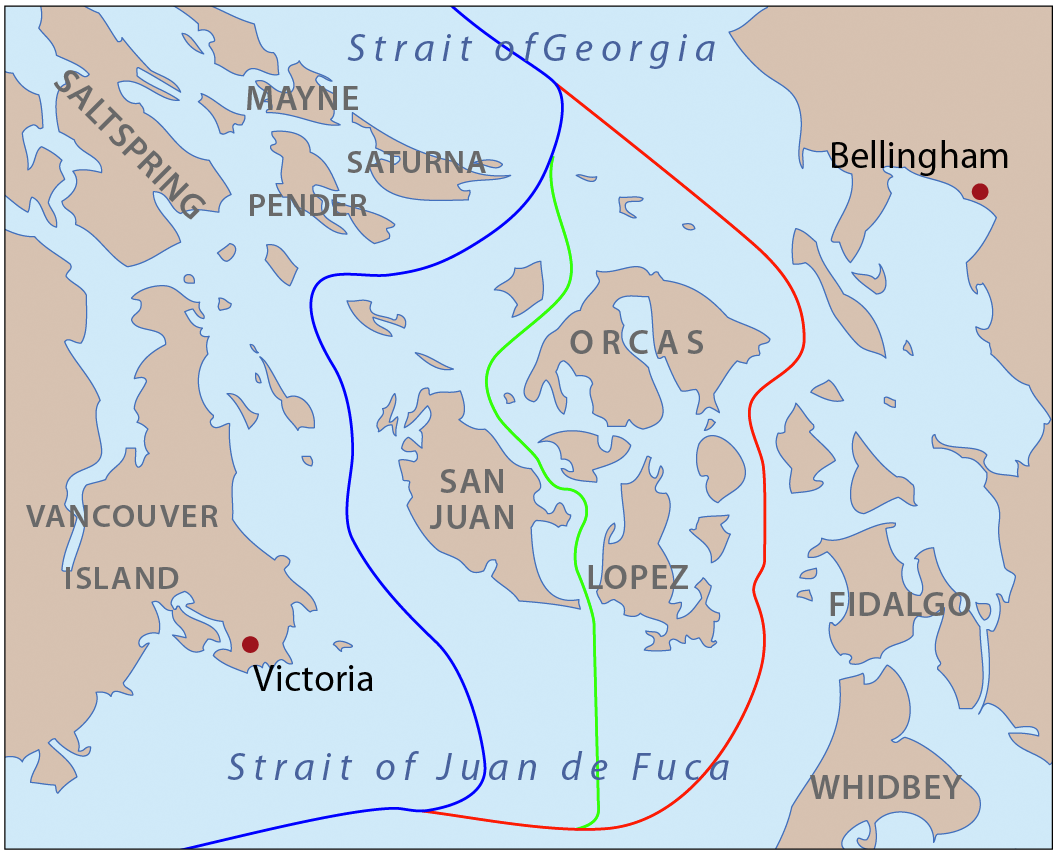





Roots and immediate cause
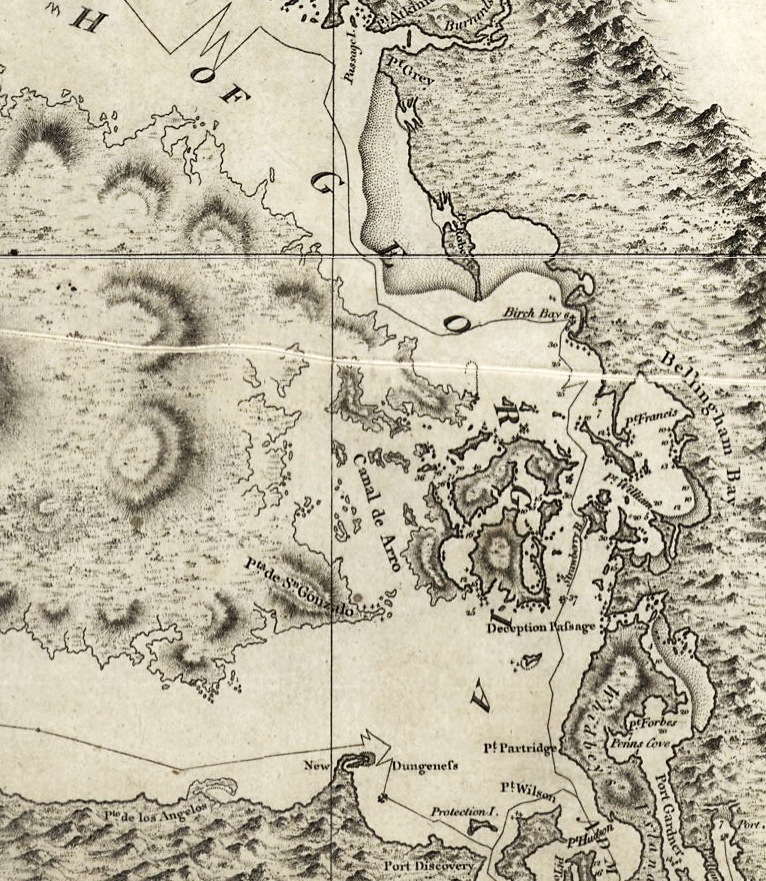
After the Oregon Treaty of 1846 established the 49th parallel as the border west of the Rocky Mountains, the wording left unclear which nation controlled several islands in the Strait of Georgia. Settlers and fur-company employees of both British and American allegiance lived on San Juan Island. In mid-1859 a pig belonging to a British company employee wandered onto the potato patch of American settler Lyman Cutlar. Cutlar killed the animal, and competing claims for compensation and authority rapidly escalated the dispute.
Standoff and management
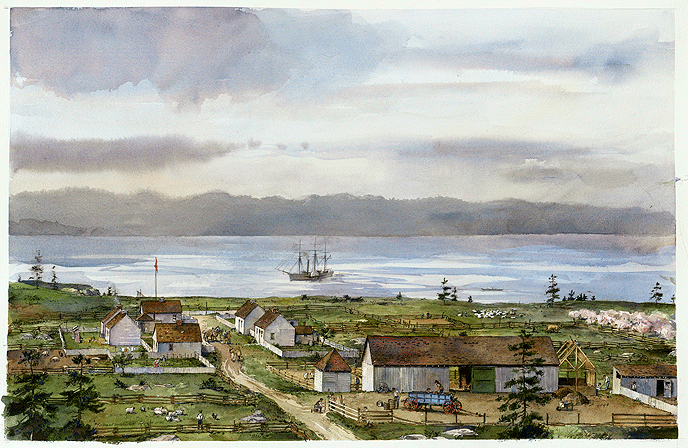
Rather than erupting into open warfare, the crisis produced a military standoff. Both governments sent forces to assert control: American troops occupied parts of the island while Royal Navy ships and a small contingent of British officers also arrived. Commanders on both sides exercised restraint; orders emphasized avoiding bloodshed. The prolonged but careful face-off became known in popular parlance as the "Pig War." Eventually both nations agreed to a temporary joint occupation while the disagreement moved toward diplomatic settlement.
Resolution and consequences
The dispute was referred to international arbitration, and in 1872 a tribunal chaired by a neutral arbiter awarded the San Juan Islands to the United States. The islands were incorporated into Washington Territory and later the state of Washington. The incident is often cited as an example of peaceful conflict management in the 19th century: a localized quarrel that might have led to violence was instead contained and settled through negotiation.
Legacy and notable facts
- No combat deaths occurred as a result of the Pig War; the pig itself is the best-known casualty.
- The standoff involved future American Civil War officers and attracted international attention, highlighting the importance of clear boundary language in treaties.
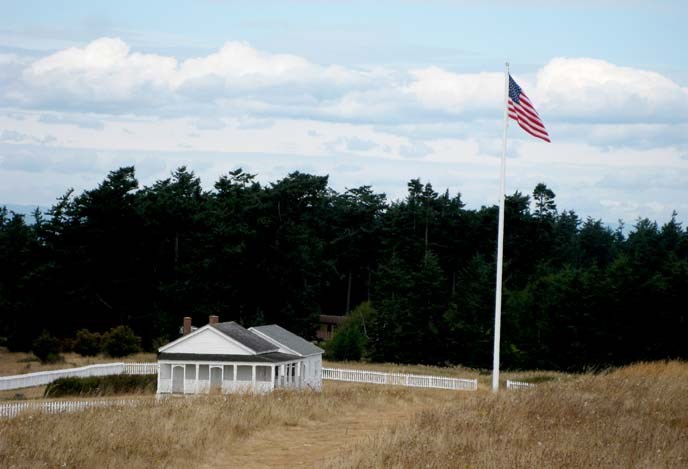
- Sites connected to the episode are preserved today, and the story remains a studied example of diplomacy, frontier law, and how small incidents can trigger international crises.
For background on the territorial questions that framed the incident see related boundary discussions and the history of Pacific Northwest settlement. The Pig War survives in public memory as a curious moment when a farm dispute briefly brought two empires face to face yet ended without armed conflict.
Questions and answers
Q: What was the Pig War?
A: The Pig War was a border dispute in 1859 between the U.S and Great Britain over the San Juan Island on the U.S-British border.
Q: Who occupied San Juan Island?
A: San Juan Island was occupied by both British and American citizens.
Q: What happened in 1859 that led to the Pig War?
A: In 1859, a pig owned by a British employee of Charles Griffin got onto the farm of an American farmer named Lyman Cutlar.
Q: What did the pig do on Lyman's farm?
A: The pig fed on Lyman's potatoes.
Q: What was the consequence of the pig's actions on Lyman's farm?
A: Lyman Cutlar killed the pig.
Q: Who did the pig belong to?
A: The pig belonged to a British employee of Charles Griffin.
Q: What was the outcome of the Pig War?
A: The Pig War ended peacefully without any shots being fired.
Related articles
Author
AlegsaOnline.com Pig War (1859): The San Juan Island border dispute Leandro Alegsa
URL: https://en.alegsaonline.com/art/76872
Sources
- historic-uk.com : "The Pig War of 1859"
- seabrightfarmcottages.com : "The Pig War of 1859"
- nps.gov : "The Pig War"