
Pepsin: the principal gastric protease
Pepsin is the main digestive protease of the stomach, active in strongly acidic conditions. This article explains its properties, activation, history, and common uses in food and research.
Overview
Pepsin is a digestive enzyme produced in the stomach that breaks proteins into smaller peptides. It operates in the strongly acidic environment of the human stomach (stomach) and is one of the principal proteases that begin the chemical digestion of dietary protein.
Image gallery
5 Images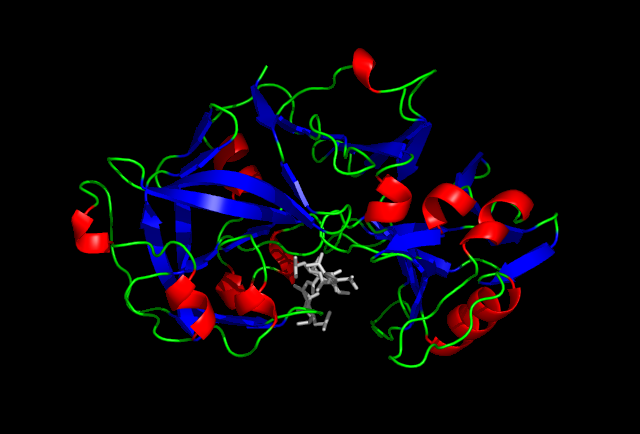


Properties and activation
Pepsin belongs to the family of aspartic proteases and is synthesized and secreted by gastric chief cells as an inactive precursor called pepsinogen. Exposure to gastric acid, primarily hydrochloric acid, lowers the pH and converts pepsinogen into the active pepsin molecule. Pepsin works best at very low pH—around 1.5 to 2—and loses activity as the medium becomes less acidic; it is largely inactive at pH levels above about 6. The acidity of the stomach that enables pepsin activity is maintained by acid secretion, a characteristic often referred to as the low pH of gastric juice.
Functions and biological importance
Pepsin cleaves peptide bonds in proteins, especially at points adjacent to aromatic amino acids, producing a mixture of peptides that are further digested by pancreatic enzymes in the small intestine. Its action is an important first step in protein digestion, enabling efficient nutrient absorption. When the acidic chyme enters the duodenum, neutralization by bicarbonate diminishes pepsin activity and allows pancreatic proteases to take over.
History and discovery
Pepsin has the distinction of being the first animal enzyme to be described. It was discovered in the 19th century by the German physiologist Theodor Schwann, with the original report dating to around 1836. That work helped establish the concept that organs secrete chemical agents that carry out digestion.
Uses, examples, and notable facts
- Food industry: pepsin is used in some varieties of cheese production and other food-processing applications where controlled protein breakdown is needed.
- Research and medicine: pepsin is a tool in laboratory protein digestion protocols and appears in some diagnostic or therapeutic preparations; its activity is sensitive to inhibitors and to pH changes.
- Distinctive role: unlike pancreatic proteases such as trypsin and chymotrypsin, pepsin is adapted to function in the stomach’s acidic milieu and is produced as a zymogen to avoid self-digestion of producing tissues.
Notable limitation: pepsin cannot function in neutral or alkaline conditions and is rapidly inactivated when gastric contents are neutralized in the small intestine. Its discovery by Schwann played a key role in early enzymology and in understanding chemical digestion.
Related articles
Author
AlegsaOnline.com Pepsin: the principal gastric protease Leandro Alegsa
URL: https://en.alegsaonline.com/art/75717
Sources
- worthington-biochem.com : "Effects of pH"