
Enzyme: Biological Catalysts — Structure, Function, History, and Applications
An enzyme is a biological catalyst—usually a protein—that accelerates specific chemical reactions in living organisms. This article covers structure, mechanism, classification, regulation, history, and practical uses.
Overview
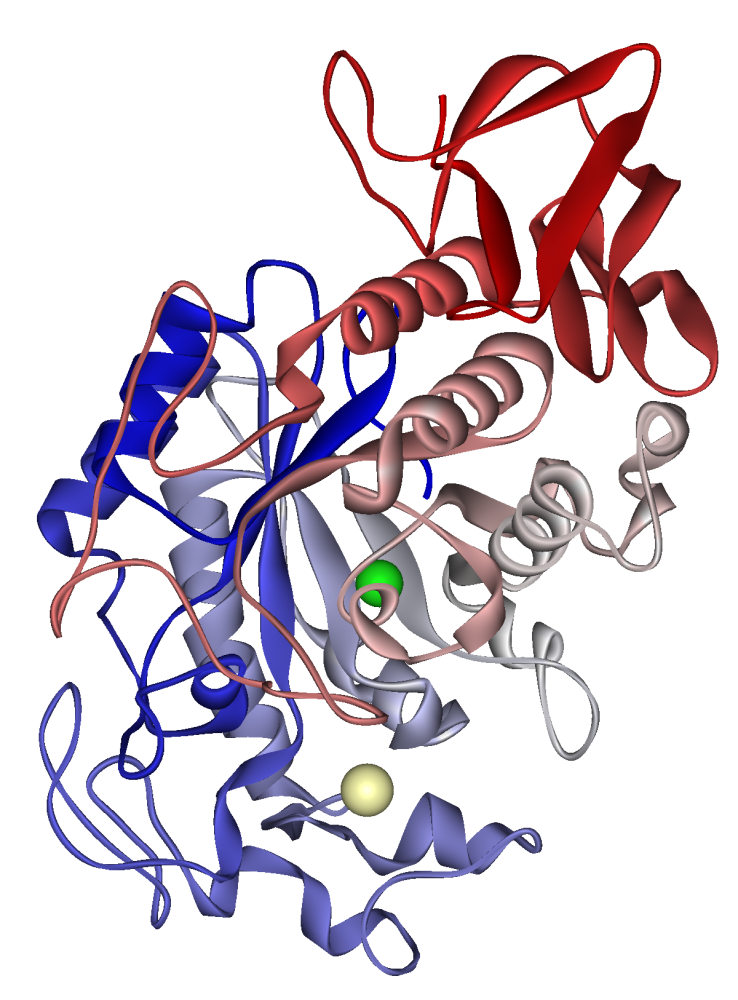
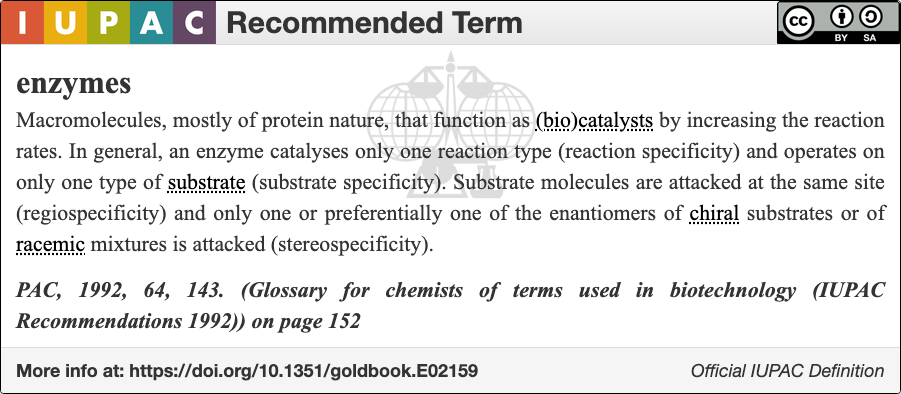
An enzyme is a biological catalyst that accelerates specific chemical reactions in living organisms without being consumed in the overall process. Most enzymes are composed of amino acids and fold into precise three-dimensional structures that create an active site where chemistry occurs. While the majority of cellular catalysts are proteins, some non-protein molecules, including catalytic RNA, can also act as catalysts.
Image gallery
9 Images



Substrates, products, and active site
The molecules that enter an enzymatic reaction are called substrates, and the molecules produced are the products. The active site of an enzyme is a specialized pocket or groove formed by selected amino acids where substrates bind and chemical transformation is promoted. Binding often relies on a combination of shape complementarity and weak interactions such as hydrogen bonds, electrostatic contacts, and hydrophobic effects.
Mechanisms of catalysis
Enzymes increase reaction rates primarily by lowering the activation energy required to reach the transition state. They may stabilize transition states, provide alternative reaction pathways, bring reactants into proximity and correct orientation, or use acid–base and covalent catalysis. Some enzymes follow an induced-fit model, in which substrate binding causes a conformational change that enhances catalysis. The study of enzyme kinetics examines how reaction rate depends on enzyme and substrate concentrations and other factors; introductory overviews are available that describe common kinetic models and experimental approaches (reaction overview).
Cofactors and prosthetic groups
Certain enzymes require additional non-protein components to function. These cofactors can be metal ions (for example, zinc or magnesium) or organic molecules derived from vitamins, often called coenzymes. When a cofactor is tightly or permanently attached it may be termed a prosthetic group. Cofactors can participate directly in catalysis by stabilizing charge, transferring electrons or chemical groups, or serving as temporary carriers.
Classification and nomenclature
Enzymes are classified by the type of reaction they catalyze. The Enzyme Commission (EC) classification organizes enzymes into major classes such as oxidoreductases, transferases, hydrolases, lyases, isomerases, and ligases. Enzyme names often end in "-ase" and a systematic EC number provides an unambiguous identifier for a specific activity in biochemical literature and databases.
Regulation in cells
Cellular enzyme activity is tightly regulated to coordinate metabolism and respond to changing conditions. Common regulatory mechanisms include allosteric control, reversible covalent modification (such as phosphorylation), changes in gene expression or enzyme synthesis, compartmentalization, and the presence of specific inhibitors or activators. Feedback inhibition, in which a downstream product reduces activity of an upstream enzyme, is a widespread means to maintain metabolic balance.
Special cases: ribozymes and catalytic RNA
Not all biological catalysts are proteins. Catalytic RNA molecules, known collectively as catalytic RNA, and specific examples called ribozymes can catalyze cleavage and ligation of RNA and other reactions. The discovery of RNA-based catalysis expanded understanding of possible catalytic chemistries in early evolution and in contemporary biology.
Methods of study
Enzymes are studied using biochemical assays that measure activity, by structural methods such as X-ray crystallography and cryo-electron microscopy to reveal three-dimensional arrangements, and by genetic and spectroscopic techniques to probe mechanism. Protein engineering and directed evolution are experimental approaches used to alter specificity, activity, or stability for research and industrial uses.
Biological importance and applications
Enzymes underlie virtually all metabolic processes: digestion, biosynthesis of macromolecules, energy conversion, signal transduction, and DNA replication and repair. Their specificity and catalytic power make them valuable in biotechnology, medicine, and industry: enzymes are used in diagnostics, therapeutics, molecular biology tools, food processing, detergents, biofuels, and chemical synthesis. Researchers also design inhibitors as drugs that target specific enzymes in pathogens or diseases.
History and notable discoveries
The concept that living tissues contain catalytic agents dates to early studies in the 19th century. The starch-degrading enzyme preparation later called diastase was isolated by Anselme Payen in 1833 and is widely cited as the first substance regarded as an enzyme; a historical account provides context for this discovery (historical reference). Later work established that enzymes are proteins and clarified principles of catalysis and kinetics. The later 20th century discovery of catalytic RNA broadened the definition of biological catalysts and influenced ideas about the origin of life.
Further reading and resources
For introductory material and databases consult enzyme compendia and methodological summaries. Review articles summarize catalytic mechanisms, protein structure–function relationships and engineering strategies; educational overviews and curated databases present reaction classifications and enzyme nomenclature (molecule resources, protein overviews, substrate examples, product examples, ribozyme studies).
- Key properties: specificity, catalytic efficiency, reuse without net consumption
- Environmental sensitivity: activity depends on pH, temperature, ionic strength
- Practical uses: industrial catalysts, diagnostics, therapeutics, research tools
Questions and answers
Q: What is an enzyme?
A: An enzyme is a protein molecule in cells which works as a biological catalyst.
Q: What is the function of enzymes in the body?
A: Enzymes speed up chemical reactions in the body, but do not get used up in the process, so they can be used over and over again.
Q: Do all biochemical reactions in living things need enzymes?
A: Yes, almost all biochemical reactions in living things need enzymes.
Q: What are substrates?
A: Substrates are the substances at the start of a reaction.
Q: What are products?
A: Products are the substances at the end of a reaction.
Q: What is the study of enzymes called?
A: The study of enzymes is called enzymology.
Q: Who discovered the first enzyme?
A: The first enzyme was found in 1833 by Anselme Payen.
Related articles
Author
AlegsaOnline.com Enzyme: Biological Catalysts — Structure, Function, History, and Applications Leandro Alegsa
URL: https://en.alegsaonline.com/art/31654
Sources
- Enzymes
- worthington-biochem.com : "Effects of pH"
- gallica.bnf.fr : "Einfluss der Configuration auf die Wirkung der Enzyme"
- doi.org : 10.1002/cber.18940270364
- doi.org : 10.1073/pnas.44.2.98
- doi.org : 10.1016/S1367-5931(02)00380-0
- biochemj.org : "Role of long-chain fatty acyl-CoA esters in the regulation of metabolism and in cell signalling"
- doi.org : 10.1016/0092-8674(93)90260-W