
Paul the Octopus
Paul the Octopus was a common octopus at the Sea Life Centre in Oberhausen, Germany, noted for 'predicting' football match winners during UEFA Euro 2008 and the 2010 FIFA World Cup.
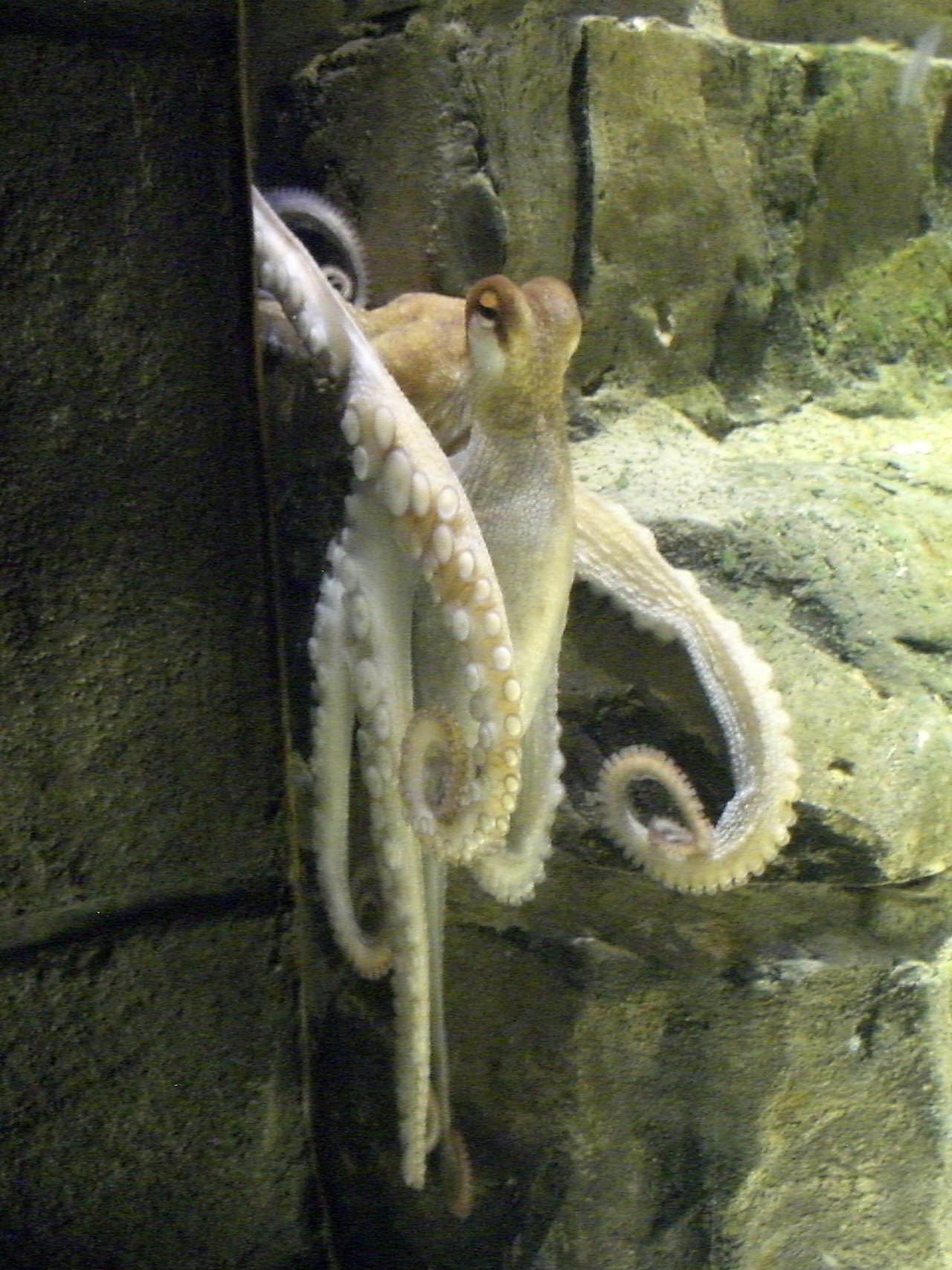
Paul the Octopus was a common octopus (Octopus vulgaris) kept in a tank at the Sea Life Centre in Oberhausen, Germany. Said to have been hatched in January 2008, Paul became internationally famous in 2008–2010 after a series of staged selection events in which he appeared to choose the winners of football matches by selecting between two food-containing containers. His apparent success attracted intense media attention, popular fascination and scientific commentary about animal behaviour and chance.
Image gallery
6 Images

Appearance and keeping
Paul was a specimen of a widely distributed species known for relative intelligence among invertebrates, problem-solving ability and flexible behaviour. In aquarium care, common octopuses are provided with enrichment, hiding places and varied food. In public posts about Paul, his keepers described him as active and responsive in his tank, and he was displayed as part of the Sea Life Centre exhibit to visitors and broadcast audiences.
Prediction method and results
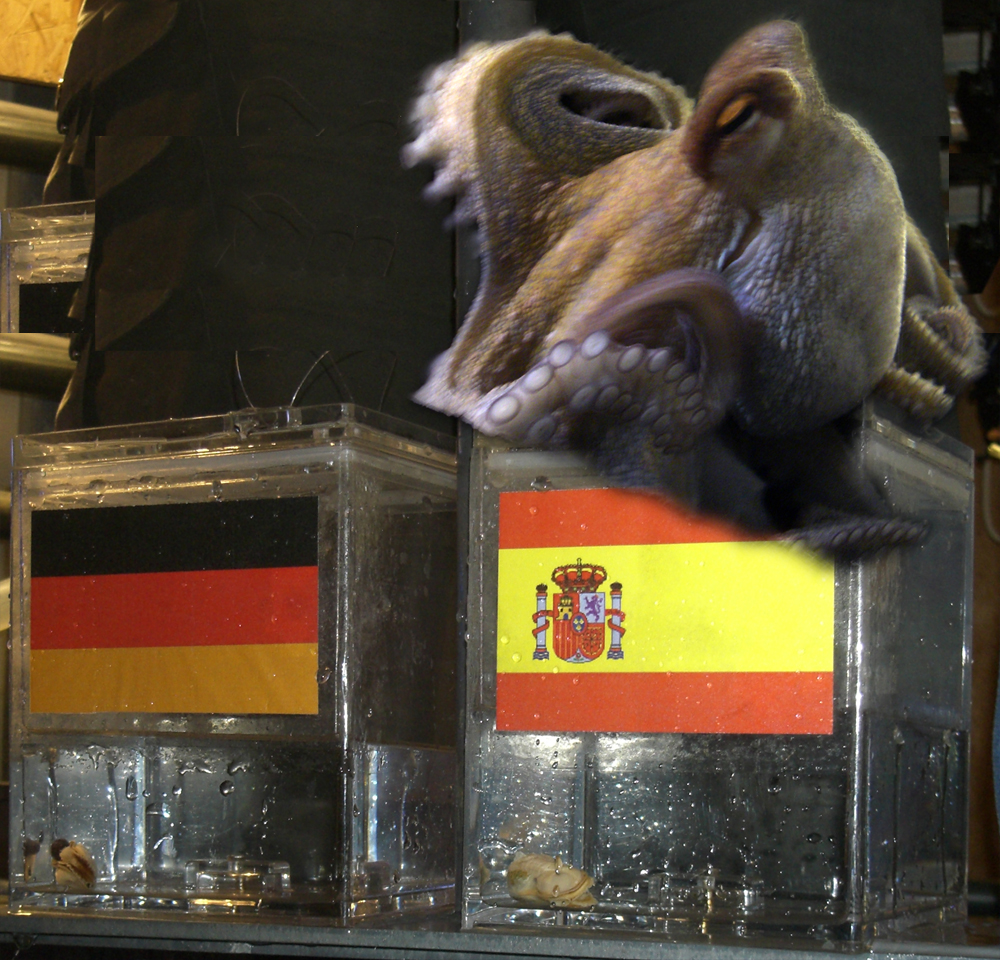
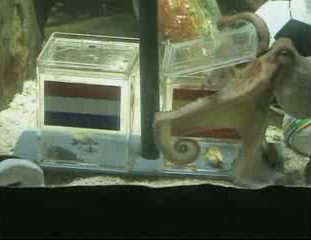
For the selection events, staff presented Paul with two sealed containers, each containing food (commonly a mussel). Each container bore a visible symbol such as a national flag representing one of two competing teams. When Paul opened and ate the food from one of the containers, observers treated that action as his "choice." During UEFA Euro 2008 he was reported to have chosen correctly in four of Germany's six matches. At the 2010 FIFA World Cup his selections for Germany's seven matches and for the final between Spain and the Netherlands were reported as correct, giving him an undefeated record in the tournament (8/8) and a combined record across the two tournaments commonly cited as 12/14.
Interpretation and scientific perspective
Scientists, sceptics and animal behaviourists used Paul's case to illustrate how chance, experimental design and human perception interact. The simple presentation was effective for television audiences but lacked controls that would eliminate incidental cues. Explanations for apparent success include random chance consistent with small-sample variation, subtle olfactory or visual cues, position and handling of options, and selective attention in media coverage. Researchers emphasise that claims of predictive ability require robust repeatable tests under controlled conditions; Paul's televised selections were an entertaining demonstration, not a controlled experiment.
Public reaction and cultural impact
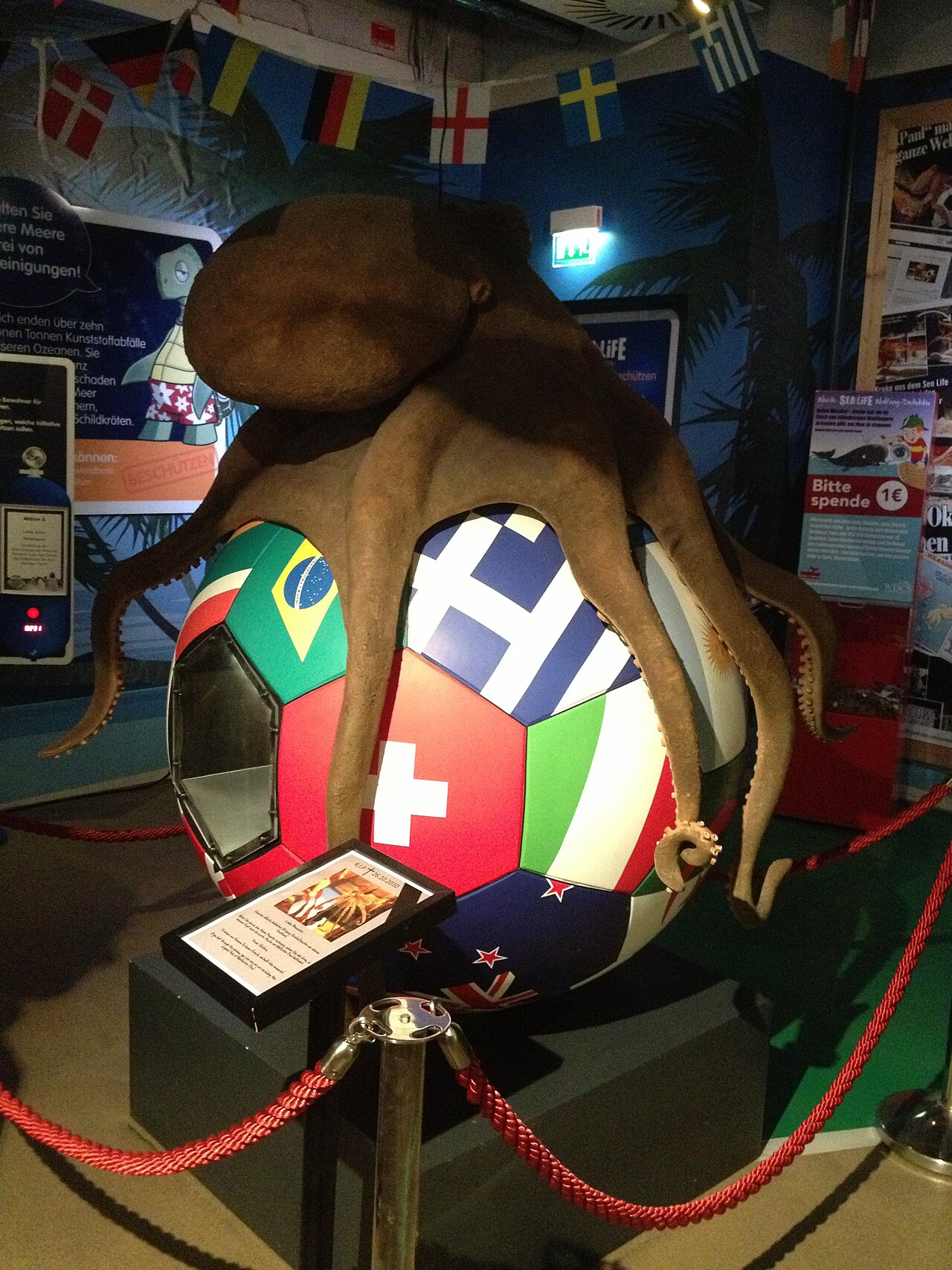
Paul rapidly became a global media phenomenon. Newspapers, television and social media reported his choices frequently, and he inspired merchandise, cartoons and internet memes. Fans treated him as a lucky mascot and some national supporters followed his choices with amusement or anxiety. The story prompted broader conversations about how humans interpret patterns, assign agency to animals and how popular science is communicated through mass media.
Retirement and death
After the 2010 World Cup, Paul was retired from prediction activities by his keepers. His death, reported in October 2010, received widespread coverage. The events around Paul — from the prediction routine to reactions after his death — remain a notable example of an animal figure becoming a transient international celebrity and a focal point for discussions about animal cognition, entertainment and probability.
Further information and references
- Facility and regional context: Sea Life Centre, Oberhausen and Germany.
- Species background: Octopus vulgaris and general accounts of octopus behaviour.
- Major tournament associated with Paul: 2010 FIFA World Cup.
- Descriptions of the selection events and public demonstrations: divination-style selection events using food items such as mussels.
- Symbols used during choices and nations involved: team flags including nations like Spain and the Netherlands.
The case of Paul the Octopus is often cited in journalism and popular science as an accessible illustration of how anecdote, probability and media attention combine to create widely shared stories. While entertaining, the demonstrations underline the importance of experimental controls when interpreting animal behaviour.
Related articles
Author
AlegsaOnline.com Paul the Octopus Leandro Alegsa
URL: https://en.alegsaonline.com/art/75190
Sources
- guardian.co.uk : "Octopus Paul predicts Spain to beat Holland in World Cup final"
- globoesporte.globo.com : "Oceanário diz que polvo-profeta não tem preço | globoesporte.com"
- iol.co.za : "Paul the octopus chooses Spain over Germany"
- news.sky.com : "Psychic Octopus to Predict England Result"
- news.bbc.co.uk : 'Psychic' octopus predicts Germany victory over England
- reuters.com : Germans shell-shocked by oracle octopus
- telegraaf.nl : "Buitenland | Het laatste nieuws uit Nederland leest u op Telegraaf.nl"