
Pauropod
Small, soft-bodied myriapods in the class Pauropoda. About 500 described species worldwide live in soil and leaf litter and play a role in decomposition and soil ecosystems.
Overview
Pauropods are tiny, soft-bodied arthropods in the myriapod group. They belong to the class Pauropoda and are represented by roughly 500 described species arranged into a few families with a cosmopolitan distribution. Pauropods are minute inhabitants of the upper soil layers and leaf litter where they are easily overlooked because of their size and secretive habits.
Image gallery
8 Images



Distinctive characteristics
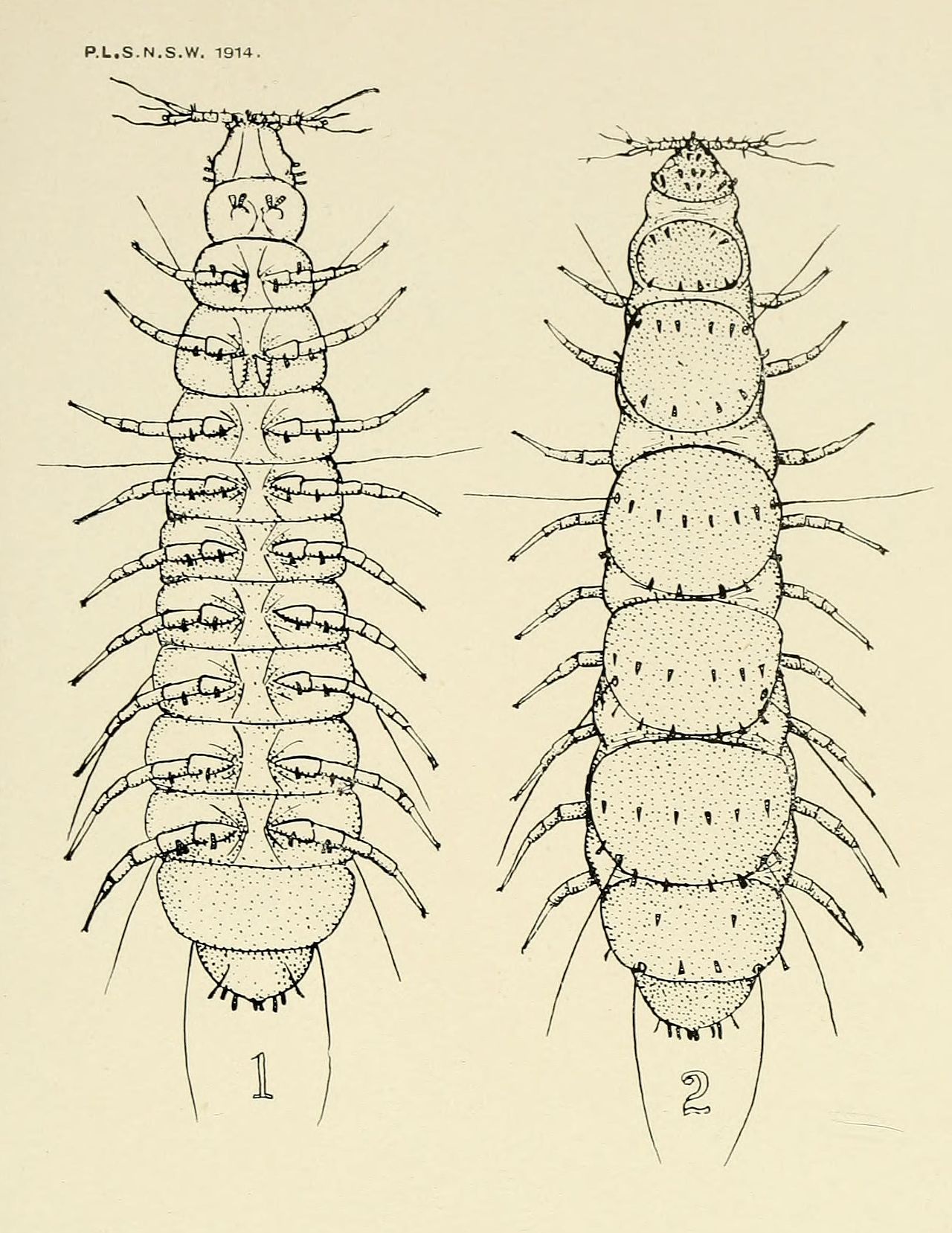
Although small, pauropods have a number of recognizable features that set them apart from other soil arthropods. They are usually pale and delicate, lack eyes, and possess short, many-segmented bodies with numerous pairs of legs. The antennae are often branched and serve as important sensory organs. Adults are typically only a few millimetres long.
- Size: very small, usually only a few millimetres.
- Body: soft, segmented, often pale in color.
- Sensory structures: branched antennae; eyes absent.
- Habitat: soil, leaf mold, and decomposing organic layers.
Ecology and role
Pauropods are soil dwellers that feed on fungal hyphae, decaying plant material and microscopic organic particles. By fragmenting and consuming detritus and fungi they contribute to decomposition and nutrient cycling in soils. Their presence and diversity can be useful indicators of soil health and the complexity of the microarthropod community. Typical microhabitats include loose humus, moss, and the upper organic strata beneath stones and logs.
Taxonomy, history and fossil record
Pauropods are one of four main groups of myriapods, alongside centipedes, millipedes and symphylans. They have attracted specialist attention from taxonomists because of their small size and subtle anatomical differences. The fossil record for pauropods is sparse: their tiny, soft bodies do not fossilize well, so only rare amber-preserved specimens and fragmentary remains are known.
Importance and notable facts
Though little known to the public, pauropods are an integral part of soil communities. They help break down organic matter, indirectly supporting plant growth and other soil organisms. Because they live in soil and leaf mold, they are sensitive to changes in moisture, pH and organic content, making them relevant to studies of habitat disturbance, land management and biodiversity. Their inconspicuous nature means that much about their life histories and distributions remains understudied.
Related articles
Author
AlegsaOnline.com Pauropod Leandro Alegsa
URL: https://en.alegsaonline.com/art/75235